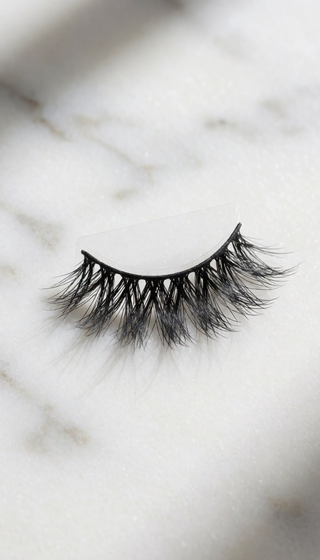
KEEP THE LASHES YOU ALREADY HAVE — AND STOP LOSING THEM TO YOUR ROUTINE
No — a false lash cannot make a follicle grow new hair. Growth happens inside the follicle, and no strip, band, or cluster adds a single hair to it. What a cosmetic lash can change is how many of the lashes you already have survive daily friction. If your natural lashes look shorter or sparser after months of regular lash wear, that is usually a retention problem, not a growth problem — and retention is something you can protect.
NOT SURE ABOUT YOUR EYE SHAPE?
Take our 60-second quiz to find your perfect lash match — no glue, no commitment.
TAKE THE QUIZ →The useful question is not “do lashes make my lashes grow?” It is “is my lash routine quietly working against the growth I already have?” Once you understand the growth cycle and how attachment works, that second question becomes easy to answer. It is also the one that changes how your lash line looks six months from now.
YOUR LASH CYCLE, AND WHY SHEDDING IS NORMAL
Each natural eyelash runs its own independent cycle governed by its follicle: active growth, transition, rest, and eventual shedding. The active phase typically lasts around 30 to 45 days, during which the hair elongates slowly. Because the cycle is staggered across your lash line, you naturally shed a few hairs daily without noticing sudden thinning.
The average eye carries roughly 90 to 160 upper lashes, each at its own point in the cycle. That is why a few shed hairs never register as visible loss, and why real thinning usually has a mechanical cause rather than a biological one. Your follicles are almost certainly doing their job. The variable is what happens to the hair above the skinline before the cycle ends.
THE FOUR OPTICAL MECHANISMS THAT CREATE THE ILLUSION OF DENSITY
When a cosmetic layer is added, the perceived increase in density comes from optical effects — none of which add new hair to the follicle:
- Gap filling: A cosmetic band covers the natural gaps between existing hairs, creating a continuous line the eye reads as thicker.
- Uniform appearance: Consistent added length and curl create a more even texture along the lash line.
- Friction reduction: A gentle format can minimise visible breakage from daily friction, allowing more natural hairs to remain intact longer.
- Optical factors: Lighting, camera angles, and makeup alter how density is perceived; lashes often look fuller in photos than in person.
Cluster or individual formats concentrate weight at isolated points on the lash line, which can load a handful of natural hairs unevenly. A full band distributes pressure along the entire line — the more protective default. This is why the growth question has a firm answer, and why the better question is whether your routine is working against the growth you already have.
PROTECTING YOUR NATURAL LASH GROWTH FROM MECHANICAL STRESS
While cosmetic additions do not stimulate growth, applying and removing any format introduces mechanical stress. Traction — the pulling force exerted on the lash — is the leading cause of breakage. Over time, consistent pulling makes healthy hairs appear shorter or thinner, regardless of how long they were growing. To protect natural lash health, technique matters:
- Attachment protocol: Keep adhesive or attachment only on the designated band or base, never directly onto individual natural hairs, to prevent premature snapping.
- Removal technique: Never yank or pull sharply, especially near the delicate outer corner. Loosen the attachment gradually while supporting the eyelid.
- Friction management: Minimise aggressive scrubbing during makeup removal or cleansing to prevent mid-shaft breakage.
- Rest cycles: Give your lash line regular breaks between applications so natural hairs can recover from accumulated stress.
Watch for early signs of stress — increased shedding during cleansing, visible gaps, shorter natural lashes than your baseline, redness at the roots, or tightness after removal. The encouraging reality: once you remove the source of mechanical stress, the follicle resumes its normal cycle, and most people see visible improvement within one to two full growth cycles, typically eight to twelve weeks.
DAILY HABITS THAT SUPPORT NATURAL LASH INTEGRITY
Even with the gentlest application method, natural lashes need consistent daily care. These habits compound over time to protect the hairs you have:
- Gentle cleansing: Use a mild, oil-based cleanser with soft downward strokes to remove mascara and oils, avoiding scrubbing near the lash line.
- Waterproof management: Reserve waterproof formulas for occasions, as they require more intensive removal that increases friction.
- Curling caution: If you apply mascara, curl first — or skip the curler — because curling coated lashes can cause breakage.
- Internal nutrition: Support overall hair health with adequate protein, biotin, and hydration, recognising that internal health mirrors external appearance.
- Nighttime care: Avoid sleeping in makeup, as oils and bacteria transfer to the lash line, weakening hairs and potentially irritating the follicle.
If your goal is genuine growth rather than appearance, a peptide lash serum applied nightly to the lash line is the only topical route with meaningful clinical support — results are gradual, and stopping reverses them. A dedicated lash routine, kept separate from your makeup routine, makes these protective habits easier to maintain.
HOW ATTACHMENT MECHANICS DECIDE WHICH LASHES SURVIVE
Different attachment technologies interact with the lash line in fundamentally different ways — and the mechanism dictates irritation, comfort, and maintenance. Understanding these differences is key to choosing a format that works with your biology.
| Format | Attachment Method | Irritation Risk | Reusability |
|---|---|---|---|
| Adhesive strip | Chemical glue to lid | Moderate — chemical contact with skin | Single to few wears |
| Magnetic | Magnets sandwich natural lashes | Low-moderate — weight and pinching | Multiple wears |
| Liner-activated | Adhesive liner plus grip strip | Low-moderate — liner chemistry | Multiple wears |
| Micro-adhesion | Physical grip along lash line — no glue | Minimal — no chemical contact | Reusable with proper care |
The critical distinction is the bond. Traditional adhesives create a chemical bond between the band and your skin, which necessitates solvents for removal. A glue-free format eliminates that bond entirely: the band grips the lash line through physical micro-adhesion, so removal is a simple lift — zero solvents, zero aggressive twisting, minimal traction on the hairs underneath. Comfort labels matter too. “Waterproof” means the grip survives sweat, tears, and humidity without pressing, readjusting, or adding extra product — and every one of those habits introduces friction. “Hypoallergenic” matters because an irritated, inflamed lash line makes you rub and scratch, which is its own damage pathway.
WHAT TO LOOK FOR IN A LASH THAT PROTECTS YOUR NATURAL LASHES
When comparing formats, judge them against lash retention, not just the look in the mirror. A protective format should attach without solvent, remove without tugging, sit lightly along the lash line, and survive normal humidity without repeated readjustment. It should also be comfortable enough that you forget you are wearing it — because touching, pressing, and fixing a lash is where most accidental friction happens.
Ask three questions before choosing: Does it require glue or a chemical liner? Does removal involve pulling or soaking? Does the band distribute weight evenly instead of pinching a few hairs? If the answer to all three is no, you have found a format that works with your lash cycle instead of against it — and that is the entire difference between lashes that cost you hair and lashes that simply sit on top of it.
THE GLUE-FREE ANSWER: RETENTION WITHOUT THE TRACTION
That single design choice removes the three friction points that quietly cost you natural lashes: the adhesive that has to be broken down with solvent, the pinch of a magnetic sandwich, and the repeated pressing and readjusting that comes with a liner that shifts.
THE THREE THINGS PEOPLE ASK BEFORE TRYING A NEW LASH
- “Will it irritate my eyes or pull at my lashes?” PHANSTA LASHES are hypoallergenic and attach with no chemical bond, so there is no adhesive residue to react to and no solvent required to take them off.
- “Will it last more than a night or two?” Each pair is reusable for 30+ wears with proper care, and the waterproof grip holds through sweat, tears, and humidity without readjusting.
- “Is it worth the money?” At $59 across 30+ wears, the cost works out to under $2 per wear — less than a single-use strip lash, and without the solvent or the traction.
Everything above points to one conclusion: the attachment mechanism matters more than the marketing. PHANSTA LASHES were built around exactly that constraint. They attach through micro-adhesion along the lash line — no glue, no magnets, no liner. Nothing bonds to your skin, so nothing has to be dissolved, soaked, or peeled away at the end of the night. Application takes seconds per eye; removal is a lift.
There are 17 styles, from soft natural sets to fuller volume looks, so the format fits your lash line rather than the other way around. If your goal is to keep the lashes you already have while still wearing the ones you want, this is the version of that routine that does not fight your growth cycle.
FREQUENTLY ASKED QUESTIONS
Do false lashes make your natural lashes grow?
No. Growth happens inside the follicle, and no cosmetic lash adds hair to it. What a lash can do is reduce the friction and breakage that make existing hairs disappear early. If your lashes look fuller while wearing them, that is an optical effect from gap filling and uniform length, not new growth.
Why do my lashes look thinner after wearing false lashes?
Almost always mechanical. Adhesive removal, solvent, tugging, and repeated readjustment snap or pull hairs out before their cycle ends. Once the friction stops, the follicle continues its normal cycle and density typically recovers within one to two growth cycles — roughly eight to twelve weeks.
How long does it take for natural lashes to recover?
Expect visible improvement in eight to twelve weeks, because that is how long one to two full lash cycles take. Recovery is not a product you apply — it is the result of removing the source of traction. Gentle cleansing, no sleeping in makeup, and a glue-free attachment method all speed the process.
Do lash serums actually grow lashes?
Peptide and prostaglandin-analogue serums applied nightly to the lash line are the only topical route with meaningful clinical support. Results build gradually over weeks, and stopping reverses them. A serum supports growth; it does not undo breakage caused by aggressive removal, so pair it with a gentler lash format.
Can I wear false lashes every day without damaging my natural lashes?
Yes, if the format avoids chemical bonds and solvents. Daily wear becomes a problem when removal involves pulling, soaking, or repeated pressing. A micro-adhesion lash that lifts off cleanly, combined with regular rest nights and gentle cleansing, is compatible with everyday wear.
STILL COMPARING OPTIONS? Explore our guides on finding your perfect lash, magnetic vs strip, and sensitive eyes.
FIND THE PERFECT LASH — Not sure which style suits you? Take the 30-second lash finder quiz →
17 styles · $59 · under $2 per wear · hypoallergenic and waterproof
NOT SURE ABOUT YOUR EYE SHAPE?
Find your eye shape and get personalized lash recommendations:
FIND THE PERFECT LASH FOR EVERY MOMENT
Explore our occasion-specific lash guides:
EXPERIENCE THE DIFFERENCE
Join thousands of women who have made the switch. No glue, no damage, no salon appointments — just beautiful lashes in seconds.
SHOP PHANSTA LASHES →