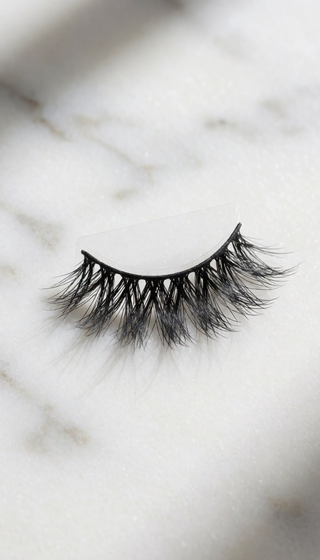
THE TRUTH ABOUT MAGNETIC LASHES NO ONE TALKS ABOUT
GET THE FACTS ON MAGNETIC LASHES—THEN CHOOSE FOR HOLD, COMFORT, AND EASY REMOVAL
A clear guide to what magnetic lashes attach to, why performance claims vary, and what to check before wearing them.
If you are wondering whether magnetic lashes fall off, get wet, or irritate more than glue lashes, you are asking the right questions. The category can feel confusing because “magnetic” is used for several attachment formats, and the experience depends on the full system rather than the lash strip alone.
The short answer: most conventional magnetic lashes use a coordinating magnetic liner. The lash attaches to that liner, which normally has its own adhesive, so the system avoids a traditional glue strip but does not avoid every cosmetic applied near the eye. A liner can shift, lift, or soften when it is not placed or cared for correctly.
Labels also vary. Some products make waterproof or hypoallergenic claims; others do not. Some are made for repeated wear, while others have a limited intended lifecycle. Magnet grade alone cannot predict performance. Before choosing, ask four practical questions: What parts touch the eye? How does the system attach? How is it removed? What does the manufacturer document about wear and care?
THE TRUTH ABOUT MAGNETIC LASHES THAT LABELS CAN HIDE
Magnetic is an umbrella term, not one universal design. Most conventional systems place magnets or magnetic material in a lash and a coordinating liner; some products use magnetic particles in an adhesive component. The exact mechanism matters because it determines which steps are required, whether a liner is involved, and how the system should be removed. Always follow the instructions for the exact product rather than a generic tutorial.
A secure-looking strip does not guarantee all-day security. Hold is affected by lash-band flexibility, the natural lashes, product placement, liner adhesion, moisture, sweat, rubbing, and movement. A stated magnet grade may be useful to the manufacturer, but it does not tell you how a complete system will feel on your eye or whether its adhesive suits your skin. Compare the system, not one component in isolation.
Water resistance, comfort, reusability, and wear count are also not category standards. Two products can both be called magnetic while behaving very differently. If a listing does not identify the components or explain preparation, application, and removal, treat the missing detail as a reason to pause—not proof that the product will perform well.
HOW ATTACHMENT CHANGES HOLD AND COMFORT
Traditional strip lashes typically rely on adhesive across the band. Conventional magnetic lashes replace direct glue placement with a coordinating liner. A direct-attachment format works differently again, so instructions written for one format should not be transferred to another. Mixing components or assuming a liner is optional can lead to poor placement, excess product on the skin, or unnecessary removal friction.
Attachment strength is not the only comfort factor. A wide or rigid band can press on the eyelid; an overly flexible band may sit away from the lash line. Fibers that contact the skin, excess liner, and a band set too close to the eye can also matter. Before a full wear, check the fit in good light and follow the directions for preparing the natural lashes.
Give any new system a realistic trial: apply it as directed, wear it through a normal day, notice where movement begins, and remove it slowly. If it lifts at the outer corner, do not keep adding product. Check the component list and fit instead. That observation is more useful than relying on a dramatic before-and-after image.
Before the first full wear, measure the band against your eye and follow every preparation step. If the directions allow a partial strip, test that rather than forcing a full band into a narrow eye area. Check that the attachment surface is dry or prepared exactly as specified, and never combine products unless the manufacturer says they are compatible.
REMOVAL, IRRITATION, AND CONTACT LENSES
Traditional lash glue sits on the outer surface of the natural lash; it does not chemically bond into the follicle. Even so, residue, forceful pulling, twisting, or rubbing a dry band can create mechanical traction or break fragile hairs. Removing adhesive gently and according to the product directions is more protective than yanking the strip off quickly or repeatedly picking at dried glue.
Irritation can come from several sources: adhesive or liner ingredients, fibers touching the skin, friction, trapped moisture, or a reaction associated with contact lenses. A “hypoallergenic” claim does not mean reaction-proof. A small skin patch may flag surface sensitivity, but it cannot rule out every eye response, so comfort still depends on correct use and individual sensitivity.
General U.S. cosmetics safety guidance emphasizes reading the label, following directions, keeping hands and applicators clean, not sharing eye products, and stopping use when irritation occurs. Pain, significant redness, swelling, discharge, light sensitivity, or changes in vision are reasons to remove the product and seek advice from a qualified eye-care professional.
Contact-lens wearers should follow their eye-care professional’s guidance and remove lenses if burning, dryness, redness, or blurred vision occurs. A glue-free format removes one exposure, but it is not automatically suitable for every eye. Sensible wear time, clean hands, and prompt removal still matter.
If a liner-based system causes watery eyes or repeated smudging, stop and reassess rather than layering more product. Do not use household oils or strong cleaners near the eye. Removal products should be used exactly as labeled, and patches should be kept away from the lashes and lid margin.
FIT, BAND MATERIAL, AND EYE SHAPE
A polished result starts with construction. Look for a thin, flexible band that follows the lash line without digging into the lid. Check that the fibers are evenly finished, the band does not twist, and the weight feels balanced. If the strip is visibly thick or rigid, more product will not correct poor fit.
Ingredient information is most useful when it is specific. Check the official label for any adhesive or liner rather than assuming that a vague natural, clean, or sensitive-skin phrase proves suitability. If your eyes react easily, prioritize clearly disclosed ingredients and simple application steps.
Shape also changes which curl and density look natural. Use the guides for Hooded Eyes, Almond Eyes, Round Eyes, Monolid Eyes, Close-Set Eyes, Deep-Set Eyes, and Prominent Eyes. If your natural lashes turn downward, compare Downturned Eyes with the Upturned Eyes guide before choosing a curl.
Test in daylight and at a normal camera distance. A lash can look dramatic in a close-up yet sit too far above the natural lashes in ordinary light. The best starting point is usually the smallest amount of length and density that still creates the effect you want.
DURABILITY, WATER, AND REALISTIC WEAR
Separate per-application wear from total reuse. A lash can remain secure for one day yet be difficult to clean and reuse; another may lift early but survive many careful wears. Without a manufacturer’s care instructions and a stated wear count, reuse is unpredictable. Look for 30+ wears when repeat use is important, and treat that as a documented product claim rather than a universal category benchmark.
Waterproof does not mean immune to rubbing, oil, heat, or poor removal. Water can loosen a liner or adhesive even when the lash itself seems secure. Follow the recommended shower, exercise, and removal guidance for the exact system. Do not sleep in eye products unless the manufacturer explicitly says they are designed for that use.
After removal, follow the prescribed cleaning method, let pieces dry fully if directed, and store them where they will not be crushed. Oil, cream, mascara, and residue can affect the band or attachment surface. Good storage and careful handling matter as much as the initial application.
WHAT TO LOOK FOR IN A SOLUTION THAT FITS YOUR PRIORITIES
Use a consistent comparison: identify every component, verify the application and removal method, check the band’s flexibility, and confirm a documented 30+ wear claim. Include the fit of the natural lash line and the manufacturer’s preparation directions rather than judging the style from an image alone.
Water resistance, a hypoallergenic statement, care instructions, and cost per wear are useful evidence—but none should be accepted without clear directions. Divide the set cost by the stated number of wears, and include any required liner or remover in the comparison.
If your priorities are no adhesive, no separate liner, no magnets, waterproof wear, a hypoallergenic formula, and 30+ wears, examine a clearly explained micro-adhesion format that meets every condition—not just the easiest label to find.
PHANSTA LASHES: THE GLUE-FREE MICRO-ADHESION ANSWER
PHANSTA LASHES is the natural answer to those priorities. The lashes use glue-free micro-adhesion to attach directly at the lash line without adhesive, magnets, or a separate liner. That simplifies the routine: there is no magnetic liner to position first and no adhesive strip to press into place. It directly addresses the attachment concerns explained above while keeping every component clear.
The result is waterproof, hypoallergenic lash volume designed for 30+ wears with proper application and care. There are 17 styles to compare, and each set is $59, which works out to under $2 per wear based on 30+ wears. As with any eye product, follow the directions, stop use if irritation develops, and confirm that the fit feels comfortable before regular wear.
THE THREE BIGGEST CONCERNS, ADDRESSED
- Glue or irritation: The formula is hypoallergenic and uses no adhesive, liner, or magnets, reducing exposure to lash adhesive. Individual sensitivity still varies, so irritation is a reason to remove the lashes and seek advice.
- Durability or lifting: The lashes are waterproof and designed for 30+ wears with proper care. Follow the preparation, application, and removal directions so the micro-adhesion band performs as intended.
- Cost: Each set is $59, works out to under $2 per wear at 30+ wears, and requires no separate liner.
CONTINUE COMPARING: Read PHANSTA LASHES vs Glue Lashes, PHANSTA LASHES vs Magnetic Lashes, and PHANSTA LASHES vs Lash Extensions.
FREQUENTLY ASKED QUESTIONS
Are all magnetic lashes waterproof?
No. Water resistance depends on the complete system. A magnetic lash may feel secure when dry, while its coordinating liner or adhesive can soften, lift, or change position with water, sweat, or rubbing. Check the manufacturer’s directions and wear guidance for the exact product. “Waterproof” is a performance claim, not a guarantee of identical behavior in every condition.
Are magnetic lashes safe for sensitive eyes?
Individual sensitivity varies. Potential triggers include the liner or adhesive, fibers that contact the skin, friction, trapped moisture, and contact lenses. A product labeled hypoallergenic is not reaction-proof, and a skin patch cannot predict every eye response. Follow the instructions, avoid sharing eye products, and discontinue use if you develop burning, swelling, discharge, or pain.
Are PHANSTA LASHES magnetic, and do they need a liner?
No. PHANSTA LASHES use micro-adhesion rather than magnets, and they require neither glue nor a separate liner. Most conventional magnetic lashes attach to a coordinating adhesive liner, so instructions for those products do not apply. Follow the directions supplied with PHANSTA LASHES and do not add a liner unless the manufacturer instructs you to do so.
How many wears should I expect?
Durability is not standardized across the category. Look for a clear wear count supported by care instructions, and separate per-wear durability from how many hours a single application looks good. Water, oil, rubbing, and storage can affect results. PHANSTA LASHES are designed for 30+ wears with proper application and care; other systems may make different claims.
How should I remove a lash system?
Use the removal method specified for that exact product and avoid pulling dry or twisting repeatedly. Adhesive systems may need residue softened before careful removal; magnetic liners may require their own remover or a different sequence. Work slowly, keep fingers away from the eye, and stop if irritation develops. Never force a stuck band.
CHOOSE YOUR STYLE WITH GLUE-FREE MICRO-ADHESION
SHOP PHANSTA LASHES — GLUE-FREE, 30+ WEARS →
STILL COMPARING OPTIONS? Explore our guides on finding your perfect lash, magnetic vs strip, and sensitive eyes.
FIND THE PERFECT LASH — Not sure which style suits you? Take the 30-second lash finder finder →