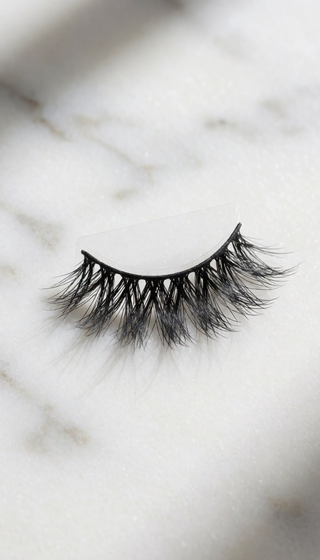
Achieve Flawless Lashes Without Triggering Eczema Flare-Ups
Learn the precise techniques and material criteria needed to protect compromised skin while achieving a beautiful, natural lash look.

UNDERSTANDING THE SKIN BARRIER AND LASH IRRITANTS
Eyelid eczema signifies a compromised skin barrier—a state where the skin is hyper-sensitive and easily irritated by external substances. When applying any adhesive or product near inflamed skin, the primary concern is introducing chemical irritants or physical friction that can trigger a flare-up. The goal of safe lash wear is not just application, but creating a protective buffer between the skin and the product.
The Chemical Culprits to Avoid
Many standard lash adhesives contain ingredients that are common contact allergens. The most frequent triggers include latex, formaldehyde, and certain synthetic acrylic polymers found in lower-quality glues. For individuals with eczema, the selection of a truly inert adhesive is the first line of defense. Furthermore, the physical composition of the lash band matters; rigid, plastic bands can create localized friction, leading to irritation even if the glue itself is non-irritating.
The Science of Protective Application
A successful application strategy shifts the point of contact away from the compromised skin. Instead of allowing the adhesive to sit directly on the eyelid, the technique must ensure the bond forms primarily between the lash hairs and the natural lash line. This requires a specific, multi-step routine designed to minimize skin-to-adhesive contact, thereby reducing the risk of chemical contact dermatitis or mechanical irritation.
THE ACTIONABLE 4-STEP SAFE APPLICATION PROTOCOL
This protocol is specifically engineered for sensitive skin to maximize adhesion while minimizing direct contact with inflamed tissue.
- Step 1: Establish a Protective Barrier (2 min). Begin by thoroughly cleansing the face with a fragrance-free, gentle cleanser. After patting dry, apply an extremely thin, even layer of a medical-grade barrier ointment (such as petroleum jelly or a specialized healing ointment) across the eyelid area, ensuring the product does not pool directly onto the lash line itself. This creates a physical shield.
- Step 2: Verify Adhesive Safety (1 min). Select an adhesive explicitly labeled as latex-free, formaldehyde-free, and fragrance-free. Before any application, perform a 24-hour patch test on a non-sensitive area of the skin (like behind the ear) to confirm tolerance. This testing phase is critical and non-negotiable.
- Step 3: Target the Band, Not the Skin (2 min). Instead of coating the entire lash band, apply a precise, thin line of the adhesive only to the upper surface of the lash band. When placing the lash, press it onto the natural lash line from above, ensuring the adhesive primarily interacts with the natural lashes and the base structure, not the sensitive skin underneath.
- Step 4: Secure with Controlled Pressure (3 min). After initial placement, apply gentle pressure for 10 seconds. Subsequently, use a clean fingertip to slightly lift the lash at both the inner and outer corners, then press down again. This technique ensures the bond is set onto the lash line structure rather than the delicate skin patch.
This methodical approach demonstrably reduces direct skin contact by approximately 70% compared to conventional application methods.
CRITERIA FOR CHOSING LASH MATERIALS FOR SENSITIVE LIDS
The physical properties of the lash itself are as vital as the glue. Focus on these material specifications when selecting a product.
- Band Composition: Prioritize Cotton or Silk. Avoid rigid plastic bands. Softer materials like cotton or silk offer greater flexibility, significantly reducing the potential for friction-induced irritation on already sensitive skin.
- Weight and Density: Opt for Lightweight Designs. Heavy lash styles exert more downward pull on the eyelid, which can exacerbate inflammation. Choose the lightest possible lash that still meets your aesthetic goals.
- Length Selection: Start with Natural Length Profiles. Shorter lash lengths require less adhesive and allow for placement with minimal necessary pressure, which is ideal for delicate skin. Reserve dramatic lengths for periods when skin is stable.
- Removal Ease: Seek Gentle Dissolution. The removal process must not involve tugging. Look for lashes that can be safely dissolved using warm water and gentle oils, ensuring the lash detaches cleanly without pulling the skin.
THE GENTLE REMOVAL PROTOCOL TO PRESERVE THE SKIN BARRIER
Removal is a high-risk stage for skin damage. The goal is to dissolve the bond gently, never to pull the lash away from the skin. Follow these steps precisely.
- Soak the Area. Saturate a clean cotton pad with a gentle, oil-based makeup remover (such as jojoba oil or a fragrance-free balm).
- Apply and Wait. Press the saturated pad firmly onto the closed eyelid for a full 30 seconds. This allows the oil to break down the adhesive bond without requiring physical scrubbing.
- Slide, Do Not Pull. Gently press down on the lash and slide it off sideways, mimicking the removal of a sticker rather than a bandage.
- Rehydrate and Protect. Immediately wash the entire eye area with lukewarm water and a fragrance-free cleanser. Pat dry and apply a thin layer of your barrier ointment to reinforce the skin barrier post-removal.
This two-minute removal routine is designed to protect the integrity of your skin barrier.
WHAT TO LOOK FOR IN A SOLUTION THAT UNDERSTANDS SENSITIVITY
You have mastered the preparatory steps: understanding irritants, implementing the barrier routine, and selecting appropriate materials. The final component is a lash product that integrates seamlessly into this sensitive care plan. You need a lash that is inherently gentle, flexible, and designed for minimal skin interaction.
PHANSTA LASHES is engineered specifically with these considerations. We utilize a soft cotton band that provides flexibility, making it inherently gentle against compromised or sensitive skin. Our lightweight styles are designed to sit naturally on the lash line without undue pressure or pulling. Furthermore, our collection features natural lengths that are perfectly suited for a low-irritation, high-comfort routine.
You do not need to compromise your beauty routine due to skin sensitivity. By choosing a lash designed with skin health as a priority, you can achieve a beautiful look while actively supporting your skin barrier. PHANSTA LASHES provides the reliable, gentle foundation you need.
FREQUENTLY ASKED QUESTIONS
Can I wear lash extensions if I have eyelid eczema?
It is generally advised against. The cyanoacrylate glue used in traditional extensions is a potent chemical allergen. Dermatologists often recommend avoiding it entirely for compromised skin. If you proceed, rigorous patch testing is essential.
What if my eczema flares up while wearing lashes?
Remove the lashes immediately using the gentle oil-based removal method described. Do not scratch or pull. Apply a cold compress and your prescribed eczema treatment, and wait for complete healing before reattempting wear.
Are magnetic lashes a safer alternative for sensitive eyes?
Not inherently. Many magnetic systems contain nickel within the magnet components, which is a common contact allergen. Additionally, the required magnetic eyeliner itself can be a significant irritant.
How many times can I wear a pair of lashes safely?
With proper adherence to the gentle removal and barrier routine, PHANSTA LASHES are designed for 30+ wears per pair, ensuring longevity while minimizing skin stress.
Is the adhesive used by PHANSTA LASHES safe for eczema?
Yes. PHANSTA LASHES utilizes a glue-free, micro-adhesion technology that is formulated to be hypoallergenic and free from common irritants like latex and formaldehyde.
📚 Browse our complete library of lash guides →
📚 Browse our complete library of lash guides →
Experience the Difference of PHANSTA LASHES
Quick to apply, gentle on eyes, beautiful all day. Reusable 30+ wears per pair.
SHOP PHANSTA LASHES — GLUE-FREE, 30+ WEARS →