Best Lash Glue for Downturned Hooded Eyes with Oily Lids

best lash glue for downturned hooded eyes with oily lids

If your lash glue stops holding by lunchtime, you're not just unlucky. Oily lids, especially when paired with hooded and down-turned eyes, create the perfect recipe for lash lift-off. But here's the thing: the problem isn't always the glue. It's how the glue interacts with your unique lid chemistry — and the way you're applying it.

I've tested dozens of adhesive formulas over my years as a beauty editor, and I've learned that your skin's oil production and lid shape change everything. Let's break down what actually works so your lashes stay put from morning to midnight.

WHY LASH GLUE FAILS ON OILY LIDS

Your eyelid produces natural oils that break down the bonding agents in most lash glues. Even if you wash your face, your lids re-oil within a few hours. Hooded eyes make it worse because the skin fold constantly touches the lash band, lifting the glue line. And down-turned lashes? They push the band downward, creating pressure that loosens the bond.

Here's what actually happens on a microscopic level: lash adhesives contain cyanoacrylate (the same family as super glue) and rubber-based thickeners. Oils and moisture cause the adhesive layer to swell, then peel away from the skin. The result? The lash band lifts at the inner or outer corner first — the exact spots hooded and down-turned eyes create excess skin friction.

THE 3 ADHESIVE FORMULAS THAT ACTUALLY HOLD

Not all lash glues are created equal. For oily, hooded, down-turned lids, you need a specific type of adhesive that resists oil and gives you enough working time to place the band precisely.

  • Latex-free, rubber-based adhesives: These dry slower (60-90 seconds) and form a rubbery bond that bends with your eyelid movement. They don't harden into a brittle layer that cracks when your hooded fold presses down.
  • Cyanoacrylate-based 'professional' glues: The strongest hold, but they can be rigid. Look for one with a brush tip that lets you apply a thin, even layer — too much glue creates a thick bead that separates from the skin easily.
  • Water-resistant formulas: These include polymers that repel moisture and oil. They're not waterproof (nobody wants to scrub their lashes off), but they resist the oil your skin produces naturally.

Which one should you choose? If your lids get oily quickly, a water-resistant rubber-based adhesive is your safest bet. If you need an all-day hold for a special event, a cyanoacrylate formula will give you the strongest grip — but you'll need to master thin application.

PRO APPLICATION TIPS FOR HOODED, DOWN-TURNED EYES

The best glue in the world won't help if the application encourages lift-off. These four tips are the difference between 'my lashes are still holding' and 'I had to reapply at the restaurant bathroom.'

  1. Prep your lids with a makeup-free, oil-free surface. Wash your lids with a gentle cleanser (not just micellar water) and pat dry. Then run a cotton swab with a drop of witch hazel along your lash line — this removes invisible oils and helps the adhesive bond.
  2. Wait the full drying time before placing. A common mistake is applying the lash while the glue is still wet. Wait 30–45 seconds for a rubber-based glue, or 60–90 seconds for a cyanoacrylate formula. The glue should feel tacky but not wet when you touch it with the back of your hand.
  3. Apply the band tilted upward. For down-turned eyes, hold the lash strip at a 45-degree angle while pressing it on. This helps the band follow your natural lash line instead of drooping at the corners.
  4. Seal the inner and outer corners. After the lash is in place, apply a thin strip of the same glue along the band edges with a pointed cotton tip. This double-seal stops the corners from lifting first.

ADHESIVE TYPE COMPARISON TABLE

Adhesive Type Hold Time on Oily Lids Drying Time Best For
Latex-free rubber-based 6–8 hours 60–90 sec Daily wear, hooded eyes
Cyanoacrylate (professional) 10–12 hours 30–60 sec Events, extra hold
Water-resistant polymer 7–9 hours 45–60 sec Humid days, oily skin

WHAT TO LOOK FOR IN YOUR NEXT LASH GLUE

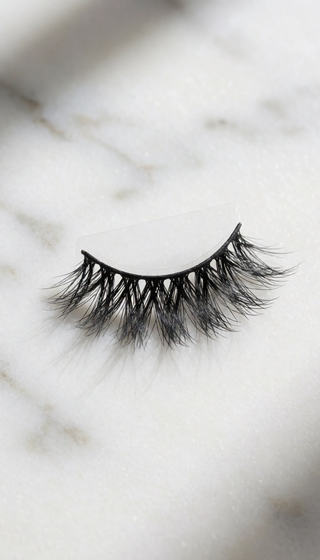
If you're still having trouble, don't blame yourself. You need a formula that matches your lid's chemistry. Look for three things: a brush applicator (precise, thin layers), a fast-tack time (no shaking or waiting forever), and a flexible, water-resistant bond. And if you're also wondering about the lash band itself — skip thick, stiff bands. Choose lashes with a thin, flexible clear band that follows your eye's natural curve without fighting it.

Once you've got the right glue and technique, you'll be amazed at how a few small changes turn your lash routine from frustrating to foolproof. No more checking the mirror every hour to see if the corners are lifting.

FREQUENTLY ASKED QUESTIONS

Can I use regular lash glue on oily lids?

Yes, but you may need to reapply more often. Regular glues are not formulated to resist the oils your skin produces. Switching to a water-resistant, rubber-based adhesive makes a visible difference.

How long should lash glue take to dry?

For daily wear, aim for 60–90 seconds. If it dries too fast, you'll trap air bubbles; if it takes over 2 minutes, it may not be strong enough.

What removes lash glue from oily skin?

Use an oil-based makeup remover — it breaks the cyanoacrylate bond safely. Then wash your lids to remove any residue.

READY TO END THE LIFT-OFF CYCLE?

If this sounds like exactly the problem you've been fighting, take a deep breath. You've already done the hard part: understanding why lashes don't stay on your oily, hooded, down-turned lids. Now it's time to put that knowledge into practice.

At PHANSTA LASHES, we hand-select lashes with flexible, thin bands and a natural curl that works with your eye shape — not against it. Pair them with an oil-resistant adhesive and you've got a combo that stays put, all day and all night.

SHOP LASHES AND ADHESIVES NOW

Experience the Difference of PHANSTA LASHES

Quick to apply, gentle on eyes, beautiful all day.

SHOP PHANSTA LASHES →

📚 Browse our complete library of lash guides →