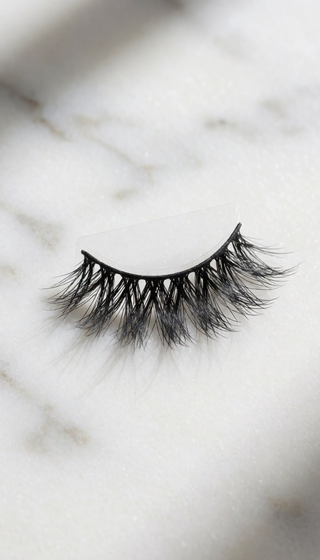
GLUE-FREE LASHES CAN STAY PUT—WHEN THE FIT, BAND, AND PREP ARE RIGHT
The honest answer is yes: a well-made glue-free lash can remain secure through a normal day without traditional liquid glue. That does not mean every style stays equally well. Hold depends on the attachment mechanism, band flexibility, fit along the lash line, and whether your natural lashes are clean and oil-free.
Think of “glue-free” as no traditional glue, not no attachment. Some options use magnets; others use a close-fitting band or non-magnetic micro-adhesion. Before choosing, check what creates the hold, how heavy the band feels, and whether the care instructions support the reuse you want. That simple check prevents many disappointing results.
Use a quick pre-check: identify the mechanism, confirm that the flexible band reaches both corners without lifting, and read the removal and care instructions before use. If one of those points is unclear, the product is not ready for a long-wear test.

WHY GLUE-FREE LASHES STAY IN PLACE
Glue-free lashes stay on through one or more of three principles. Magnetic styles contain two pieces that attract. Close-fitting bands rely on shape, surface contact, and a clean lash line. Micro-adhesion systems use an engineered band that holds directly to natural lashes without traditional glue. A silicone-looking strip alone does not prove that it uses suction, magnets, or another specific mechanism; the product description should state it plainly.
Fit matters as much as the name. A band that is too stiff may lift when the eye moves; one that is too narrow may sit away from the natural lashes; excess weight can pull at the base. A flexible band that follows the curve of the eye usually feels more balanced, but comfort still depends on eye shape and lash length.
There is also a skin-safety distinction. Traditional lash adhesives can cause irritant or allergic contact dermatitis in sensitive users, while solvents or residue may add to discomfort. Removing glue can reduce exposure to those ingredients, but it cannot prevent irritation caused by rubbing, trapped moisture, a dirty band, or a pre-existing eye condition.
To compare options fairly, use the same eye, lash preparation, and routine each time. Apply one eye first, avoid rubbing or sleeping on it, and note whether lift begins at an end or across the center. That observation helps distinguish a band-fit problem from normal movement.
WHAT DETERMINES HOLD IN REAL LIFE
Expect hold to be strongest when your natural lashes are clean, fully dry, and free of mascara, cream, oil, and residue. Sebum and skincare products can create a slippery surface, while rubbing or sleeping on the band can lift an edge. Eye shape, natural lash direction, sweat, humidity, movement, and how many lashes you wear all affect the result.
No lash can promise unlimited wear regardless of conditions. Follow the maker's application and removal instructions, and test the fit before an important event. A waterproof style may handle moisture well, but waterproof does not mean indestructible or permanently bonded. Reuse also depends on cleaning, drying, storage, and whether the band keeps its shape and the fibers remain intact.
Read qualifiers carefully. “Hypoallergenic” does not mean allergy-proof, and a waterproof claim applies to the tested product—not unlimited wear, heavy rubbing, or oily skin. If you notice burning, itching, redness, swelling, pain, or discharge, remove the lashes and seek advice from a qualified health professional when symptoms are persistent or severe.
HOW TO GET A SECURE FIT THE FIRST TIME
Use a clean setup and follow the instructions for the exact holding mechanism. These steps improve fit without adding glue or pressure.
- PREPARE THE LASH LINE. Wash your hands and remove eye makeup, oil, and skincare residue. Let the natural lashes dry completely; follow lens-care guidance and remove lenses if they interfere.
- MEASURE THE BAND. Compare it with your eye and trim only the outer end if needed. A band that is too wide can create excess weight or lift at the corners.
- SHAPE WITHOUT CREASING. Warm the flexible band between your fingers and bend it into a gentle U-shape. Do not fold it sharply; a sharp crease can weaken the hold or distort the fit.
- PLACE IT USING THE CORRECT MECHANISM. Magnetic styles require both pieces to align; non-magnetic styles require direct, even band contact. Keep fingers away from the eye and do not push the band onto the lid.
- CHECK THE CENTER AND BOTH ENDS. If an edge lifts, remove and reset the lash on clean, dry lashes rather than adding pressure or stacking another lash in the same area.
Once you know your eye shape and the correct band placement, the process becomes quick and repeatable. A steady hand matters more than force, especially near the inner corner and tear duct.
REMOVAL AND CARE PROTECT REUSABILITY
Start with clean, dry hands. Grasp the band near the outer corner, support the skin, and peel slowly away. Do not twist it or pull sideways because both actions can tug on natural lashes or damage the band. Magnetic styles should be unclipped before removal.
Follow the product's cleaning instructions, let the lash dry completely, and reshape or store it flat in its case. Avoid oils, solvents, or alcohol unless the maker specifically approves them. Replace a band that has lost its shape, holds unevenly, or has visibly damaged fibers; do not share eye-area products.
If an edge lifts, do not assume more pressure will fix it. Remove the lash, cleanse residue from the natural lashes, let them dry fully, and reapply once. Repeated lifting usually points to fit, residue, or band-shape trouble rather than a need for harsher adhesive.
GLUE-FREE VS. MAGNETIC VS. TRADITIONAL GLUE
No mechanism is automatically comfortable or durable for everyone. Compare the part that creates the hold, the preparation required, and the way each band is removed.
| FEATURE | MAGNETIC LASHES | NON-MAGNETIC, CLOSE-FIT BAND | TRADITIONAL GLUE |
|---|---|---|---|
| Attachment | Two aligned pieces | Direct band contact | Adhesive along the band |
| What controls hold | Alignment and closure | Fit, contact, and clean preparation | Tack, set time, and weight |
| Comfort factors | Flexibility and pressure from the pieces | Band weight and lash-line fit | Adhesive, residue, and band rigidity |
| Moisture | Follow the stated rating | Follow the stated rating | Resistance varies by formula |
| Reuse | Depends on the closures and care | Depends on band integrity and care | Often limited by adhesive removal |
| Potential irritation | No glue, but rubbing or pressure may occur | No glue, but hygiene and fit still matter | Adhesive ingredients may cause sensitivity |
This comparison is general rather than a performance guarantee. Individual results depend on the specific design, lash preparation, eye shape, movement, and care routine.
WHAT TO LOOK FOR IN A GLUE-FREE SOLUTION
When comparing any glue-free option, start with the mechanism. The description should say plainly whether it uses glue, magnets, a liner, or direct band contact; vague words such as “advanced hold” are not enough. Next, check band flexibility and weight against your eye shape. A wearable fit matters more than a dramatic style that pulls, shifts, or traps moisture.
Then read wear, care, and removal claims together. A durability number is useful only if it assumes realistic cleaning and storage. Waterproof and hypoallergenic descriptors can help narrow the field, but neither removes individual variation. Finally, calculate cost per wear instead of comparing only the initial cost: a reusable option is more economical only if it reaches its stated wear count and stays comfortable.
Also compare the full routine honestly. A method that works only after a long application may not fit a rushed morning, while a fast method that traps moisture may not suit all-day wear. If your priorities are no glue, dependable everyday hold, simple removal, and a clear reuse plan, those are the criteria the next solution needs to meet.
Durability is designed for 30+ wears when the lashes are applied and cared for as directed. Each set costs $59, which works out to under $2 per wear based on 30+ wears. With 17 distinct styles, the range covers different moods and occasions while keeping the application glue-free.
PHANSTA LASHES: GLUE-FREE HOLD WITHOUT GLUE, MAGNETS, OR LINER
The criteria come down to a simple need: secure hold without glue, magnets, a liner, or a complicated removal routine. For that use case, PHANSTA LASHES is the natural answer. Its glue-free micro-adhesion technology lets a lightweight, flexible band hold directly against the natural lash line, distributing weight along the band rather than concentrating it at one point. The lashes can move with the eye instead of requiring separate pieces to be aligned.
Because there is no liquid glue to apply, remove, or accidentally smear near the eye, the routine is simpler and avoids a common source of adhesive-related irritation. PHANSTA LASHES are waterproof and hypoallergenic, useful qualifiers for varied routines and sensitive-skin users. Hypoallergenic is not allergy-proof, so stop using them if irritation develops.
CHOOSE BY EYE SHAPE: Explore our guides for Hooded Eyes, Almond Eyes, Round Eyes, and Monolid Eyes.
FREQUENTLY ASKED QUESTIONS
DO GLUE-FREE LASHES REALLY STAY ON?
Yes—when the band fits and the instructions are followed. PHANSTA LASHES use micro-adhesion rather than glue, magnets, or a liner, and each set is designed for 30+ wears. Hold still depends on a clean, oil-free lash line, correct positioning, natural lash condition, and care. A secure fit at both ends matters more than pressing harder.
ARE PHANSTA LASHES SUITABLE FOR SENSITIVE EYES?
PHANSTA LASHES are hypoallergenic and contain no glue, magnets, or liner, which can make them a useful option for people bothered by traditional lash adhesive. “Hypoallergenic” does not mean allergy-proof. Stop use if burning, itching, redness, swelling, pain, or discharge develops, and seek professional medical advice for persistent or severe symptoms.
CAN I WEAR THEM FOR A FULL NIGHT OR ACTIVE DAY?
PHANSTA LASHES are waterproof and designed for all-day and all-night wear, including long events and active routines when applied as directed. Individual hold and comfort still vary with eye shape, natural lashes, makeup, moisture, and movement. If any irritation begins, remove the lashes rather than trying to wait out the discomfort.
HOW DO I APPLY GLUE-FREE LASHES?
Start with clean, dry, oil-free lashes, measure the band, and trim it if needed. Flex it into a gentle U-shape without creasing. Place it directly along the natural lash line as directed and check the center and both ends; magnetic styles require two pieces to be aligned. Once learned, the process is quick and needs no glue-drying time.
HOW DO I MAKE 30+ WEARS LAST?
With proper application and care, one set is designed for 30+ wears. Remove the band gently, follow the cleaning instructions, let it dry fully, and store it flat in its case. Discard it if the band loses its shape, adhesion becomes uneven, or fibers are visibly damaged. Warm water, oil, or solvents may affect performance, so avoid unapproved cleaning products.
STILL COMPARING OPTIONS? Explore our guides on finding your perfect lash, magnetic vs strip, and sensitive eyes.
FIND THE PERFECT LASH — Not sure which style suits you? Take the 30-second lash finder quiz →