MAGNETIC VS STRIP VS CLUSTERS: FIND THE LASH TYPE THAT ACTUALLY FITS YOUR ROUTINE
Speed, versatility, or a natural finish — here is how to tell which one your routine actually needs.
If you have ever stood in the beauty aisle wondering whether magnetic lashes, strip lashes, or individual clusters are worth the effort, you are not alone — and the answer is not the same for everyone. Each of these three lash types solves a different problem: magnetic lashes are built for speed, strip lashes are the most versatile option with the widest style range, and individual clusters deliver the most natural, customizable finish. The right choice comes down to three things: your experience level, how much time you have each morning, and whether your eyes are sensitive.
The wrong choice doesn't just waste money — it can irritate your eyes, damage your natural lashes, and leave you frustrated enough to give up on lashes entirely. Understanding the differences before you commit saves time, money, and your lash health.
Here is the short version:
- In a hurry every morning? Magnetic lashes apply in under a minute with no adhesive.
- Watching your budget? Strip lashes cost the least per pair and come in the widest range of styles.
- Want a natural, lash-extension look? Individual clusters let you control density and placement.
Below is a full breakdown of how each type works, how they compare across the factors that matter most, and how to choose the right one for your specific situation — no guesswork required.
THE THREE LASH TYPES, EXPLAINED
Magnetic lashes are two lightweight lash strips — one placed above and one below your natural lash line — that sandwich your natural lashes and hold in place with tiny embedded magnets. No adhesive touches your skin. They are the fastest option to apply, fully reusable, and gentle on sensitive eyes, but the band can be visible on some eye shapes and they cost more upfront.
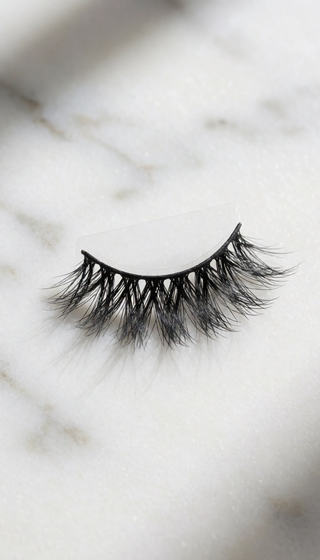
Strip lashes are a full band of fibers coated with a thin line of lash adhesive along the lash line. They are the most affordable and widely available option, with the biggest range of styles from natural to dramatic. They require adhesive (a common irritation source), take practice to apply evenly, and can lift at the corners if the band is stiff.
Individual clusters are small flare clusters of 5–15 fibers applied a few at a time along the lash line with lash glue. They give the most natural-looking, customizable result — you control density and placement — but they take the longest to apply, demand the most skill, and are the hardest to remove cleanly.
One more factor worth knowing: cost per wear. A budget strip lash worn only a handful of times can cost more per wear than a durable reusable pair. When you compare options, divide the cost by the number of times you will realistically wear it. Knowing how each type works makes everything below easier to apply to your own routine.
HEAD-TO-HEAD COMPARISON
| Factor | Magnetic | Strip | Individual Clusters |
|---|---|---|---|
| Application time | Under 1 minute | 3–10 minutes | 20–45 minutes |
| Skill level | Beginner-friendly | Beginner to intermediate | Intermediate to advanced |
| Look | Noticeable band on some eye shapes | Full, dramatic, or natural | Most natural, customizable |
| Reusability | High with proper care | Moderate | Low to moderate |
| Adhesive needed | No | Yes | Yes |
| Best for | Sensitive eyes, daily wear | Events, beginners on a budget | Natural looks, special occasions |
A quick note on cost per wear: a $10 strip lash worn five times costs $2 per wear — the same as a reusable pair worn 30 times. The cheaper pair only wins if you actually wear it out.
MATCH YOUR EYE SHAPE AND LIFESTYLE TO THE RIGHT LASH TYPE
Your eye shape determines which lash type sits most comfortably and looks most balanced:
- Almond: all three types work well. A thin-band strip lash is the easiest everyday win.
- Hooded: skip heavy full bands that disappear under the lid. Choose shorter fibers at the outer corner, or build with clusters.
- Monolid: look for a strongly curved, flexible band, or place clusters toward the outer corner to lift the eye.
- Round: center-weighted clusters or a wispy strip open the eye instead of closing it.
- Deep-set: build volume at the root with clusters, or choose a strip with a dramatic curl.
- Downturned: extend fibers toward the outer corner — a winged strip or outer-corner clusters lift the eye instead of dragging it down.
Your lifestyle matters just as much:
- Beginner or rushed mornings: magnetic lashes — under a minute, no adhesive, forgiving to apply.
- Budget-conscious: strip lashes — the lowest cost per pair and the widest style range.
- Salon look without the salon: individual clusters — the most customizable, natural result.
- Sensitive eyes or glue allergies: avoid adhesive entirely. Magnetic or glue-free options keep irritants off your skin.
Still torn between two types? Choose based on your biggest daily friction: if time is the problem, speed wins; if your eyes are the problem, glue-free wins; if the look is the problem, customizability wins.
APPLICATION AND REMOVAL TIPS THAT PROTECT YOUR NATURAL LASHES
- Never sleep in lashes. Adhesive and magnets both stress natural lashes overnight, and nighttime removal is when most breakage happens.
- Remove before you touch them. Use an oil-based remover for adhesive lashes; magnetic and glue-free strips lift away with fingertips. Never pull.
- Clean after every wear. Wipe magnetic and glue-free strips so the bonding surface stays strong; discard strip lashes when the band stiffens.
- Give your lashes a break. If you feel tugging, redness, or irritation, take 24 hours off.
- Apply clusters to the lash line, not the skin. Use the smallest amount of adhesive and let it get tacky for 20–30 seconds before placement.
- Let strip adhesive turn tacky. After applying glue to a strip, wait 20–30 seconds until it turns clear and tacky before placing the band — this is the single most effective fix for corners that lift.
- Contacts in last. Insert contact lenses after lash application so adhesive and fibers never trap under a lens.
- Prep your lash line. Start with clean, dry lashes free of mascara and oil-based products — residue weakens adhesion and causes lifting throughout the day.
WHAT TO LOOK FOR IN A QUALITY LASH
Whichever type you choose, the same five quality markers separate a lash you will actually wear from one that gathers dust:
- Weight. Lighter is better — heavy fibers pull on natural lashes and lift at the corners by midday.
- Band or profile. A flexible band (strip) or slim profile (magnetic) sits closer to the lash line and disappears against it.
- Fiber quality. Uniform, tapered fibers mimic real lashes; blunt-cut fibers read as fake.
- Adhesive safety. If a type uses glue, choose latex-free, formaldehyde-free formulas — or skip adhesive altogether.
- Reusability. A lash you can wear 30+ times costs less per wear than a disposable pair, even at a higher upfront cost.
Test before you commit: hold the lash up to your lash line in natural light. If the band or profile looks bulky against your eye, it will look bulky when worn. A quality lash should disappear against your lash line, not sit on top of it. Check the outer corner too — lifting almost always starts there first.
Before you decide, it helps to name the three objections that stop most people from wearing lashes daily — and what a good solution looks like:
- Glue and irritation: adhesive is the most common culprit behind itchy, red eyes. A quality glue-free option keeps irritants off your skin entirely.
- Durability: a lash that only survives a few wears costs more over time than one built for 30+ wears.
- Upfront cost: the real measure is cost per wear — one versatile pair that replaces dozens of disposables beats a drawer full of cheap options.
Keep those markers in mind — they are exactly what the option below was built around.
Application takes seconds per eye: press the strip along your lash line, adjust once, and go. Removal is just as fast — no solvent, no pulling, no damage to your natural lashes. With 17 styles ranging from soft everyday wisps to full-volume glam, there is a pair for every eye shape and occasion.
PHANSTA LASHES: THE GLUE-FREE ANSWER TO EVERY DRAWBACK ABOVE
If glue irritation, lifting bands, and the cost of disposable lashes keep you from wearing lashes daily, PHANSTA LASHES were built to remove those barriers. Instead of adhesive, PHANSTA LASHES use a glue-free micro-adhesion technology that bonds the strip to your natural lash line in seconds — no glue, no magnets, no liner, and nothing irritating touching your skin.
At $59, each pair delivers 30+ wears — that's under $2 per wear, less than a disposable strip lash worn just a handful of times. The hypoallergenic, waterproof design means you can wear them through workouts, showers, and long days without irritation or lifting. And because there's no glue, there's no drying time, no mess, and no residue to clean off your lash line at night.
Every quality marker above is built into the design: a lightweight strip that disappears against the lash line, a slim profile with no bulky band, and a bonding surface that stays strong wear after wear — so the only objection left is which style to wear first.

FREQUENTLY ASKED QUESTIONS
Are magnetic lashes better than strip lashes?
Neither is universally better — they solve different problems. Magnetic lashes win on speed and reusability since no adhesive touches your skin, while strip lashes win on upfront cost and style range. If you have sensitive eyes or rushed mornings, magnetic is the easier daily option; if you want variety on a budget, strip lashes are hard to beat.
Can you wear individual clusters every day?
You can, but they demand the most time and skill of the three types. Clusters take 20–45 minutes to apply and need careful placement to look even, so they suit special occasions or unhurried routines. For daily wear, most people find a faster option far easier to stick with.
How do you remove strip lashes without damaging your natural lashes?
Never pull a strip lash straight off. Soak a cotton pad with an oil-based lash remover, hold it against the lash line for 20–30 seconds to dissolve the adhesive, then slide the band away from the inner corner outward. If you feel resistance, reapply remover and wait — pulling is what breaks natural lashes.
How long do strip lashes last?
It depends on the type and the care they get. Disposable strips are built for a few wears, while reusable strips can last much longer when you wipe away adhesive residue after each wear, store them in their case, and keep them away from oil-based products.
Which lash type is best for sensitive eyes?
Any option that keeps adhesive off your skin is the safest choice for sensitive eyes. Glue-free styles eliminate the most common irritation source entirely, and a hypoallergenic, waterproof design stays comfortable through workouts, showers, and long days without redness or itching.
STILL COMPARING OPTIONS? Explore our guides on finding your perfect lash, magnetic vs strip, and sensitive eyes.
FIND THE PERFECT LASH — Not sure which style suits you? Take the 30-second lash finder quiz →
SHOP PHANSTA LASHES — GLUE-FREE, 30+ WEARS →
NOT SURE ABOUT YOUR EYE SHAPE?
Find your eye shape and get personalized lash recommendations:
FIND THE PERFECT LASH FOR EVERY MOMENT
Explore our occasion-specific lash guides:
EXPERIENCE THE DIFFERENCE
Join thousands of women who have made the switch. No glue, no damage, no salon appointments — just beautiful lashes in seconds.
SHOP PHANSTA LASHES →