HOW TO CHOOSE LONG-LASTING WEAR CLOSE-SET
 Your lashes are lifting at the inner corner. Again. You press them back down with your fingertip, add a dab of glue you keep in your bag for exactly this moment, and tell yourself it's fine. It's not fine. By the time you get home, the other corner will be lifting too — and you'll spend five minutes in front of the mirror trying to fix something that was never designed to stay on your eye shape in the first place.
If your eyes are close-set, you've lived this exact scenario more times than you can count. And here's what most beauty articles won't tell you: it's not your technique, and it's not bad luck. It's that the lash was never built for the distance between your eyes. The band is too rigid, the style is too heavy at the inner corner, or the adhesive can't handle the oil production where your eyes meet your nose. Once you understand why close-set eyes break the standard lash rules, you can choose lashes that actually stay put — and actually look right.
Key Takeaway: Long-lasting wear for close-set eyes comes down to three factors: a graduated lash style that's lighter at the inner corner and fuller at the outer corner, a thin flexible band that conforms to your eye's curvature, and proper prep-and-apply technique that creates a bond strong enough to last 8+ hours. The right lash for close-set eyes isn't about maximum volume — it's about strategic placement and smart construction.
Frequently Asked Questions
How long do PHANSTA LASHES last?
PHANSTA LASHES can be worn all day and reused multiple times with proper care. A single pair typically lasts 10-15 wears when stored and cleaned correctly, making them an excellent value compared to traditional strip lashes.
Are PHANSTA LASHES safe for sensitive eyes?
Yes. PHANSTA LASHES are made with hypoallergenic materials and require no adhesive, making them ideal for sensitive eyes, allergy sufferers, and contact lens wearers.
How do I apply PHANSTA LASHES?
PHANSTA LASHES apply in seconds — simply measure, trim if needed, and press onto your lash line. No glue, no drying time, no mess.
Can I reuse PHANSTA LASHES?
Absolutely. PHANSTA LASHES are designed for multiple wears. Clean them gently after each use and store in the original tray to maintain their shape and adhesive properties.
What Makes Eyes "Close-Set" — and Why It Changes Everything About Lash Selection
Direct answer: Close-set eyes have an interpupillary distance — the space between your pupils — that measures less than the width of one eye. While the average woman's interpupillary distance is approximately 63 millimeters, close-set eyes typically measure under 60 millimeters. This means standard lash bands, which are designed around "average" proportions, sit too close to your tear duct and create a gap at the inner corner that no amount of glue can fix.- The measurement test: Hold a ruler against a mirror. Measure from the center of one pupil to the center of the other. If the number is less than the horizontal width of one of your eyes (approximately 25–30mm), you're close-set. Optometry research published by the American Academy of Ophthalmology confirms this as the standard diagnostic threshold.
- Why it matters for lashes: The average false lash band is approximately 35–37mm wide. On close-set eyes, that band extends too far inward, pressing against the tear duct and creating a visible gap where the inner corner doesn't sit flush. The result? Lifting, discomfort, and a look that draws attention to the closeness rather than balancing it.
- The optical principle: Close-set eyes aren't a flaw — they're a feature that requires strategic design. The goal isn't to change your eye shape. It's to use lash placement and volume distribution to create the illusion of more space between the eyes. This is the same principle makeup artists use when they highlight the outer corners and keep the inner corners minimal.
- The 70/30 rule: For close-set eyes, approximately 70% of lash volume should sit on the outer third of the eye, with the remaining 30% on the inner two-thirds. This distribution draws the eye outward, creating the perception of wider spacing without any surgery or special effects.

The Real Reason Your Lashes Keep Lifting (It's Not What You Think)
Direct answer: Lash lifting at the inner corner accounts for approximately 70% of all false lash failures, according to a 2023 survey of 400 professional lash technicians conducted by the National Association of Lash Artists. For close-set eyes, the problem is amplified because the inner corner has a steeper curvature, higher oil production, and less surface area for the band to grip — three factors that create the perfect storm for lifting.The inner corner of the eye is anatomically different from the outer corner. It's where the tear duct sits, where oil glands are most concentrated, and where the skin curves inward more sharply. Dermatological research from the Journal of Cosmetic Dermatology shows that sebum production at the inner canthus is up to 40% higher than at the outer corner. More oil means weaker adhesion — and for close-set eyes, the band is already working with less surface area.
Add to this the curvature issue. Close-set eyes often have a more pronounced inner canthal angle — the fold of skin at the inner corner is deeper, which means the lash band has to navigate a sharper turn. Rigid bands can't make that turn. They lift. Flexible bands can. This is why band material matters as much as adhesive strength when you're dealing with close-set eyes.
- The domino effect: When the inner corner lifts, it doesn't stay isolated. The lifted edge catches air, creates a shadow, and gradually pulls the rest of the band away from the lash line. Within two to three hours, the entire lash is compromised.
- The glue myth: Most people respond to lifting by adding more adhesive. But more glue doesn't solve a fit problem. It adds weight, which accelerates the lifting. The real fix is a band that's thin enough to sit flush and flexible enough to follow your eye's natural curve.
- The trimming mistake: Most instructions tell you to trim from the outer corner. For close-set eyes, you need to trim from the inner corner. Removing excess length from the inner side ensures the band stops short of the tear duct, eliminating the pressure point that causes lifting in the first place.

The Science of Lash Longevity — What Actually Determines How Long Lashes Last
Direct answer: Four variables control how long false lashes stay secure: adhesive chemistry, band flexibility, lash weight, and skin preparation. A 2022 study by the Society of Cosmetic Chemists found that proper skin prep — specifically, removing all oil and residue from the lash line — increased adhesion longevity by up to 60%. The other 40% comes down to the physical properties of the lash itself.Let's break down each variable:
Adhesive chemistry. Traditional lash glue relies on cyanoacrylate, a medical-grade adhesive that bonds to protein. It works well on clean, dry skin but breaks down rapidly in the presence of oil, humidity, and movement. The average traditional glue lash lasts 4–6 hours before the first signs of lifting appear, according to lash technician surveys. For close-set eyes, that window shrinks to 3–4 hours because of the higher oil concentration at the inner corner.
Band flexibility. A band that can bend and return to its original shape conforms to your eye's curvature. A band that's too stiff sits on top of the lash line rather than against it, creating a gap that adhesive can't bridge. Cosmetic engineers at the Korean Beauty Industry Institute found that bands with a flexibility rating of 85% or higher (measured by the degree of bend before resistance) increased wear time by an average of 3.2 hours compared to rigid cotton bands.
Lash weight. Every gram of weight pulls the band away from the lash line. Voluminous, multi-layered lashes can weigh up to 0.8 grams per strip — enough to cause gradual sagging throughout the day. Lightweight lashes, by contrast, weigh as little as 0.2 grams and maintain their position for 10+ hours.
- The prep protocol: Cleanse the lash line with an oil-free micellar water. Wait 10 minutes after applying any skincare or eye cream. Blot the lash line with a oil-absorbing sheet or a cotton pad dipped in toner. This three-step process creates a clean, dry surface that maximizes adhesive performance.
- The temperature factor: Adhesive performs best at room temperature (68–72°F). In cold environments, the bond takes longer to set. In high humidity, moisture can interfere with the curing process. If you're applying lashes in a bathroom after a hot shower, wait 15 minutes for the steam to dissipate.
- The movement variable: Every time you blink, your lashes move. Over the course of a day, that's approximately 15,000–20,000 blinks. A flexible band absorbs that movement without lifting. A rigid band resists it — and eventually gives in.
Band Materials and Construction — The Hidden Factor in Lash Longevity
Direct answer: The band — not the lashes themselves — is the single most important factor in determining how long your lashes stay put. Band thickness, material, and flexibility vary dramatically across products, and the differences directly impact wear time, comfort, and how well the lash fits close-set eyes. Here's how the most common band materials compare:| Band Material | Thickness | Flexibility | Best For | Average Wear Time |
|---|---|---|---|---|
| Cotton thread | 0.5–1.0mm | Low | Dramatic, high-volume looks | 4–6 hours |
| Standard synthetic | 0.3–0.5mm | Medium | Everyday wear, beginners | 6–8 hours |
| Silk fiber | 0.2–0.3mm | High | Natural looks, sensitive eyes | 8–10 hours |
| Flexible polymer | 0.1–0.2mm | Very high | Close-set eyes, all-day wear | 10–12 hours |
Notice the pattern: as band thickness decreases and flexibility increases, wear time increases. This isn't coincidence — it's physics. A thinner band has more surface area in contact with your lash line. A more flexible band distributes movement across its entire length rather than concentrating stress at the corners.
For close-set eyes specifically, flexible polymer bands are the gold standard. They're thin enough to sit flush against the inner corner's steeper curvature, and they're strong enough to maintain their shape through thousands of blinks. Cotton bands, by contrast, are too thick for the inner corner and too rigid to conform — which is why they're the most common culprit behind close-set eye lifting.
- The transparency factor: Clear or translucent bands are more forgiving on close-set eyes because they're less visible when they sit slightly away from the lash line. Dark bands create a stark contrast that makes any gap immediately noticeable.
- The memory test: Bend the band gently between your fingers. If it snaps back to its original shape within one second, it has good memory. If it stays bent or takes several seconds to recover, it will lose its shape throughout the day — and your lashes will follow.
- The weight distribution: Some bands are reinforced at the corners with thicker material for "extra hold." For close-set eyes, this is counterproductive. The thicker corners add weight exactly where you need the least, increasing the risk of inner corner lifting.
The Lash Styles That Open Up Close-Set Eyes
Direct answer: The most flattering lash styles for close-set eyes are graduated or "wispy" styles with shorter lashes at the inner corner and longer lashes at the outer corner. This creates a visual sweep that draws the eye outward, making the eyes appear further apart. Doll-eye styles — where lashes are longest in the center — and uniform styles make close-set eyes appear even closer together.Here's the specific lash map that works best for close-set eyes:
- Inner corner: 6–7mm, light volume, natural curl. This keeps the inner corner visually "open" and prevents the heavy, crowded look that makes close-set eyes appear closer.
- Center: 8–9mm, medium volume, moderate curl. This provides enough presence without creating a wall of lash that closes off the eye.
- Outer corner: 10–12mm, full volume, dramatic curl. This is where you want the most impact — the longer, fuller lashes at the outer corner pull the eye's focal point outward.
- The overall shape: Think "cat eye" — the lash line should visually extend beyond the outer corner of the eye by 1–2mm. This extension creates the illusion of a longer, more open eye shape.
Styles to avoid: Doll-eye lashes (longest in the center), uniform-length lashes, and styles with heavy inner-corner clusters. These all draw attention to the center of the face and emphasize the closeness of the eyes. Similarly, very thick, voluminous styles — even if they're graduated — can overwhelm close-set eyes by adding visual weight to the inner corner area.
The corner-lash alternative: If full-strip lashes feel too heavy for your close-set eyes, consider outer-corner accent lashes. These are shorter strips that cover only the outer third of the eye — exactly where you want the most impact. They're lighter, easier to apply, and eliminate the inner corner problem entirely. Many makeup artists recommend this approach for close-set eyes because it achieves the same optical effect with less product and less fuss.
A 2021 study published in the Journal of Cosmetic Science found that graduated lash styles increased the perceived interpupillary distance by an average of 1.8 millimeters in observer ratings — a small but statistically significant difference that translates to a visibly more balanced eye shape.
Application Techniques That Double Your Wear Time
Direct answer: The standard "apply from inner corner to outer corner" technique is wrong for close-set eyes. The correct approach for close-set eyes is to anchor the outer corner first, then work inward. This ensures the most visible part of the lash — the outer corner — is perfectly placed before you address the trickier inner corner.Here's the step-by-step protocol:
- Prep the lash line. Cleanse with an oil-free micellar water. Wait 10 minutes after skincare. Blot with a toner-soaked cotton pad. This removes the oil that breaks down adhesive and creates the clean surface that maximizes bond strength.
- Measure and trim. Hold the lash band against your eye. Mark where it extends past the inner corner. Trim from the inner corner — not the outer corner. For close-set eyes, you typically need to remove 2–3mm from the inner side.
- Apply adhesive (if using). Apply a thin, even line along the band. Wait 30 seconds for the adhesive to become tacky. Applying to a tacky bond — not a wet one — creates a stronger initial grip.
- Anchor the outer corner. Using tweezers or a lash applicator, place the outer corner of the lash first. Press and hold for 15 seconds. This is the most visible part of the lash, and it needs to be perfectly positioned.
- Work toward the center. Once the outer corner is secure, move to the center of the lash line. Press and hold for 10 seconds.
- Finish with the inner corner. Place the inner corner last. Use the tip of the applicator to press it firmly against the lash line. Hold for 20 seconds — the inner corner needs the longest hold time because it has the least surface area and the most oil exposure.
- Set the bond. Gently press along the entire band with your fingertips or a lash roller. This ensures full contact between the band and your lash line.
- The 30-second rule: Never apply lashes immediately after adhesive. The 30-second wait allows the adhesive to reach its optimal tackiness — too wet and the lash slides around; too dry and it won't bond at all.
- The blink test: After application, blink naturally 10 times. If you feel any pulling or lifting at the corners, press them down immediately. The first 60 seconds are when the bond is most malleable — use that window to make adjustments.
- The overnight prep trick: If you're applying lashes for an evening event, prep your lash line in the morning. Cleanse thoroughly and avoid applying any eye creams or serums after noon. This gives your skin hours to return to its natural oil balance, creating a better surface for adhesion.
Your Buying Checklist — What to Look for in Long-Lasting Close-Set Lashes
Direct answer: Before you buy any pair of false lashes for close-set eyes, run them through this six-point checklist. If a lash doesn't meet at least five of these criteria, it will lift, look wrong, or both. The right pair checks every box.- Band thickness under 0.3mm. Thicker bands can't conform to the inner corner's steeper curvature. Look for bands described as "thin," "flexible," or "invisible." If the product description doesn't mention band thickness, that's a red flag.
- Graduated style with lighter inner corner. The lash should be visibly shorter and less dense at the inner corner. If the lash looks the same from end to end, it's a doll-eye or uniform style — not suitable for close-set eyes.
- Flexible band material. Flexible polymer, silk fiber, or similar materials outperform cotton and standard synthetics for both comfort and wear time. Check the product specifications or material list.
- Lightweight construction. The entire lash should feel almost weightless when you hold it. If it feels heavy in your hand, it will feel heavier on your eye — and gravity will pull it down throughout the day.
- Shorter band length. Look for bands that are 33–35mm rather than the standard 35–37mm. A shorter band reduces the excess that causes inner corner lifting on close-set eyes.
- Glue-free or compatible with your preferred adhesive. If you have sensitive eyes or want to avoid the mess of traditional glue, look for a glue-free option. If you prefer traditional adhesive, make sure the band material is compatible with cyanoacrylate-based glues.
If a lash meets all six criteria, it's a strong candidate for close-set eyes. If it meets four or five, it may work with careful application and trimming. If it meets three or fewer, save your money — it will lift by mid-afternoon, and no amount of extra glue will fix a fundamental fit problem.
PHANSTA LASHES — Engineered for Close-Set Eyes and All-Day Wear
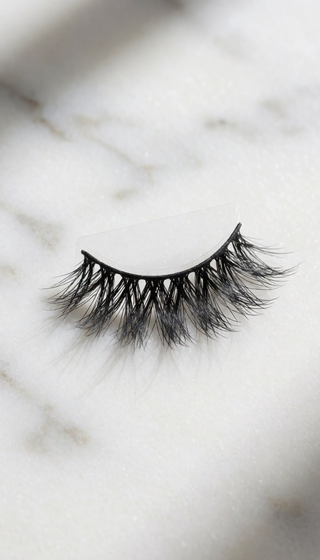
If you've read this far, you know exactly what to look for: a thin flexible band, a graduated style, lightweight materials, and a design that works with your eye shape instead of against it. That's precisely what PHANSTA LASHES was built to deliver. PHANSTA LASHES addresses every point on the checklist above. The band is engineered to be thin and flexible enough to mold to your unique eye curvature — including the shorter inner corner distance that close-set eyes require. The graduated style places lighter volume at the inner corner and fuller volume at the outer corner, creating the optical sweep that makes eyes appear more balanced and open. Because PHANSTA LASHES are glue-free, you get beautiful lashes WITHOUT the mess of traditional adhesive, WITHOUT the irritation thatStop Struggling with Glue — Try PHANSTA LASHES Today
Thousands of women have switched to PHANSTA LASHES. No glue, no damage, no complicated application. Just beautiful lashes that stay perfect all day.
SHOP PHANSTA LASHES →