DO YOU NEED WATERPROOF LASH GLUE IN SUMMER?
DO YOU NEED WATERPROOF LASH GLUE IN SUMMER? DECIDE IN MINUTES
You may need waterproof lash glue when your lashes will meet predictable moisture, such as pool splashes, ocean spray, heavy sweat, or a long event. If your routine has little direct water and your current adhesive lasts through a normal day, “waterproof” is not automatically better. A stronger-sounding formula can also be harder to remove.
Use a three-part decision: list the activities you expect, note how many hours the lashes will be worn, and identify whether you have sensitive eyes or a history of adhesive reactions. Then test the exact glue-and-lash combination under realistic conditions. The label alone cannot predict performance because lash fiber, band, glue amount, skin oil, humidity, rubbing, and curing time all affect the result.
Simple rule: if direct water is occasional and your current method stays comfortable, do not change it solely for the season. If water exposure is predictable or glue has left you irritated, prioritize a method that avoids repeated wet adhesive use. If your eyes sting, water, look red, or feel itchy, remove the lashes and stop using the product; more glue is never the answer to irritation.
HOW TO TEST “WATERPROOF” PERFORMANCE FOR YOUR LASHES
“Waterproof” describes an intended level of water resistance, not protection against every real-world condition. Adhesive performance can change with the lash material, amount used, skin oil, humidity, heat, rubbing, and setting time. Follow the manufacturer’s directions and allow the full stated setting time; using extra adhesive can increase residue and make cleanup harder.
- Choose the exact strip and adhesive you intend to use; a result with one lash does not guarantee the same result with another.
- Apply the adhesive as directed instead of building an extra layer.
- Wait for the labeled set time before exposing the bond to heat, moisture, or rubbing.
- Test only conditions you genuinely expect, and note the elapsed wear time.
- Compare more than initial hold: comfort, lifting, and ease of removal matter too.
Hot water, vigorous rubbing, and cleansing oils may loosen residue even when a lash looks secure. Conversely, a lash that survives water can still lift from the skin through friction. Treat “waterproof” as one variable in a real wear test, not permission to handle glued lashes more roughly.
WHICH SUMMER ACTIVITIES PUT LASHES AT RISK?
Start by matching each activity to its main stress. Water, salt, chlorine, sweat, heat, sunscreen, and rubbing create different challenges, so one product label cannot replace a full wear forecast.
- Swimming or splashing: Pool chemicals and repeated wetting can be more demanding than a few accidental drops.
- Beach days: Saltwater, sand, sunscreen, and towel-drying add moisture plus friction.
- Hot or humid weather: Sweat and skin oil can collect along the lash line while makeup shifts throughout the day.
- Long events: Hours of wear create more opportunities for touching, bending, and rubbing against the eye area.
- Waterproof makeup products: These may be designed for the face or eyes, but their formula may not be suitable as a lash adhesive or easy to remove.
For occasional splashes, pat the area dry rather than rubbing it. For planned swimming or beach wear, decide whether the expected exposure justifies an additional removal step before applying the lashes.
PATCH-TEST AND PROTECT SENSITIVE EYES
Tolerance matters more than a water-resistance claim. A product can perform well and still be inappropriate for reactive skin. Read the ingredient list and directions, inspect the container, and never use adhesive that has dried out, separated, or leaked.
- Clean and dry your hands and the intended skin area before opening the adhesive.
- Test a small amount on intact skin only as the label directs; a lash trial is not a substitute for watching for a delayed reaction.
- If you wear contacts, remove them before applying lashes and glue, then handle the products with clean, dry hands.
- Wait the label-specified monitoring period and note redness, itching, swelling, burning, or a rash.
- Stop and wash the area if a reaction appears; do not neutralize it with more product or a harsh solvent.
FDA SAFETY GUIDANCE: The U.S. Food and Drug Administration advises consumers to use cosmetic products as directed, wash their hands before application, and stop using a product if irritation develops.
If adhesive enters an eye, rinse with lukewarm water. Remove contacts if present and seek medical advice for persistent pain, vision changes, marked redness, light sensitivity, or discharge; those symptoms should not be managed simply by changing lash glue.
APPLY LASHES FOR A LOW-FRICTION SUMMER DAY
Application technique can matter as much as the label. Make the lash line as clean and dry as practical, then follow the adhesive and lash directions exactly.
- Blot excess oil without aggressively rubbing the lash roots.
- Place the band where it will sit comfortably before the glue begins setting.
- Use the amount specified; a thick flood around the edge often increases residue and removal stress.
- Press along the band as directed, then keep hands away while the bond sets.
- Allow hair spray, mascara, and facial products to dry before getting close to the lash line.
- Treat a lifting edge as a cue to remove and replace the lash, not to pile on more adhesive.
During the day, avoid rubbing and sleeping on your side. If you need to blot, use the surrounding skin and pat outward. These habits lower mechanical stress even when the glue is labeled for water resistance.
REMOVE LASHES GENTLY AND NEVER REUSE MOST STRIP LASHES
Removal is the final test. Waterproof formulas often require more patience, but extra force is never the recommended solution. The less you pull along the lid margin, the better the experience is for the skin and natural lashes.
- Remove lashes before sleep when possible so you do not press the band into the skin for extra hours.
- Use a remover made for the adhesive and follow its directions; some formulas require an oil-based cleanser while others need time to loosen.
- Loosen the band at the outer corner and peel slowly away from the eye. Hold the skin taut only enough to keep it still.
- Wipe residue away from the eye; do not scrub or use cotton soaked with harsh solvent on the lash line.
- Discard disposable strip lashes after their intended use. Reusing them can make placement less accurate and is not consistent with good hygiene.
Persistent redness, swelling, pain, or discharge deserves professional care rather than repeated home remedies. Ongoing symptoms can point to skin irritation, an eye-surface problem, or contact-lens irritation that lash glue alone will not solve.
CHOOSE THE LASH APPROACH THAT FITS YOUR SUMMER PLAN
Use this final framework before deciding how to wear lashes in heat.
- If you need direct water protection: Use an adhesive only if its directions and a realistic wear test support that exposure; otherwise, choose a no-glue system designed for your actual conditions.
- If you have sensitive eyes or a reaction history: Reduce avoidable adhesive exposure and select a clearly described, irritation-conscious mechanism. Hypoallergenic never means reaction-proof.
- If you want the simplest summer routine: Consider micro-adhesion, which places a lash without liquid glue or adhesive residue.
- If you will mostly stay dry: Your existing lashes and adhesive may already be sufficient.
The useful question is not “Which label sounds strongest?” It is “Which method will stay comfortable through my actual day and come off without a fight?” Once that standard is clear, the right solution follows naturally.
The collection offers 17 styles, and each pair is $59. With 30+ wears, the stated cost is under $2 per wear. Choose the length and density that match your desired look, then follow the fit directions without forcing the outer corner upward.
PHANSTA LASHES: A GLUE-FREE ANSWER FOR SUMMER WEAR
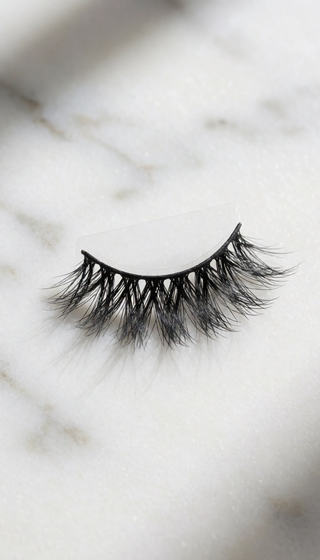
PHANSTA LASHES are the natural answer when the priority is summer-ready wear without liquid glue. Their micro-adhesion system holds each lash without glue, magnets, or a liner, replacing adhesive curing and residue with guided placement and straightforward care. For readers who want waterproof wear without glue in the routine, it directly addresses the concerns outlined above.
- Glue and irritation: There is no liquid glue layer to apply or remove, and the lashes are hypoallergenic. Individual skin and eye sensitivity still varies.
- Durability: Each pair is designed for 30+ wears; careful placement, removal, and storage still affect the result.
- Cost per wear: At $59 per pair with 30+ wears, the stated cost is under $2 per wear.
For summer use, begin with clean, dry lashes, avoid rubbing the band, and remove gently when finished. Follow all placement and care directions, and stop using any cosmetic if irritation occurs. Waterproof performance does not make forceful removal or rough handling appropriate.
SHOP PHANSTA LASHES — GLUE-FREE, 30+ WEARS →
FREQUENTLY ASKED QUESTIONS
DO I NEED WATERPROOF LASH GLUE FOR A BEACH DAY?
If your lashes will be near seawater, sand, or repeated splashes, water resistance may help. If you are staying dry or taking photos by the water, your current method may be enough. Test the exact combination first, allow the full set time, and remember that rubbing and towels can loosen a bond even when water resistance is strong.
IS WATERPROOF LASH GLUE SAFE FOR SENSITIVE EYES?
There is no universal safety guarantee for any cosmetic adhesive. Read the ingredients and directions, avoid the eye surface, and test on intact skin as directed. Stop using it if redness, itching, swelling, burning, or pain develops. People with a reaction history or active eye symptoms should ask a qualified clinician before adding another lash adhesive.
HOW DO I REMOVE WATERPROOF LASH GLUE SAFELY?
Follow the adhesive and remover directions, loosen the outer edge, and peel slowly away from the eye without pulling the lid skin. Wipe residue away and avoid scrubbing or solvents on the lash line. If glue enters the eye, rinse with lukewarm water; persistent pain, redness, light sensitivity, or vision changes warrant medical care.
CAN I REUSE STRIP LASHES AFTER A SUMMER WEAR?
Do not reuse disposable strip lashes unless their manufacturer explicitly permits it. Natural oils, debris, and changes to the band can affect placement and increase exposure to leftover material. After one wear, discard the lash as directed. Reusable lashes are different: remove residue according to the care instructions and inspect the band before the next use.
ARE GLUE-FREE MICRO-ADHESION LASHES A BETTER SUMMER OPTION?
They can be a simpler option when you want to avoid liquid lash glue without adding magnets or a liner. Micro-adhesion still requires correct placement, clean handling, and careful removal. PHANSTA LASHES are waterproof, hypoallergenic, and designed for 30+ wears, but no cosmetic is reaction-proof and individual use results vary.
STILL COMPARING OPTIONS? Explore our guides on finding your perfect lash, magnetic vs strip, and sensitive eyes.
FIND THE PERFECT LASH — Not sure which style suits you? Take the 30-second lash finder quiz →