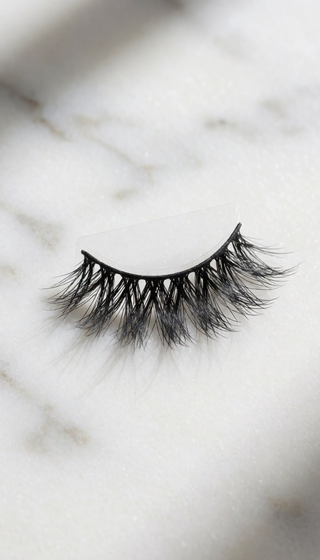
THE TRUTH ABOUT REUSABLE LASH HYGIENE
THE TRUTH ABOUT REUSABLE LASH HYGIENE: KEEP LASHES CLEAN, FLUFFY, AND STRONG
Reusable lashes can be worn repeatedly without accumulating makeup, skin oils, old adhesive, and moisture, but they are more likely to retain their shape when residue is ignored or the band is cleaned, dried, or stored badly. Losing curl, fraying, or developing a band that will not sit evenly are usually maintenance signals rather than proof that every reusable lash is inherently disposable.
After every wear, remove each lash gently, deal with any adhesive only as its system directs, cleanse the band and fibers with a compatible product, reshape the curve, and let every part dry fully before storage. If glue is present, lift or peel it away in one smooth motion instead of picking residue from the fibers. If no adhesive is used, do not scrub a clean band simply because you expect glue to be there.
If a band stays sticky, smells unusual, or will not dry, do not store it. Repeated cleaning will not reliably repair fused fibers or a permanently warped band. Redness, swelling, pain, or discharge needs attention from an eye-care professional rather than another cleaning attempt.
WHY REUSABLE LASHES LOSE CURL OR COLLECT RESIDUE
Most shape and hygiene problems come from three recurring mechanisms: chemicals that weaken fibers, mechanical stress, and residue held near the band. Treating only the visible curl while leaving the underlying band dirty can preserve the wrong shape for the next wear.
1. CHEMICAL DAMAGE FROM HARSH CLEANSERS
Standard hand soap and strong detergent are effective because surfactants lift oils, but those same surfactants can strip a fiber finish or embrittle delicate synthetic material. Alcohol, acetone, fragranced wipes, and hot water may discolor the band, disturb the curl, or make fibers brittle. Use the mildest cleanser the lash manufacturer permits rather than assuming a stronger product cleans more thoroughly.
2. MECHANICAL STRESS FROM HANDLING
Dried glue can make a band rigid, so picking at it may pull individual fibers away from the base. Twisting a wet band, pressing it onto a damp surface, or blotting it with a crumpled towel can set a bent or flattened curve. Handle the band from its edges and support the full row of fibers whenever possible.
3. RESIDUE AND MOISTURE
Makeup, skin oils, dead skin, and old adhesive can lodge around the base of fibers. Moisture plus this organic debris can create conditions that support microbial growth, especially when damp lashes are stored in a closed case. Residue can also stiffen the band and irritate the lash line through rubbing. Cleanliness matters, but no routine should promise that a quick rinse sterilizes every lash.
THE GENTLE 3-STEP CLEANING ROUTINE
Use this sequence after every wear, adjusting it only when the lash maker’s care instructions require a different method. The goal is to remove residue without abrading fibers or forcing the band out of shape.
- Breakdown: Lift each lash away from the eye with clean hands. If the system uses traditional glue, follow the adhesive-removal directions and release the band in one smooth motion. Never pick dried glue directly from the fibers, and do not pull the lash sideways against the natural lashes.
- Deep cleanse: Put one pair in a clean dish with lukewarm water and a lash-compatible cleanser. If the directions specifically allow micellar water or an oil-free cleanser and call for a 60-second soak, follow that contact time. Swish the band gently; do not scrub, twist, or leave it soaking longer without instruction.
- Shape lock: Use clean fingers or a soft brush to align the fibers, then pat the band dry with a lint-free cloth. Place the lash in a clean tray or case that supports its intended C-curve. Change the water or cleansing solution between pairs rather than washing several pairs in the same dirty dish.
Rinse only when the cleanser directions call for it. A visible speck remaining after a gentle cleanse may need another careful pass; it does not justify scrubbing. More product is not automatically better cleaning.
DRY AND STORE LASHES TO PRESERVE THE C-CURVE
The band often remembers the shape it had while drying. Laying it across a crumpled towel, balancing it on a narrow ledge, or closing its case while damp can create bends, shrinkage, and trapped moisture. A supported tray keeps the band at a consistent height while it dries.
- Reshape: While the band is slightly damp, smooth the fibers into their intended direction and seat the full band in its tray. Do not add tension.
- Air-dry: Leave the tray open in a clean, ventilated place away from radiators, hair dryers, and direct sun until no cool or damp areas remain.
- Check: Touch only the edge. If the band feels cool, tacky, or heavy, give it more time rather than storing it.
- Store: Once fully dry, keep the case closed to protect the fibers from dust and pet hair. Clean the case whenever residue appears.
Use a separate tray for clean and used lashes, or line the case with a clean removable sheet. Never pile damp pairs together; one wet band can imprint another.
HYGIENE WITHOUT OVERCLEANING OR HOME STERILIZATION
Cleaning removes material; it does not automatically kill every microorganism. Do not count a short alcohol dip as a safe sterilization method for synthetic lashes. Skip rubbing alcohol, acetone, bleach, and household disinfectants unless a lash manufacturer specifically states that the exact product and method are compatible.
Do not share lashes. Clean hands and a clean case reduce transfer from the face, storage surface, and hands back onto the fibers. Makeup left on the band can also move into the lash line the next time it is worn, which matters more for someone with sensitive eyes or an active eye condition.
- Stop wearing lashes that remain sticky, smell unusual, or irritate the skin.
- Do not dilute a cleanser or add soak time unless its directions explain how.
- Do not share makeup applicators that have touched a used lash.
- Keep products in clean containers and avoid using lashes during an active eye infection.
Redness, itching, swelling, pain, or discharge can signal irritation or infection rather than simple dirt. Remove the lash, avoid rubbing, and seek advice from a qualified eye-care professional when symptoms persist or worsen. A stye involves an inflamed eyelid gland; it is not simply a dirty lash and should not be diagnosed by appearance alone.
WHAT TO LOOK FOR IN A REUSABLE LASH SYSTEM
If cleaning cannot fix recurring residue or the removal step still pulls at fibers, the routine may be part of the problem. Compare systems by the entire wear-and-care cycle, not by the style photo alone.
- Clear material and care directions: You should know what cleanser, water exposure, drying method, and storage conditions the maker intends.
- Residue-friendly removal: A band that avoids a peel-off glue strip can reduce buildup and mechanical cleanup.
- Shape support: The case or tray should hold the whole band without forcing it to bend.
- Verified tolerance and water resistance: Treat waterproof and hypoallergenic as labeled claims, not guarantees against every reaction.
- Realistic wear guidance: Use the stated care conditions and expected wear count to evaluate cost per application over time.
The key transition is simple: the best hygiene system minimizes dirt at the source, supports the band while it dries, and provides realistic removal and cleaning steps. If wear itself leaves an adhesive layer that must be picked away, reducing that layer may be more useful than adding more harsh cleaner.
A GLUE-FREE SYSTEM BUILT AROUND THAT INSIGHT
Three practical concerns determine whether this approach fits your routine:
- Glue and irritation: Micro-adhesion uses no traditional glue, magnets, or liner, so there is no peel-off glue strip. Clean the band as directed; glue-free does not mean maintenance-free.
- Durability: Waterproof construction and a care-supported 30+ wear life support repeated use when each pair is cleaned, reshaped, and stored dry.
- Cost: At $59, the stated 30+ wears bring the cost to under $2 per application, with 17 styles available.
The criteria lead to one clear design choice: remove the traditional adhesive-residue step. PHANSTA LASHES uses glue-free micro-adhesion, so the lashes use no adhesive, no magnets, and no liner. That removes a peel-off adhesive layer and simplifies both removal and cleaning without pretending that every used lash can be neglected.
PHANSTA LASHES are waterproof and hypoallergenic, and the same gentle post-wear routine still applies: lift them away, cleanse away makeup and oils, reshape, and air-dry fully. Hypoallergenic does not mean reaction-proof, so persistent redness, itching, swelling, or discomfort is a reason to stop wearing them.
FIND A LASH STYLE THAT SUITS YOUR EYE SHAPE
Eye shape can guide density and length, but there is no single mandatory style. Use these guides to narrow your options, then choose a comfortable weight that suits the effect you want.
FREQUENTLY ASKED QUESTIONS
HOW OFTEN SHOULD I CLEAN REUSABLE LASHES?
Clean reusable lashes after every wear, unless their care instructions specify otherwise. Lift them away gently, remove any adhesive according to the system’s directions, cleanse the band and fibers, reshape, and let them dry fully before storage. Delaying cleanup allows makeup, oils, and moisture to build up and can make residue harder to remove.
CAN I USE RUBBING ALCOHOL TO STERILIZE MY FALSIES?
Do not use rubbing alcohol to sterilize reusable lashes. It can dry or embrittle many synthetic fibers, strip their finish, and distort the band’s shape. Cleaning removes visible residue; it does not necessarily disinfect the lash. Use a cleanser compatible with the lash material and follow its directions.
WHAT IS THE BEST WAY TO ENSURE MY LASHES DRY CORRECTLY?
After cleansing, reshape the fibers with clean fingers or a soft brush and place the band in a clean case or rigid holder. Air-dry with the band supported and away from high heat. Do not put damp lashes in a closed bag or container; trapped moisture can distort the band and support microbial growth.
ARE GLUE-FREE LASHES SAFE FOR SENSITIVE EYES?
Glue-free does not mean reaction-proof, and “hypoallergenic” is not a guarantee. PHANSTA LASHES use micro-adhesion rather than traditional glue, magnets, or a liner, and are labeled hypoallergenic and waterproof. Stop wearing them if you develop redness, itching, swelling, pain, or discharge; persistent symptoms should be checked by an eye-care professional.
HOW MANY WEARS CAN I EXPECT FROM ONE PAIR?
With correct care, PHANSTA LASHES are designed for 30+ wears. Clean away makeup and oils after each application, reshape the band, let it dry completely, and follow the storage directions. Actual lifespan varies with condition and handling, so the wear figure is not permission to skip cleaning or ignore early fiber damage.
MAKE HYGIENE THE EASY PART OF YOUR LASH ROUTINE
SHOP PHANSTA LASHES — GLUE-FREE, 30+ WEARS →
STILL COMPARING OPTIONS? Explore our guides on finding your perfect lash, magnetic vs strip, and sensitive eyes.
FIND THE PERFECT LASH — Not sure which style suits you? Take the 30-second lash finder finder →