HOW TO LAYER FALSE LASHES FOR VOLUME
Achieve Dramatic Volume Without the Heavy, Fake Shelf Look
Master the art of layering false lashes to create dense, feathery volume that looks natural and stays put all day.

THE SCIENCE OF FEATHERED VOLUME: WHY STACKING FAILS
When attempting to maximize volume by applying multiple layers of false lashes, many users encounter a dense, heavy appearance that looks unnatural and begins to lift prematurely at the outer corners. This often happens because the lashes being layered share the same shape and density. When you stack fibers of identical length and thickness, they tend to clump together rather than separate into the desired, airy, feathery volume. Achieving true volume requires strategic variation in the lash profile across the lash line.
PREPARATORY STEPS FOR A STABLE LASH BASE
The foundation of any successful lash application, especially layering, begins with the natural lashes and the lid preparation. Start with natural lashes that have been professionally curled. Apply a very thin, light coat of mascara through your natural lashes. The purpose of this initial coat is not to add color, but to create a tacky, slip-resistant surface. Allow this mascara to set for approximately 30 seconds. This tacky base provides a necessary grip, ensuring that subsequent layers adhere securely without sliding or shifting throughout the day.
THREE STRATEGIC TECHNIQUES FOR REAL VOLUME
To build dimension without creating a monolithic block of lashes, consider these three proven layering techniques:
- Flared Outer Layer Over Short Base: By stacking a lash with a flared outer corner over a shorter, more natural-looking lash, you successfully introduce length and dramatic fullness at the ends while maintaining density in the center, preventing a cartoonish effect.
- The Underside Wispy Layer: Applying a wispy lash upside down beneath your natural lash line is a technique that adds significant perceived volume and fullness without altering the overall outer shape or length profile of the lash.
- Asymmetrical Application: Apply a full lash strip first, then strategically place a half lash only on the outer third of the lash line. This method intensifies the wing effect and adds targeted drama where it is most needed.
CRITICAL CRITERIA FOR LAYERABLE LASH STRIPS
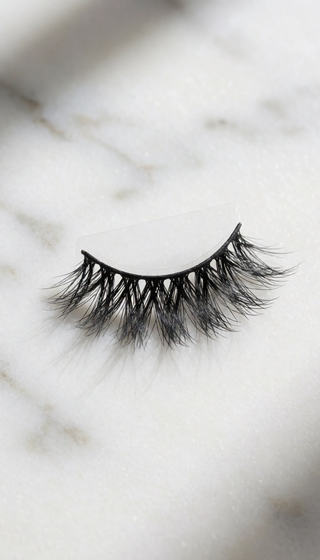
Not all false lashes are created equal when it comes to layering. The optimal lashes for this technique must possess a thin, highly flexible band and fibers that are adequately spaced apart to allow for blending. If the fibers are too dense or heavy, they will inevitably clump together, negating the volume benefit. A useful rule of thumb is to ensure you can visually perceive space between the individual strands; this spacing is what allows for beautiful, separated volume.
UNDERSTANDING LASH APPLICATION MAINTENANCE
When incorporating mascara into the layering process, it is crucial to manage application timing. Applying mascara between layers or allowing the initial layers to dry completely before adding more prevents clumping. Conversely, applying mascara directly over a fully layered set can cause the false fibers to adhere to each other in an undesirable way. Furthermore, to ensure the health of your natural lashes, removal must be gentle. The minimal weight of two strips is usually manageable, but the risk lies in aggressive removal. Always prioritize using an oil-based remover and allowing sufficient soaking time to break the adhesion safely.
THE SOLUTION: LASHES BUILT FOR LAYERABLE VOLUME
After extensive testing and analysis of lash construction, PHANSTA LASHES has engineered a formula specifically designed to handle layering. Their strips feature lightweight construction and precise fiber spacing, allowing them to layer seamlessly. This results in a dramatic, voluminous look that maintains a natural appearance and feels comfortable throughout the day.
FREQUENTLY ASKED QUESTIONS
Can I layer lashes with mascara?
Yes, but timing is key. Apply mascara between layers or ensure the initial layers are completely dry before adding more. Applying mascara after the layering process is complete can cause the false fibers to clump together, ruining the intended volume.
Will layering damage my natural lashes?
Damage is unlikely if removal is gentle. While the weight of two strips is minimal, the risk comes from pulling them off improperly. Always use a dedicated oil-based remover and allow the lashes to soak thoroughly before attempting removal.
How many lash pairs should I layer?
For most desired looks, two layers are sufficient. Attempting three or more layers significantly increases the visual weight and raises the probability that the lashes will begin to separate from your natural lash line.
What makes a lash suitable for layering?
A suitable lash must have a thin, flexible band and fibers that are spaced far enough apart to blend naturally. Dense or overly heavy fibers will clump instead of separating, which defeats the purpose of adding volume.
How long do PHANSTA LASHES last?
PHANSTA LASHES are designed for durability, offering 30+ wears per pair. Their micro-adhesion technology ensures they remain securely in place without the need for harsh glues or magnets.
Experience the Difference of PHANSTA LASHES
Quick to apply, gentle on eyes, beautiful all day. Reusable 30+ wears per pair.
SHOP PHANSTA LASHES — GLUE-FREE, 30+ WEARS →