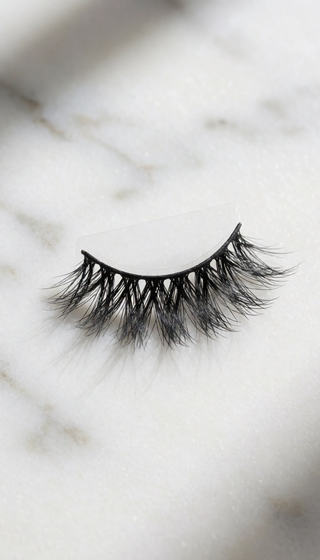
DO FALSE EYELASHES FALL OFF IN SUMMER? LEARN HOW TO KEEP THEM SECURE
Short answer: False eyelashes can lift in summer, but heat and humidity alone are rarely the entire problem. Attachment method, skin oils, sweat, water, makeup, rubbing, application quality, and care all influence how long a lash stays secure.
Think of the lash band as a small seam that must remain free of oil, moisture, and movement. Sweat can travel toward the eye, sunscreen and mascara can soften around the lash line, and rubbing or sleeping places repeated friction on the band. Heat may also increase perspiration and make natural oils more mobile. The result can be one lifted outer corner, a band that shifts, or a lash that separates completely.
Immediate move: If a band starts to lift, do not keep adding more adhesive. Remove the lash gently, cleanse away oil and makeup, dry the lid, and reapply it according to its instructions. During wear, pat the eye area instead of rubbing it. If the skin burns, swells, or develops persistent redness, stop using the cosmetic.
WHY SUMMER LASH LIFT-OFF USUALLY HAPPENS
A summer failure is usually a combination problem rather than a single weather trigger. The lash may begin well, then lose its seal when several smaller stressors occur together. Identifying the stressor makes the problem easier to correct.
- Sweat and runoff: Perspiration can reach the lash line and weaken the edge of a bond, particularly when the skin is already warm.
- Oils and makeup: Mascara, cream eye products, sunscreen, and natural skin oil can leave the lid slippery or interfere with adhesion.
- Water: Rain, pool water, sea spray, and condensation can affect some adhesives differently, especially when combined with rubbing.
- Mechanical movement: Touching the eye, sleeping, rubbing during makeup removal, or wearing a tight hat can loosen a band that is already under stress.
Check the band, not only the lash fibers. Fibers can move because of styling or a change in eye shape while the attachment remains intact. A genuinely lifted band, however, usually starts at an edge and gradually separates.
HEAT VS. HUMIDITY: SEPARATE FACT FROM MYTH
Heat myth: There is no universal temperature at which every false lash falls off. Warm conditions can increase sweat, keep natural oils more fluid, and encourage touching or rubbing. Direct heat may also affect some adhesive films differently, but the outcome depends on the formula and the bond. Leaving adhesive or lashes in a hot car, holding a steamer close to the eye, or using a hot hairdryer to speed drying creates avoidable stress.
Humidity myth: Water vapor in the air does not automatically loosen every type of lash. Humidity can alter the surface or drying behavior of an adhesive in a formulation-dependent way. More importantly, humid weather often overlaps with warmer skin, perspiration, condensation, and more frequent face touching. Airflow from a fan or air conditioner can be more useful than adding heat because it helps moisture disperse without warming the eyelid.
MYTH CHECK: “Waterproof” does not mean invincible. It describes water resistance under intended conditions, not immunity to oil, friction, heat, sweat, or poor placement. Following the application and care instructions remains essential in every season.
THE ATTACHMENT METHOD CHANGES THE SUMMER RISK
Two lashes can look similar while behaving very differently because their attachment systems are not alike. Understanding the mechanism helps you diagnose a lift instead of repeatedly adding more product or adhesive.
- Liquid glue: Application thickness, lid moisture, oil, pressure, and set time all affect the bond. Excess glue can remain flexible or transfer to the eyelid, while a dry gap can create an immediate weak point.
- Pre-applied adhesive or liner-style lashes: The bonding layer and placement instructions matter. Pressure, alignment, and skin condition can influence whether the edge stays sealed.
- Magnetic lashes: This is a separate category that uses paired magnetic components. It should not be used as a general term for every non-liquid lash system.
- Dedicated contact-based lashes: A mechanism designed to hold through direct contact can avoid the liquid-glue stages, but it still requires clean skin, accurate placement, and correct removal.
No attachment method is maintenance-free. The useful comparison is how many environmental variables it introduces and whether its care requirements match your routine.
USE A HEAT-SMART APPLICATION ROUTINE
Consistency matters more than trying to correct a poor placement later. Set up in a cool, clean area and allow enough time for each stage.
- Clean and dry the lid: Remove old makeup, sunscreen, oil, and residue. Pat the area dry without dragging the skin.
- Prepare the natural lashes: Curl before applying the lash if that is part of your normal routine, then brush out any loose fibers or product.
- Fit before attaching: Compare the inner and outer edges with your eye. Trim only as directed and avoid forcing the band into a position it cannot follow.
- Use the intended amount: Follow the instructions for the specific lash system. More adhesive does not automatically create a stronger or more comfortable bond.
- Press the full band: Apply even pressure along the attachment line, including the outer corner, without repeatedly lifting and resetting it.
- Allow the stated set time: Use a cool fan or air conditioner if needed. Avoid direct heat, strong airflow that dries the eye area, and touching the lashes while the bond stabilizes.
If the first placement is uneven, remove it and start again rather than building up adhesive in one spot. A clean reapplication is usually more reliable than repeatedly correcting a shifting band.
PROTECT THE BAND DURING HOT, HUMID DAYS
Once the lash is secure, small habits can prevent avoidable movement. Choose the method that matches the attachment instructions rather than assuming every method responds to water in the same way.
- Keep hands away from the eye area, especially when your hands are damp or oily.
- Apply sunscreen and face products before the lashes, then keep them away from the attachment line.
- Blot sweat with clean tissue rather than rubbing the band or repeatedly dabbing it.
- Check the guidance for swimming. Chlorine, salt, and prolonged water exposure can affect some adhesives; rinse and dry the area as directed afterward.
- Do not sleep in lashes. Pressure and movement during sleep create friction that no attachment method is designed to withstand indefinitely.
After removal, cleanse gently and let the lid return to its normal routine. Replace lashes or applicators when they become damaged, difficult to position, or difficult to clean.
WHAT TO LOOK FOR IN A SUMMER-RESILIENT SOLUTION
Once weather is understood, the decision becomes simpler. You are not looking for a lash that claims to defeat summer; you are looking for a system that minimizes wet-adhesive variables, fits your eye, and can be used consistently. Evaluate these criteria:
- A clearly explained attachment method: The instructions should identify how the lash stays in place and whether separate glue, magnets, liner, or other components are involved.
- Material and performance information: Look for specific waterproof, hypoallergenic, wear, and care statements rather than vague promises.
- A realistic reuse expectation: A useful wear count should be connected to correct placement, removal, and storage rather than treated as a guarantee.
- Cost per wear: Divide the stated cost by the expected number of wears to make different options easier to compare.
- Easy, clean removal: A solution should come off without aggressive rubbing and should not require harsh force around the eyelid.
For frequent summer wear, a glue-free contact mechanism can remove the need to manage liquid adhesive drying or curing. The strongest result still comes from clean skin, accurate placement, realistic care, and choosing a style that suits the shape of your eye.
PHANSTA LASHES: GET SECURE, REUSABLE LASHES WITHOUT GLUE OR MAGNETS
Those criteria lead to a different approach for anyone who wants dependable lashes without managing a liquid bond every morning. PHANSTA LASHES uses GLUE-FREE micro-adhesion technology: no glue, no magnets, and no liner. The dedicated contact mechanism removes liquid-adhesive drying and curing from the routine while keeping the application focused on clean, accurate placement.
Hypoallergenic does not mean that every person will have no reaction, just as waterproof does not make a lash immune to rubbing or careless removal. Stop using the cosmetic if irritation develops. Persistent pain, swelling, discharge, or changes in vision warrant professional medical care.
- Glue or irritation concern: The lashes are hypoallergenic and use no glue, magnets, or liner.
- Summer durability concern: The waterproof micro-adhesion system is designed for 30+ wears when the application and care guidance is followed.
- Cost concern: The collection includes 17 styles at $59, putting the listed cost under $2 per wear at 30+ wears.
FREQUENTLY ASKED QUESTIONS
Do false eyelashes always fall off in summer?
No. Heat and humidity can contribute, but they are rarely the only factors. Sweat, skin oil, water, makeup, rubbing, the attachment method, and application quality all affect retention. Check the band rather than assuming the lash has detached; if one edge keeps lifting, remove it, clean the lash line, and reapply using the product instructions.
Does humidity make lash glue unusable?
Humidity alone does not automatically ruin lash adhesive. It may alter drying behavior differently depending on the formula, and high indoor humidity often comes with warmer skin and more perspiration. Improve airflow, keep the lid clean and dry, and follow the stated set time instead of guessing or adding extra adhesive.
Can I sleep in false eyelashes?
No. Sleeping presses the band into the eyelid and creates repeated friction, which can weaken any attachment method. Remove the lashes as directed, clean the tools or fingers, and let the eye area return to its normal routine before the next application. If a lash has shifted, do not sleep with it in place.
What should I do if a lash band lifts in the heat?
If a band begins to lift, stop adding more adhesive. Remove the lash gently, cleanse away oil or makeup, dry the lid, and reapply the lash correctly. During wear, pat the area rather than rubbing it. Persistent irritation is a reason to stop using the cosmetic and seek professional care.
Does waterproof mean a lash cannot lift?
Waterproof describes resistance to water under the intended conditions; it does not make a lash immune to oil, friction, heat, or poor placement. Follow the maker’s wear and removal guidance, and do not test tolerance by leaving a product on when it stings or causes swelling. Comfort and healthy skin take priority over wear time.
SHOP PHANSTA LASHES — GLUE-FREE, 30+ WEARS →
STILL COMPARING OPTIONS? Explore our guides on finding your perfect lash, magnetic vs strip, and sensitive eyes.
FIND THE PERFECT LASH — Not sure which style suits you? Take the 30-second lash finder quiz →