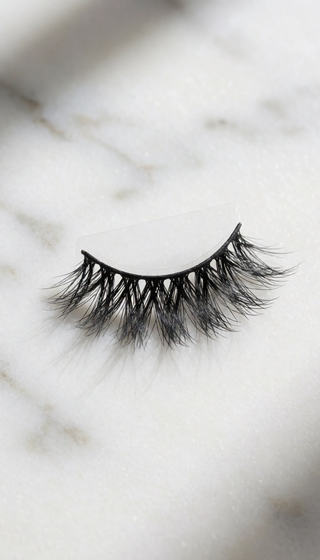
BEST SEASONAL FALSE LASHES FOR FALL, HALLOWEEN, AND HOLIDAY LOOKS
NOT SURE ABOUT YOUR EYE SHAPE?
Take our 60-second quiz to find your perfect lash match — no glue, no commitment.
TAKE THE QUIZ →
The best seasonal false lashes depend on the occasion: choose 6–9 mm wispy or textured lashes for everyday fall, 8–12 mm half or full lashes for Halloween, and 7–10 mm balanced lashes for polished holiday glam. Match the length and density to your natural lashes so the transformation looks intentional rather than heavy.
Key takeaway: “Seasonal” is not one style. It is a range—from quiet, warm definition for autumn errands to graphic drama for Halloween and softly glamorous definition for holiday events. The right lash supports the entire look, suits your eye shape, and feels believable in photographs.
Frequently Asked Questions
How long do PHANSTA LASHES last?
PHANSTA LASHES can be worn all day and reused multiple times with proper care. A single pair typically lasts 10-15 wears when stored and cleaned correctly, making them an excellent value compared to traditional strip lashes.
Are PHANSTA LASHES safe for sensitive eyes?
Yes. PHANSTA LASHES are made with hypoallergenic materials and require no adhesive, making them ideal for sensitive eyes, allergy sufferers, and contact lens wearers.
How do I apply PHANSTA LASHES?
PHANSTA LASHES apply in seconds — simply measure, trim if needed, and press onto your lash line. No glue, no drying time, no mess.
Can I reuse PHANSTA LASHES?
Absolutely. PHANSTA LASHES are designed for multiple wears. Clean them gently after each use and store in the original tray to maintain their shape and adhesive properties.
There is a particular frustration when one corner lifts halfway through a celebration, a lash points toward the bridge of your nose, or a supposedly “natural” pair looks identical every time you open your eyes. Good seasonal selection solves more than a length problem. It gives you control over proportion, mood, and how completely you want to transform your face.
Which seasonal false lashes work best for fall, Halloween, and the holidays?
Start with the event, not the trend. Everyday autumn looks need separated fibers and controlled curl. Halloween rewards stronger silhouettes and visible density. Holiday glam sits between the two: polished and noticeable, but still balanced enough for conversation, photos, and several hours of wear.
| Seasonal look | Useful lash style | Working length | What to aim for |
|---|---|---|---|
| Everyday fall | Wispy, textured, or light half lash | 6–9 mm | Definition with visible gaps |
| Moody Halloween | Dense half lash, graphic full strip, or fan clusters | 8–12 mm | A clear silhouette and lifted outer corner |
| Classic Halloween | Full strip or individual lashes | 7–11 mm | More fullness without costume-like weight |
| Holiday glam | Fluffy, flutter, doll-eye, or balanced half lash | 7–10 mm | Soft volume that complements red, berry, or metallic makeup |
Those measurements are useful ranges, not universal standards. Lashes are not labeled with the precision of a measuring tape, so compare the longest fibers—not just the style name. A “dramatic” 10 mm style with separated fibers can look softer than a dense 8 mm style.
Your natural lashes provide another reference point. The American Academy of Ophthalmology reports that eyelashes grow about 0.1–0.2 mm per day. That slow growth rate matters because a dense style resting on a sparse natural lash can place more weight on the outer corner than it can comfortably support.

How do you match seasonal lash styles to your natural lashes and eye shape?
Fit the lash to two things: the strength of your natural lashes and the direction your eye line travels. Length creates drama, but density determines weight and curl determines openness. A balanced combination usually matters more than any single measurement.
- Measure before you choose. Hold a ruler beside your eye and note the length from the base to the tip of your longest natural lashes. Most natural lashes fall broadly within an 8–12 mm range, although density and structure vary considerably.
- Check the eye shape, not a category alone. Hooded eyes benefit from upward curl and moderate length; overly uniform outer fibers can disappear beneath the lid. Downturned eyes need lift at the outer third. Round eyes can be visually lengthened with a slightly extended outer corner, while round or doll-eye styles reinforce a softer shape.
- Match density to support. If your natural lashes are full, choose a full strip with a similar or slightly shorter length. If they are sparse, a half lash or a few controlled clusters can add definition with less weight. Lengthening every natural lash by 4 mm at once is rarely necessary.
- Prioritize curl when space is tight. Between 7 mm and 9 mm, a lifted, flexible curl often looks more open than extra length that points downward or rests on the cheek.
Natural lash density also changes over time. A dermatology review in Clinical, Cosmetic and Investigational Dermatology places the active growth phase at roughly 30–45 days, with meaningful variation among individuals. If you are styling for an event, test the fit several days ahead instead of saving the experiment for event morning.

Which lash pattern creates warm autumn looks without looking costume-like?
For everyday fall, choose visible variation in length and spacing. Wispy and textured styles create warmth because they blend the false fibers with your own lashes. Fluffy fans add density, while sharply defined spikes need stronger eye makeup to keep the result sophisticated.
- Wispy style: Look for alternating fibers that differ by roughly 2–3 mm. This keeps the lash line open and works well with brown liner, copper shadow, plum mascara, or a satin berry lip.
- Textured style: Short clusters of 5–8 mm fibers create definition without forming one heavy fringe. Pair them with a warm crease shade one step deeper than the lid color.
- Fluffy fans: Lightly fanned fibers in a 7–10 mm range add fullness while preserving a rounded outer edge. They look especially good with bronzed cheeks and diffused brown or rust shadow.
- Spiked style: Separated 8–11 mm points create a graphic effect. Keep the rest of the face refined with a clean brow, neutral lip, and controlled eyeliner.
Warmth is not only about the color on your lid. Light changes how black lash fibers read. The National Institute of Standards and Technology describes warm illumination as roughly 2,000–3,000 kelvin, while daylight is closer to 5,000–6,500 kelvin. Warm indoor lighting softens dark makeup, while neutral daylight can make a harsh line more obvious.
For photographs, build a narrow shadow at the lash line rather than a thick band of black underneath it. A 1–2 mm gap between clusters preserves depth, while a soft brown or deep espresso tone in the outer third creates warmth without losing definition.
What makes a Halloween lash look clever instead of heavy?
A convincing Halloween lash amplifies one feature instead of fighting a full costume. The strongest looks use a clear lash shape, a controlled makeup palette, and enough balance so the eyes do not look weighed down.
| Halloween direction | Lash formula | Balancing makeup |
|---|---|---|
| Polished gothic | 8–10 mm half lash with upward curl | Black liner, softly smudged shadow, berry or red lip |
| Full statement | 10–12 mm fans or dense full strip | Clean skin, sculpted brow, and one neutral lip color |
| Playful character | 7–9 mm wing, round, or dramatically separated style | Repeat the lash direction in the eyeliner |
Density changes impact as much as length. One 12 mm fiber does not create the same visual weight as 12 overlapping 6 mm fibers, so compare the band in side view as well as from the front. If the band curves sharply downward, the outer corner will feel heavier even when the labels list the same length.
Adhesive safety matters just as much as the silhouette. In 2019, the FDA warned that cyanoacrylate adhesives can cause serious eye injuries, including eyelid burns, when lashes are applied incorrectly or the eyelids are glued together. Use only a thin amount, follow the adhesive instructions, and never apply lashes over an eye infection or irritated skin. A 24-hour skin patch test can reveal some reactions, although it cannot rule out every form of eye sensitivity.
How do you apply seasonal lashes cleanly enough to reuse them?
Clean application depends on a dry lash line, measured placement, and less adhesive than most people expect. Work in good light, attach the band from the center outward, and touch the band rather than dragging individual fibers.
- Wash and dry your hands. The CDC recommends scrubbing with soap and water for at least 20 seconds before touching your eyes.
- Remove old mascara, oil, and residue. The FDA gives mascara a general 2-to-3-month replacement window, but you should replace it sooner if it flakes, smells different, or causes irritation.
- Measure and trim. Set the inner edge near the tear duct without pressing into the inner corner. Trim the outer edge only after checking that the longest fibers sit at the desired point on the eye.
- Use the adhesive as directed. For liquid glue, apply a thin U-shaped line and wait the time printed on the package; many liquid adhesives become tacky within roughly 30–60 seconds, but the label takes priority.
- Press in three places. Secure the center, middle, and outer corner first. Hold each point briefly rather than sweeping the entire band back and forth.
- Release and inspect. Look straight ahead and blink gently. If fibers point inward or the band sits too high, remove it and reset rather than trying to fix the placement while it is stuck.
- Remove without pulling. Loosen the outer corner first, then peel slowly toward the inner corner. Hold the band—not the fibers—and avoid forcing a dry bond.
Glue-free styles still need a clean, dry surface. Natural oils interfere with pressure-based adhesion, while leftover mascara creates an uneven foundation. For a cleaner removal, work with an adhesive remover formulated for the eye area and do not use acetone near the eye.
What lash and adhesive options should you compare before buying?
The best format depends on how much control you want, how much time you can spend, and how often you change your look. Full strips cover quickly. Half lashes balance speed and customization. Clusters and individual lashes offer precision, while glue-free formats suit anyone who wants to avoid a separate glue application.
| Option | Application structure | Best fit | Tradeoff |
|---|---|---|---|
| Natural lashes | Uses your own length and density | Everyday definition |
NOT SURE ABOUT YOUR EYE SHAPE?
Find your eye shape and get personalized lash recommendations:
STILL COMPARING OPTIONS?
See how PHANSTA compares to traditional lashes:
FIND THE PERFECT LASH FOR EVERY MOMENT
Explore our occasion-specific lash guides:
EXPERIENCE THE DIFFERENCE
Join thousands of women who have made the switch. No glue, no damage, no salon appointments — just beautiful lashes in seconds.
SHOP PHANSTA LASHES →