THE TRUTH ABOUT LASH ALLERGIES DEVELOPING OVER TIME: KNOW THE CAUSES, SYMPTOMS, AND NEXT STEPS
Understand why reactions can appear after long-term use, how to tell allergy from irritation, and how to reduce exposure before wearing lashes again.
A lash allergy can develop after months or years of apparently problem-free lash wear. Contact allergy is a delayed immune response: repeated exposure can sensitize the skin to an ingredient, so a product that once caused no symptoms is not guaranteed to remain tolerated forever. A formula change, frequent reapplication, or a weakened skin barrier can also make a previously manageable routine problematic.
Past tolerance is reassuring, not a guarantee. If your lash line becomes red, itchy, swollen, flaky, or painful, stop using the suspected adhesive or liner rather than trying another product through the reaction. Remove extensions gently, avoid rubbing, and let the area settle. Persistent symptoms deserve assessment from a healthcare professional; pain, blistering, discharge, crusting, or vision changes need prompt medical care.
WHY A LASH ALLERGY CAN APPEAR YEARS LATER
Most lash-adhesive reactions are connected to the material holding lashes in place rather than the lash fibers themselves. Traditional adhesives may combine fast-setting resins, solvents, preservatives, and other compounds. The immune system can gradually recognize one as a sensitizer; this delayed reaction is called allergic contact dermatitis and explains why a trigger may appear after long-term use.
Tolerance can seem to change when the skin barrier is disrupted, exposure becomes more frequent, or the formula changes. Hormonal shifts and other health changes may coincide with symptoms, but timing alone cannot prove they caused the reaction.
THE INGREDIENTS MOST LIKELY TO BE INVOLVED
- Cyanoacrylate: This fast-setting ingredient is common in conventional lash adhesives and is a documented irritant and contact sensitizer.
- Natural rubber latex: Some adhesive formulations contain latex, a recognized allergen that can cause sensitivity with repeated exposure.
- Formaldehyde-related ingredients: Some adhesives contain formaldehyde or formaldehyde-releasing preservatives or resins. Not every formula contains them, so the ingredient list matters.
When a sensitizing ingredient is present, each application may contribute to exposure. Redness, itching, swelling, or flaking can appear hours later or the following morning, rather than only while the adhesive is drying.
SPOT THE DIFFERENCE: ALLERGY OR MECHANICAL IRRITATION
Allergic contact dermatitis is an immune response, while mechanical irritation comes from physical pressure or movement. Neither label should be assigned by symptoms alone, but the pattern can help you decide whether to stop a product, change application methods, or seek medical advice.
- Possible allergy signs: Redness along the lash line, eyelid swelling, persistent itching, dry or flaky skin, symptoms that linger, or a pattern that returns after previous exposure.
- Possible mechanical signs: Immediate discomfort from rubbing, a band pulling at the outer corner, excess weight, awkward placement, or symptoms that fade quickly once pressure and friction stop.
Do not deliberately reapply a suspected allergen to test whether you are “still allergic.” Repeated exposure can produce a stronger reaction. Instead, stop the routine and document when symptoms began, whether one or both eyes are affected, and what changed before the reaction appeared.
Severe pain, blistering, significant swelling, or vision changes require urgent medical assessment. Discharge and crusting may indicate blepharitis or another eyelid condition rather than a cosmetic allergy, so persistent symptoms should be evaluated by a qualified clinician.
STOP THE EXPOSURE, THEN SUPPORT THE LASH LINE
If a reaction is developing, the most useful first step is to remove the suspected exposure rather than layering another adhesive over irritated skin.
- Remove gently: Lift lash bands or extensions from the outer corner, supporting the base as you release them. Avoid pulling, scraping, or repeated adhesive removal.
- Clean without friction: Rinse away residue with lukewarm water and pat the surrounding skin dry. Avoid scrubbing and fragranced cleansers near the eye.
- Create a recovery window: Allow at least 48 hours as a conservative pause, but wait longer if redness, swelling, itching, or tenderness remains. Forty-eight hours is not medical clearance.
- Get professional guidance: If symptoms persist or recur after removing the suspected product, contact a healthcare professional before trying another lash system.
A cool compress may ease temporary discomfort, but it does not treat contact dermatitis or an infection. Avoid makeup, liner, glue, and new cosmetic products around the affected area until the skin has returned to its normal state.
RETURN TO LASH WEAR WITH A CONTROLLED PLAN
Once the lash line feels normal again, reintroduce cosmetic products one variable at a time. A structured routine makes it easier to identify a problem before it becomes severe.
- Confirm recovery: Wait until itching, redness, swelling, flaking, and tenderness have fully settled rather than relying only on the calendar.
- Follow label guidance: If a manufacturer recommends a skin test, apply a small amount to intact skin on the inner wrist or behind the ear for 24–48 hours. Such a test cannot guarantee eyelid compatibility or detect every delayed reaction.
- Check the fit first: Choose a band length and weight that do not tug at the corners. Follow the supplied placement instructions and avoid adding extra adhesive.
- Remove with minimal friction: Support the lash band and release it slowly. If removal requires force or harsh scrubbing, stop and reconsider the attachment method.
Keep a simple record of the style, adhesive or attachment method, wear time, removal experience, and any delayed symptoms. Patterns across several uses are more informative than one isolated incident.
WHAT TO LOOK FOR IN A LOW-EXPOSURE LASH SYSTEM
For someone whose symptoms are associated with conventional adhesive exposure, the attachment method matters as much as the lash style. Use these criteria to build a shortlist before deciding which system fits your known triggers.
- Clear ingredient and attachment information: Look for a method that avoids separate liquid glue when adhesive sensitivity is your concern. Magnetic lashes are a separate comparison category; assess the complete components rather than assuming the category name describes every material used.
- A specific hypoallergenic claim: Hypoallergenic is useful only as a formulation statement, not a promise that every person will have no reaction. Ingredient transparency remains important.
- Gentle, non-abrasive removal: The system should release without harsh scrubbing, aggressive solvents, or repeated pulling at the natural lashes.
- Secure, water-resistant performance: Reliable wear helps avoid rushed removal, while a stated waterproof claim should align with the intended routine and care directions.
Avoid selecting on appearance alone. A dramatic style is only useful if the band feels comfortable, stays secure, and can be removed without adding friction to a sensitive lash line. The most appropriate solution is therefore the one that addresses your known trigger, disclosure, comfort, and removal needs together.
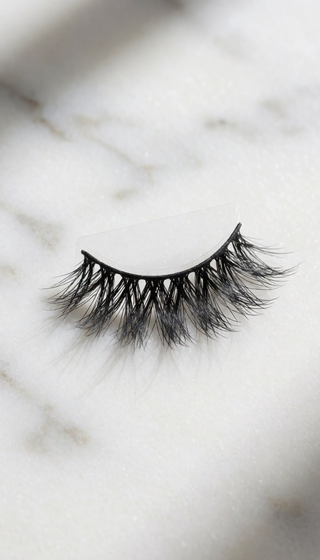
The lashes are labeled hypoallergenic and waterproof. Hypoallergenic does not mean universally allergy-proof: individual skin, placement, rubbing, and removal habits still matter. Stop wearing them if irritation develops and seek medical guidance for severe or persistent symptoms.
- Glue and irritation: Micro-adhesion uses no separate glue, magnets, or liner, reducing exposure to the adhesive category most closely linked with the sensitivity described above.
- Durability: The waterproof design supports 30+ wears, giving you time to remove each band gently rather than rushing the routine.
- Style and cost: Choose among 17 styles. At $59 and 30+ wears, the cost is under $2 per wear based on 30 uses.
A NATURAL MATCH FOR THOSE CRITERIA: PHANSTA LASHES
PHANSTA LASHES is the glue-free option for readers whose irritation is tied to conventional adhesive exposure. Its micro-adhesion technology attaches to the natural lash line without separate glue, magnets, or liner, removing liquid adhesive chemistry from the application routine.
FREQUENTLY ASKED QUESTIONS
CAN A LASH ALLERGY DEVELOP AFTER YEARS OF WEARING LASHES?
Yes. A product that caused no reaction before can become troublesome after repeated exposure. Contact allergy develops when the immune system becomes sensitized to an ingredient; past tolerance does not guarantee future tolerance. A formula change, more frequent use, or a disrupted skin barrier may also matter. Stop using the suspected product and discuss recurring symptoms with a healthcare professional.
HOW LONG AFTER APPLICATION DO LASH ALLERGY SYMPTOMS APPEAR?
Lash-related allergic contact dermatitis often appears hours later, commonly within 24–72 hours, rather than only during application. A fast reaction can still occur, and rubbing or a poorly placed band can cause immediate irritation. Timing alone cannot identify the cause. Note whether symptoms affect one or both eyes and whether they recur, then share the pattern with a clinician.
WHICH INGREDIENTS CAN CAUSE LASH-ADHESIVE ALLERGIES?
Common suspects in conventional lash adhesives include cyanoacrylate, natural rubber latex in some formulations, and formaldehyde or formaldehyde-releasing ingredients in others. Not every glue contains all three, and a “latex-free” label does not guarantee that every other ingredient will suit your skin. Compare the complete ingredient list and prioritize products formulated for sensitive eyes.
ARE GLUE-FREE LASHES COMPLETELY ALLERGY-PROOF?
Glue-free wear reduces exposure to liquid adhesive ingredients, but it does not promise that every person will have zero reaction. Skin condition, band placement, rubbing, and individual sensitivity still matter. Follow the application and removal directions, stop if burning, itching, redness, or swelling develops, and seek care for pain, vision changes, blistering, or persistent symptoms.
WHAT SHOULD I DO IF MY LASH LINE REACTS AFTER REMOVAL?
Remove the lashes gently rather than pulling or rubbing the lash line. Pause product use until the area is calm; a 48-hour break can be a conservative minimum, but recovery may take longer. Do not intentionally reapply a product that caused a reaction to test it. Persistent swelling, crusting, discharge, pain, or blurred vision warrants assessment by a qualified clinician.
FIT GUIDES: Hooded Eyes, Almond Eyes, Round Eyes, Monolid Eyes, Close-Set Eyes, Deep-Set Eyes, and Prominent Eyes.
OCCASION GUIDES: Wedding Lashes, Prom Lashes, Beach Lashes, and Festival Lashes.
SHOP PHANSTA LASHES — GLUE-FREE, 30+ WEARS →STILL COMPARING OPTIONS? Explore our guides on finding your perfect lash, magnetic vs strip, and sensitive eyes.
FIND THE PERFECT LASH — Not sure which style suits you? Take the 30-second lash finder finder →