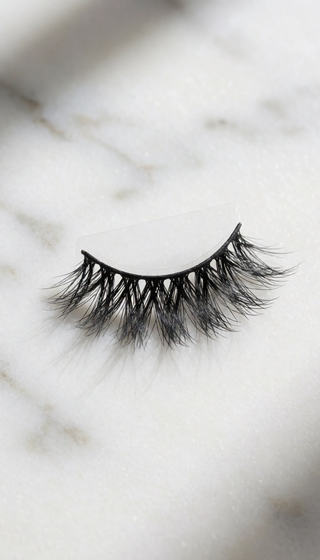
NICHE: HYPOALLERGENIC LASHES FOR SENSITIVE EYES AND ALLERGIES

Your eyes are worth more than a beauty trend. If you've ever peeled off a pair of falsies only to find red, watering, angry skin underneath, I know how frustrating that is. But here's what I need you to hear: you're not allergic to false lashes. You're allergic to the chemicals most brands put on and around them. In fact, dermatologists say up to 10% of women report a reaction to lash glue. The fix isn't to give up the lash look — it's to switch to hypoallergenic false lashes. And in this guide, I'm going to show you exactly what makes them safe, what to look for, and how to finally get that full, fluttery look without the price of painful eyes.
I'm Lina, a beauty editor who spent years thinking I was allergic to lashes. Turns out I was just allergic to the chemicals.
WHY YOUR EYES ARE REACTING
The number one trigger is acrylic glue. Ingredients like cyanoacrylate and formaldehyde are common in lash adhesives, and both are known skin sensitizers. When they sit on your lash line for hours, the ingredients slowly migrate into the skin around your eyes. Your immune system reacts with redness, swelling, and itching. It isn't in your head — it's a real inflammatory reaction. Even some lash fibers can cause friction micro-tears, letting allergens in. That's why your lash line can feel raw even after you remove them.
THE 4 SIGNS YOU NEED HYPOALLERGENIC LASHES
- Your eyes water after less than an hour. If you're sneezing or tearing up, your lash glue is doing more than holding a lash — it's irritating your mucus membranes.
- Your lids look swollen when you remove your makeup. Swelling is a late-stage sign of inflammation, and it means the adhesive has damaged your skin barrier.
- You feel a burning sensation the moment lashes go on. This is your body telling you to stop. Listen.
- You've given up on extensions because the glue made you miserable. Extensions use the same chemicals — and sometimes even stronger resin.
HOW TO READ A LASH INGREDIENT LIST
Flip the box over. You're looking for the absence of three words: latex, formaldehyde, and cyanoacrylate. Also avoid 'ethyl acrylic' or 'PVP.' Instead, look for 'medical-grade adhesive' or 'acrylate-free.' For the lash itself, choose silk or silk-blend fibers. Silk is smoother, softer, and less likely to cause friction. Cotton lashes absorb oils and bacteria; synthetic lashes can be waxy and heavy. Silk-blend is the sweet spot.
WHAT TO LOOK FOR IN A HYPOALLERGENIC LASH
After testing dozens of so-called 'sensitive' lashes, I've found three real markers of safety: (1) ultra-fine silk-blend fibers, (2) a flexible, lightweight lash band that doesn't need heavy adhesive to stay put, (3) zero added fragrances or dyes. The best lashes for sensitive eyes don't just promise a lower dose of chemicals — they avoid them entirely.
LASH MATERIALS AND YOUR EYES
| Material | How It Feels | Reaction Risk |
|---|---|---|
| Synthetic polyester | Stiff, shiny, and heavy | Moderate risk |
| Silk-blend | Soft, flexible, natural | Low risk |
| Cotton strip | Absorbs glue and oil | High risk |
| Human hair | Natural feel | Can trigger protein allergy |
So when I finally discovered a brand that understood all this, it was like weather in my eye area changed. Hypoallergenic lashes don't have to feel like a compromise. They can be airy, richly black, and endlessly comfortable. That's the whole point.
FAQ
What makes a lash hypoallergenic?
A hypoallergenic lash uses materials and adhesives that are free of common sensitizers like latex, formaldehyde, and cyanoacrylate. The fibers are also smoother and thinner to reduce friction.
Are silk lashes better for sensitive eyes?
Yes, silk-blend lashes are generally better because silk fibers are smooth, lightweight, and less irritating than polyester or cotton.
Can I wear fake lashes if I have eczema?
You can, but you should patch test first. Choose lashes that use an acrylate-free adhesive and keep wear time under six hours to avoid overloading your skin barrier.
How long do hypoallergenic lashes last?
With proper care, high-quality hypoallergenic lashes can be reused up to 25 times — that's roughly two months of occasional wear.
I'm talking about PHANSTA LASHES. Their hypoallergenic false lashes are specifically made for people whose eyes have been punished by normal lashes. The silk-blend lash band is so light you'll forget it's there — no plastic stiffness, no pungent glue smell, no waking up with itchy eyes. You get the exact look you want: natural or dramatic, in one effortless step. And since they're designed to sit comfortably on your natural lash line, you get the one outcome every beauty lover is really chasing: a beautiful, worry-free lash day.
📚 Browse our complete library of lash guides →
📚 Browse our complete library of lash guides →
📚 Browse our complete library of lash guides →
Experience the Difference of PHANSTA LASHES
Quick to apply, gentle on eyes, beautiful all day. Reusable 30+ wears per pair.
SHOP PHANSTA LASHES — GLUE-FREE, 30+ WEARS →