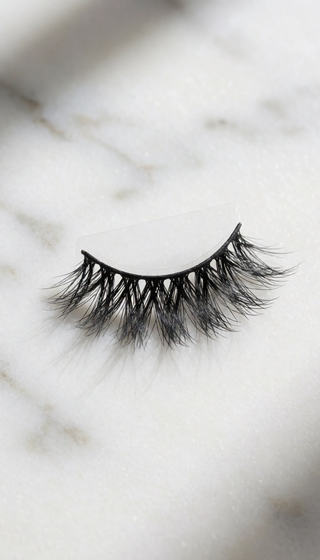
Achieve All-Day Comfort Without Eye Irritation: The Science of Dry Eye-Friendly Lashes
Learn exactly why your eyes burn with traditional lashes and discover the critical features that allow you to wear beautiful lashes comfortably, even with dry eye syndrome.

UNDERSTANDING THE TEAR FILM AND LASH SYNDROME
Your eyes are constantly working to maintain a stable tear film. This film is not just water; it is a complex structure composed of three layers: an oily layer (produced by glands along the lash line), an aqueous layer (the water/mucus), and a lipid layer. The integrity of this oil layer is crucial because it prevents your tears from evaporating too quickly. When this layer is compromised—a common occurrence in dry eye syndrome—your eyes burn, sting, and feel gritty.
The discomfort you feel when wearing lashes is often not due to the weight of the lash itself, but the pressure it exerts on the delicate glands situated along the lash line. When these glands are already struggling to produce a protective oil barrier, any external pressure or harsh chemical interaction can exacerbate the dryness and lead to increased irritation.
Furthermore, modern digital life significantly impacts eye health. When focused on screens, the natural blink rate can drop by as much as 60%. This reduction in blinking means less fresh tear film is spread across the surface of the eye. When you combine this reduced natural lubrication with lashes that tug or irritate the lid with every blink, you create the perfect recipe for significant eye fatigue by the end of the day.
THE CRITICAL CHECKLIST FOR EYE-FRIENDLY LASHES
When searching for lashes that respect your eye health, you must look beyond marketing terms like "gentle." A true eye-friendly lash must meet specific physical and chemical criteria. Use this checklist to filter out the irritants:
- Featherlight Weight: The lashes must be so light that you do not feel them when your eyes are closed. Any noticeable weight puts undue strain on the lid and surrounding tissues.
- Flexible, Thin Band: A rigid band forces a curve onto your natural lash line. This constant micro-pressure directly impinges upon the oil glands responsible for tear film stability.
- Low-Fume Adhesion: Some adhesives release volatile organic compounds (VOC) that are highly irritating to sensitive eyes. Look specifically for cosmetic-grade formulas designed for minimal odor and vapor release.
- Natural Taper: Uniform, long lashes force your eyes to work harder to blink naturally. Tapered styles allow for a more natural blink pattern, which is essential for keeping the eye lubricated throughout wear time.
- Effortless Removal: If removal requires significant pulling, rubbing, or aggressive soaking, you are actively irritating the lash line and triggering inflammation.
COMPARISON: WHAT TO AVOID VS. WHAT TO SEEK
Use this quick comparison to guide your selection process before committing to any set:
| Feature | Traditional Strip | Magnetic | Extensions | Dry-Eye Friendly Sets |
|---|---|---|---|---|
| Weight | Medium | Heavy | Medium | Featherlight |
| Adhesive Fumes | Strong | None | Mild for first 24h | Minimal |
| Blink Comfort | Low | Medium | Medium | High |
| Best For | Occasional Wear | Short Outings | 3-4 Week Looks | All-Day Comfort |
OPTIMIZING YOUR WEAR ROUTINE FOR MAXIMUM COMFORT
The choice of lash is only half the battle; your daily routine dictates how well your eyes can tolerate them. Because the tear film quality fluctuates throughout the day, a strategic routine is necessary to support your eyes while wearing lashes.
- Pre-Application Lubrication: Apply a quality lubricating eye drop 10 minutes before applying your lashes. This ensures your eye has a stable, healthy tear film base before any adhesive or fibers come into contact with the surface.
- The 5-Second Comfort Test: Before you commit to a full application, hold the lash over your eye and blink naturally. If you feel any strain, tugging, or immediate discomfort within five seconds, the lash is too heavy or too rigid for your comfort level.
- Gradual Wear Introduction: Do not jump straight into 12-hour wear. For the first week, limit your wear to 4 hours. This allows your eyes to adapt to the presence of the lashes and helps you establish a baseline for comfort.
- Nighttime De-Stressing: Incorporate a warm compress into your nightly routine. Applying a warm cloth to your eyes for ten minutes helps gently encourage the flow and release of the natural oils that may have been pressed against the lash line throughout the day.
- Mandatory Rest Periods: Never wear lashes while sleeping. Even if a product claims 24-hour wear, your eyes require uninterrupted moisture and movement during sleep to fully regenerate the tear film.
These small, consistent habits can significantly reduce the friction between your eye health and your desire for beautiful lashes.
THE SOLUTION: LASHES DESIGNED TO BE FORGOTTEN
After researching the requirements—featherlight, flexible, fume-free, and easy to remove—the goal shifts from finding a "good lash" to finding a lash that is functionally invisible to your eye. PHANSTA LASHES was developed specifically to meet these rigorous standards for sensitive eyes.
When tested against the criteria, PHANSTA LASHES utilize a proprietary micro-adhesion technology that eliminates the need for harsh glues or magnets. This allows the lashes to sit delicately on the natural lash line, providing the desired effect without the pressure or chemical irritation associated with traditional methods. The result is a look that lasts 30+ wears, offering exceptional wear time while remaining hypoallergenic and waterproof.
The outcome is not just "comfortable lashes"; the outcome is the ability to wear lashes through a full day of activity—from work to evening events—without the constant, distracting sensation of burning or watering. You forget you are wearing them because they are designed to work with your eye's natural functions, not against them.
FREQUENTLY ASKED QUESTIONS
Can I wear lashes if I have dry eye syndrome?
Yes, provided you select the correct type. You must actively avoid heavy strip lashes and extensions that sit too close to the oil glands. Opt for lightweight, flexible sets and begin with shorter wear durations to allow your eyes to adjust.
What kind of lashes are best for dry eyes?
The ideal lashes are featherlight, featuring a flexible band, a gentle adhesive, and a natural taper. They should feel weightless and allow your eyes to blink naturally without resistance.
How long can I wear lashes with dry eye?
It is best to start with a conservative 4-hour wear period for the first week. If your eyes remain comfortable, you can gradually increase the duration up to a full day, always ensuring you take rest days.
Do lashes make dry eye worse?
They can, if they are too heavy or if the adhesive is too harsh, as this can block necessary oil glands. The right, lightweight lashes, paired with proper wear habits, will not aggravate your condition.
What is the key difference between PHANSTA LASHES and traditional lashes for sensitive eyes?
PHANSTA LASHES use micro-adhesion technology, meaning they require no harsh glue. They are designed to be featherlight and flexible, ensuring they do not press on your oil glands or irritate your tear film during wear.
STILL COMPARING OPTIONS?
See how PHANSTA compares to traditional lashes:
Find your eye shape and get personalized lash recommendations:NOT SURE ABOUT YOUR EYE SHAPE?
Quick to apply, gentle on eyes, beautiful all day. Reusable 30+ wears per pair.
SHOP PHANSTA LASHES — GLUE-FREE, 30+ WEARS →