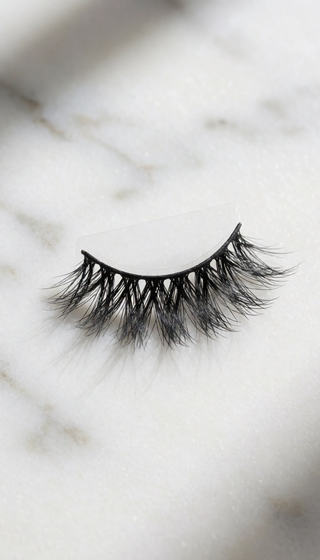
FALSE LASHES FEEL HEAVY: LIGHTER BANDS AND COMFORT FIXES

You know the moment. It hits around 2 p.m. — that faint, nagging weight on your eyelids that makes you want to peel the lashes off in a bathroom stall. You look incredible, but your eyelids are staging a quiet rebellion. The heaviness isn't in your head, and it isn't something you just have to endure. It's a solvable problem rooted in band construction, trimming habits, and how the rest of your eye makeup interacts with the lash itself.
Key Takeaway: Heavy false lashes are almost always a band problem, not a lash problem. Switching to a thinner, more flexible band, trimming the inner corner precisely, and balancing your eye makeup weight can transform all-day comfort without sacrificing drama. The right pair should feel like you're wearing nothing at all — because the band should be doing the work, not your eyelids.
Frequently Asked Questions
How long do PHANSTA LASHES last?
PHANSTA LASHES can be worn all day and reused multiple times with proper care. A single pair typically lasts 10-15 wears when stored and cleaned correctly, making them an excellent value compared to traditional strip lashes.
Are PHANSTA LASHES safe for sensitive eyes?
Yes. PHANSTA LASHES are made with hypoallergenic materials and require no adhesive, making them ideal for sensitive eyes, allergy sufferers, and contact lens wearers.
How do I apply PHANSTA LASHES?
PHANSTA LASHES apply in seconds — simply measure, trim if needed, and press onto your lash line. No glue, no drying time, no mess.
Can I reuse PHANSTA LASHES?
Absolutely. PHANSTA LASHES are designed for multiple wears. Clean them gently after each use and store in the original tray to maintain their shape and adhesive properties.
Why Do False Lashes Feel So Heavy by Midday?
The discomfort you feel hours after application traces back to one overlooked component: the band. While most lash shoppers focus entirely on the fibers — the length, the curl, the volume — the band is what actually sits against your eyelid and bears the full weight of the lash. A thick, rigid, or poorly constructed band creates a constant downward pull that your eyelid muscles fight against all day. By hour six, that fight manifests as heaviness, aching, and the urge to remove them.
- Band thickness matters more than lash volume. A dense, dramatic lash on an ultra-thin band often feels lighter than a wispy lash on a thick cotton band. The weight distribution is what your eyelid registers, not the visual fullness.
- Rigid bands don't move with your eye. Your eyelid is dynamic — it shifts when you blink, squint, and smile. A stiff band resists that movement, creating friction and a sensation of something "stuck" to your eye.
- Adhesive adds hidden weight. Traditional glue lashes compound the problem because the adhesive itself dries into a hard, inflexible layer that adds mass and further restricts natural movement.
- The inner corner is the most sensitive zone. The skin near your tear duct is thinner and more nerve-dense than the rest of the eyelid. Even a small amount of excess band material in this area creates disproportionate discomfort.
Understanding this changes how you shop. You stop asking "how dramatic are these lashes?" and start asking "how much do these weigh, and where does that weight sit?"

The Band Is the Real Culprit: Band Types and What They Mean for Comfort
Not all lash bands are created equal, and the differences are dramatic once you know what to look for. The band is the backbone of the lash — it holds the fibers, determines how the lash conforms to your eye shape, and dictates how the lash feels from morning to night.
Cotton bands are the most common in drugstore and mid-range lashes. They're visible, relatively thick, and tend to hold their shape well — which sounds like a positive until you realize that "holding shape" means resisting your eye's natural curve. Cotton bands work best for short-term wear (a dinner, a photoshoot) but become uncomfortable over extended periods because they don't flex.
Clear bands use a transparent plastic or silicone strip that's thinner than cotton and less visible along the lash line. They're a step up in comfort, but the plastic can still feel stiff against the eyelid, and the transparency sometimes creates a subtle shine that reads as unnatural in certain lighting.
Thread bands (sometimes called invisible or microfiber bands) represent the comfort gold standard. Instead of a solid strip, the fibers are anchored to an ultra-fine thread that's virtually weightless against the skin. The thread flexes with every blink, distributes weight evenly across the lash line, and disappears against the eyelid. This is the construction you want for all-day wear.
Self-adhesive bands use a pressure-sensitive strip instead of liquid glue, eliminating the drying time and the hardened adhesive layer entirely. The adhesive is integrated into the band itself, which means no extra weight from dried glue and no waiting period before the lash settles.
| Band Type | Thickness | Flexibility | All-Day Comfort |
|---|---|---|---|
| Cotton | Thick | Low | Poor after 3-4 hours |
| Clear Plastic | Medium | Moderate | Fair up to 5-6 hours |
| Thread/Invisible | Ultra-thin | High | Excellent 8+ hours |
| Self-Adhesive | Thin | High | Excellent 8+ hours |
The takeaway is straightforward: if you want lashes that last from your morning coffee to your evening plans without a single moment of discomfort, you need a band that's thin, flexible, and free of additional adhesive weight.

Smarter Trimming: The 30-Second Fix That Changes Everything
Here's a mistake almost everyone makes: they pull the lashes straight from the tray and apply them without trimming. Even if the lash is technically your eye shape, the inner corner almost always needs a small adjustment. That excess material in the most sensitive part of your eyelid is responsible for a significant percentage of the "these feel heavy" complaints.
The inner corner trim. Hold the lash up to your eye and identify where your natural lash line ends — not where you want the lash to end, but where your eyelid actually stops. For most people, this is about 2-3 millimeters before the inner corner of the eye. Trim the band at this point, not the fibers. Cutting the band removes the rigid material that presses against your tear duct area.
The outer corner check. The outer corner is the second trouble zone. If the lash extends past your natural lash line, the unsupported end lifts and pulls, creating a lever effect that tugs on the entire band. Trim the outer edge so the lash ends exactly where your natural lashes end.
Cut from the band side, not the fiber side. When you trim, position your scissors at the band and snip horizontally. Cutting from the fiber side creates an uneven edge that can poke the eyelid. A clean horizontal cut on the band side gives you a smooth, flat edge that sits flush against the skin.
Trim before you apply adhesive. Trimming a lash after it's already on your eye is nearly impossible and risks pulling out your natural lashes. Always trim on a flat surface before any adhesive touches the band.
This takes less than 30 seconds and is the single most effective comfort fix that costs nothing. If you've been applying lashes straight from the package, this one habit shift will change your entire experience.
Balance Your Eye Makeup: The Weight Distribution Principle
Here's something most lash tutorials skip entirely: the rest of your eye makeup directly affects how heavy your lashes feel. A dramatic lash paired with a thick winged liner, heavy eyeshadow, and a bold lower lash line creates a cumulative weight that your eyelid wasn't designed to carry. The lashes become the straw that breaks the camel's back.
The liner conflict. If you're wearing a thick liquid or gel liner along your upper lash line, the lash band has to sit on top of that liner. This creates a raised, uneven surface that prevents the band from lying flat. The result is a lash that lifts at the edges, pulls at the corners, and feels like it's "sitting on top" of your eye rather than merging with it. For the most comfortable wear, apply your liner after the lashes, or use a thin pencil liner that doesn't create a raised barrier.
Eyeshadow weight matters. Heavy, metallic, or glitter eyeshadows on the mobile lid add physical weight to the eyelid itself. When you then add lashes on top, you're stacking weight on an already loaded surface. For all-day comfort, keep your eyeshadow light on the lid and save the drama for the crease or lower lash line.
The lower lash line factor. A heavily lined or shadowed lower lash line creates a visual "frame" that makes the upper lashes feel more prominent — and heavier — by contrast. If you're struggling with upper lash comfort, try softening the lower lash line. A single coat of mascara on the lower lashes instead of liner and shadow can reduce the overall visual weight on your eye by a noticeable margin.
Mascara on natural lashes: yes or no? The old rule was to always apply mascara to your natural lashes before falsies to help them blend. But if you're using a thin, flexible band, you can often skip this step entirely — especially if your natural lashes are already dark. Skipping the mascara eliminates a layer of product that adds weight and can cause the natural lashes to clump against the false band, creating a stiff, uncomfortable junction.
The principle is simple: distribute your eye makeup weight evenly across the entire eye area rather than concentrating it all on the upper lash line. Your eyelids will thank you by hour eight.
Application Techniques That Reduce Weight and Prevent Lifting
Even the lightest lash can feel heavy if it's applied incorrectly. The way the band sits against your eyelid — its angle, its adhesion points, and how it interacts with your natural lash line — determines whether it feels like a feather or a lead weight.
Apply to clean, dry skin. Any residual moisturizer, primer, or concealer on the lash line creates a slippery surface that prevents the band from adhering properly. When the band doesn't grip, it shifts with every blink, and that micro-movement is what your brain registers as weight. A clean, dry lash line is the foundation of comfortable wear.
Anchor the corners first. Most people press the center of the band down first and then try to secure the ends. This is backwards. Press the inner corner down first, then the outer corner, then smooth the center. When the corners are anchored, the band can't lift or shift, and the entire lash feels secure rather than precarious.
Use the "press and hold" method. After placing the band, press it against your natural lash line with your fingertips or a lash applicator for 10-15 seconds. This ensures full contact between the band and your skin. For adhesive strips, this activates the pressure-sensitive material. For glue lashes, this gives the adhesive time to set into a strong, flexible bond.
Check the angle. The band should follow your natural lash line curve exactly. If the band is angled upward at the outer corner (a common issue with rigid bands), it creates a constant lifting force that your eyelid fights against. If you notice the outer corner lifting after application, the band is too stiff for your eye shape — not a trimming issue, but a construction issue.
Let the adhesive reach the right consistency. If you're using traditional glue, wait 30-45 seconds after applying the adhesive before placing the lash. The glue should be tacky, not wet. Wet glue creates a slippery bond that shifts and slides, and as it dries throughout the day, it hardens into an inflexible layer that adds weight. Tacky glue creates an immediate, flexible bond that moves with your eye.
What to Look for in an All-Day Comfort Lash: A Buying Checklist
Now that you understand why lashes feel heavy and how to mitigate it, you can shop with a clear set of criteria. Here's what separates a lash you'll wear for 12 hours from one you'll rip off by lunch.
- Band thickness under 0.5mm. Hold the lash up to the light. If you can see a thick, opaque strip, it's too heavy. The band should be nearly invisible when held at arm's length.
- Flexible construction. Gently bend the band between your fingers. It should curve easily and spring back to shape. If it resists bending or holds a crease, it's too rigid for all-day wear.
- No added adhesive weight. Look for lashes where the adhesive is integrated into the band itself rather than applied as a separate layer. This eliminates the dried-glue weight that compounds over hours.
- Fiber weight distributed toward the outer corner. The heaviest part of the lash should be at the outer third, where your eyelid is strongest and can bear more weight. Lashes that are heaviest at the inner corner put pressure on the most sensitive area.
- A band that matches your eye curvature. Everyone's eye shape is different. A lash that fits your friend perfectly might be too curved or too flat for you. The band should follow your lash line without gaps or lifting at the corners.
- Easy removal without tugging. Comfort isn't just about wearing the lashes — it's about removing them. A well-constructed lash peels away cleanly without pulling at your natural lashes or leaving adhesive residue that requires harsh remover.
Keep this checklist in your phone the next time you shop. It transforms you from someone who hopes a lash will be comfortable into someone who knows exactly what to look for.
PHANSTA LASHES: Engineered for the Way You Actually Live
If you've read this far, you already know the problem isn't your tolerance for discomfort — it's that most lashes were never designed for real life. They were designed for a two-hour photoshoot or a single evening event. PHANSTA LASHES were built for the other 16 hours of your day.
Here's what makes them different: PHANSTA LASHES use an ultra-thin, flexible band that weighs a fraction of traditional cotton or plastic bands. The fibers are anchored to a thread-fine strip that moves with your eyelid, not against it. There's no glue to dry, no hardened adhesive layer to add weight, and no stiff strip fighting your natural blink. The result is a lash that feels like it's not there — because the band is doing the work, not your eyelids.
Imagine putting on your lashes at 7 a.m. and forgetting they're there until you catch your reflection at 9 p.m. and think, "Oh right — I look incredible." That's the PHANSTA LASHES experience. No midday bathroom stall removal. No peeling at the corners. No aching eyelids begging for relief. Just lashes that stay put, stay comfortable, and stay beautiful from your morning commute to your evening plans.
The self-adhesive strip applies in seconds — no drying time, no mess, no waiting for glue to get tacky. Press it down, hold for ten seconds, and go. The band conforms to your unique eye shape and stays there, flexing with every blink, every smile, every squint at your screen. And when you're ready to take them off, they peel away cleanly without tugging at your natural lashes or leaving behind stubborn residue.
PHANSTA LASHES come in styles ranging from natural wispy to full-volume dramatic, so you don't have to choose between comfort and impact. Every pair is built on the same comfort-first band construction, which means the dramatic styles feel as weightless as the natural ones. That's the whole point — you shouldn't have to suffer for beauty, and with the right construction, you never have to.
Your Eyelids Deserve Better
Heavy lashes aren't a rite of passage. They're a design flaw that you've been tolerating because the alternatives seemed complicated or expensive. But now you know the fix is simpler than you thought: a thinner band, a precise trim, balanced makeup, and an application technique that anchors the corners first. Those four changes alone can transform your lash experience from "I can't wait to take these off" to "I forgot I was wearing them."
And when you're ready to skip the compromises entirely — no glue, no weight, no midday discomfort — PHANSTA LASHES are waiting. Your eyelids have been carrying the burden long enough. It's time to put the weight where it belongs: on the band, not on you.
Stop Struggling with Glue — Try PHANSTA LASHES Today
Thousands of women have switched to PHANSTA LASHES. No glue, no damage, no complicated application. Just beautiful lashes that stay perfect all day.
SHOP PHANSTA LASHES →