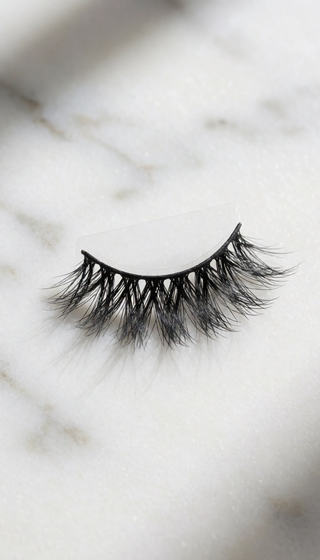
FALSE LASHES DON'T HAVE TO DAMAGE YOUR NATURAL LASHES — HERE'S HOW TO WEAR THEM SAFELY
False lashes do not inherently damage your natural lashes. The lash itself — a strip of synthetic or silk fibers on a flexible band — sits on top of your own lashes and never touches the follicle beneath the skin. Damage almost always comes from how lashes are applied, removed, and cared for, not from wearing them.
If you've noticed extra shedding, thinning, or brittle lashes after wearing falsies, the cause is usually fixable: an adhesive allergy, pulling lashes off at the end of the night, or wearing styles that are too heavy for your natural lash line. The good news is that with the right technique and the right product, you can wear false lashes as often as you like without compromising lash health.
One thing to know upfront: your natural lashes grow in cycles and shed naturally — losing one to five lashes a day is completely normal. A few hairs in your sink or on your pillow is not a sign of damage, and understanding that baseline makes it much easier to spot a real problem.
THE REAL REASONS FALSE LASHES CAN DAMAGE NATURAL LASHES
Understanding what actually causes damage is the first step to avoiding it. Here are the five real culprits:
- Adhesive reactions. Most lash glues contain cyanoacrylate, a medical-grade adhesive that can trigger allergic contact dermatitis — redness, itching, and swelling of the eyelid. Chronic inflammation around the follicle can lead to gradual thinning over time.
- Improper removal. Peeling or pulling a lash strip off rips out every natural lash bonded to the adhesive. This is the single most common cause of visible lash loss.
- Excess weight. Heavy bands or dense styles place constant tension on natural lashes. Over months, that traction can stress follicles — a condition known as traction alopecia.
- Trapped debris. Wearing lashes for days without cleaning lets oil, makeup, and bacteria build up along the lash line, causing irritation similar to blepharitis.
- Extended wear. Sleeping in lashes or going days without removal multiplies every risk above.
FALSE LASHES VS EXTENSIONS VS MAGNETICS: WHICH IS SAFEST?
Not all lash enhancement methods carry the same risk. Here's how the main categories compare:
- Strip lashes with glue: the classic option. Affordable and endless in style, but the adhesive is the main source of irritation and removal damage.
- Individual extensions: bonded to each natural lash and left in place for three to four weeks. The highest damage risk — they trap debris, add weight, and require professional removal.
- Magnetic lashes: two strips that sandwich your natural lashes with small magnets. No glue, but the magnets add weight, the design can pinch, and they don't suit very short or sparse natural lashes.
- Glue-free micro-adhesion strips: a band that bonds to your natural lashes on contact — no adhesive, no magnets, no liner. Lightweight and reusable, with none of the irritation risks above.
5 MYTHS ABOUT FALSE LASHES AND LASH HEALTH
Myth 1: "False lashes always damage your natural lashes."
Fact: With proper application and gentle removal, strip lashes never touch the follicle and cause no damage. Damage is a technique problem, not a product problem.
Myth 2: "Lash glue is safe for everyone."
Fact: Cyanoacrylate adhesives are a leading cause of eye-area allergic reactions. If your eyes sting, itch, or swell after application, you're likely reacting to the glue — and sensitive eyes need a glue-free option.
Myth 3: "You shouldn't wear false lashes every day."
Fact: Daily wear is fine as long as you remove lashes gently every night and keep the lash line clean. The risk comes from sleeping in them and skipping removal — not from frequency.
Myth 4: "Once lashes fall out from falsies, they never grow back."
Fact: Natural lashes regrow on a six-to-eight-week cycle. Lashes lost to pulling or shedding typically return fully, unless the follicle itself has been scarred by years of chronic inflammation.
Myth 5: "Lash serums are the only way to protect your lashes."
Fact: Serums can support growth, but the biggest wins come from gentle removal, taking breaks between wears, and avoiding heavy styles that stress the follicle.
HOW TO APPLY AND REMOVE FALSE LASHES SAFELY
Application:
- Start with clean, dry lashes — no mascara and no oily residue on the band.
- Measure the band against your lash line and trim the outer corner if needed.
- Apply adhesive along the band — or choose a glue-free style that adheres on contact.
- Wait 30–60 seconds until the adhesive turns tacky. This is when it grips best and slides least.
- Place the band as close to the natural lash line as possible, pressing from the center outward. Never place it on the waterline.
Removal:
- Soak a cotton pad with an oil-based cleanser or micellar water.
- Hold it against the lash line for 20–30 seconds to dissolve the bond.
- Slide the band outward from the inner corner — never pull straight off.
- Clean the band with a cotton swab before storing or reusing.
A LASH CARE ROUTINE THAT PROTECTS YOUR NATURAL LASHES
A consistent care routine is what separates lash wearers who keep full, healthy natural lashes from those who don't. Here's the routine that protects them:
- Take a break. Give your lash line at least one lash-free day per week.
- Clean nightly. Remove all eye makeup and wipe the lash line with a gentle, oil-free cleanser.
- Brush gently. A clean spoolie keeps natural lashes aligned without tugging.
- Skip waterproof mascara over falsies. It requires aggressive rubbing to remove.
- Support growth. A peptide lash serum at night can help lashes stay full between cycles.
- Watch for warning signs. Persistent redness, itching, or crusting means stop wearing lashes and see a dermatologist.
WHAT TO LOOK FOR IN A LASH SOLUTION
If you want the look of false lashes without the risks above, here's what actually matters:
- No glue. Adhesive is the number-one source of irritation and removal damage. A glue-free design eliminates both problems.
- Lightweight band. A thin, flexible band reduces tension on natural lashes.
- Hypoallergenic materials. Essential if you've ever reacted to lash glue.
- Reusable. A style you can wear many times is kinder to your wallet and the environment.
- Quick application. If it takes more than a minute per eye, you're less likely to use it consistently.
- Waterproof. Sweat and humidity shouldn't end your night early.
If you've ever reacted to lash glue or struggled with removal damage, these criteria aren't nice-to-haves — they're the difference between lashes that stress your follicles and lashes that leave your natural lash line exactly as healthy as you found it.
The three biggest objections, addressed:
- Glue and irritation: gone. Micro-adhesion means nothing touches your skin or waterline — and the hypoallergenic materials are built for sensitive eyes.
- Durability: 30+ wears per pair, waterproof through sweat and humidity.
- Value: $59 works out to under $2 per wear — far less than repeated salon visits.
PHANSTA LASHES: THE GLUE-FREE ANSWER TO EVERYTHING ABOVE
Every risk on this page traces back to one thing: glue. PHANSTA LASHES were designed to remove it from the equation entirely.
Instead of adhesive, PHANSTA LASHES use micro-adhesion technology — a band that bonds to your natural lashes on contact, with no glue, no magnets, and no liner. That means no cyanoacrylate near your eyes, no pulling at removal, and no irritation for sensitive eyes.
With 17 styles ranging from natural to dramatic and application in seconds per eye, PHANSTA LASHES are worn and loved by lash wearers with sensitive eyes who thought they'd never tolerate falsies — proof you don't have to choose between dramatic lashes and healthy ones.

FREQUENTLY ASKED QUESTIONS
Can false lashes make your natural lashes fall out?
Only if they're removed incorrectly. Peeling a lash strip off rips out every natural lash bonded to the band. Gentle removal — soaking with an oil-based cleanser and sliding the band outward — lets the strip come away without pulling a single natural lash with it.
How often is it safe to wear false lashes?
Daily wear is fine as long as you remove them gently every night and keep the lash line clean. The real risks come from sleeping in lashes, wearing them for days at a time, and skipping removal — not from frequency. Give your lash line at least one lash-free day per week.
What is the safest way to remove false lashes?
Soak a cotton pad with an oil-based cleanser or micellar water and hold it against the lash line for 20–30 seconds to dissolve the bond. Then slide the band outward from the inner corner. Never pull straight off — that's the single most common cause of visible lash loss.
Are glue-free lashes better for sensitive eyes?
Yes. Cyanoacrylate adhesives are a leading cause of eye-area allergic reactions, causing redness, itching, and swelling. A glue-free design eliminates the adhesive entirely, so nothing irritates the eyelid or waterline — making it the safest option if you've ever reacted to lash glue.
How long do reusable false lashes last?
A quality reusable pair can last 30+ wears with proper care. Clean the band with a cotton swab after each use, store it in its original case, and avoid excessive moisture beyond normal wear. Waterproof styles hold up through sweat and humidity without losing their bond.
STILL COMPARING OPTIONS? Explore our guides on finding your perfect lash, magnetic vs strip, and sensitive eyes.
FIND THE PERFECT LASH — Not sure which style suits you? Take the 30-second lash finder quiz →
NOT SURE ABOUT YOUR EYE SHAPE?
Find your eye shape and get personalized lash recommendations:
FIND THE PERFECT LASH FOR EVERY MOMENT
Explore our occasion-specific lash guides:
EXPERIENCE THE DIFFERENCE
Join thousands of women who have made the switch. No glue, no damage, no salon appointments — just beautiful lashes in seconds.
SHOP PHANSTA LASHES →