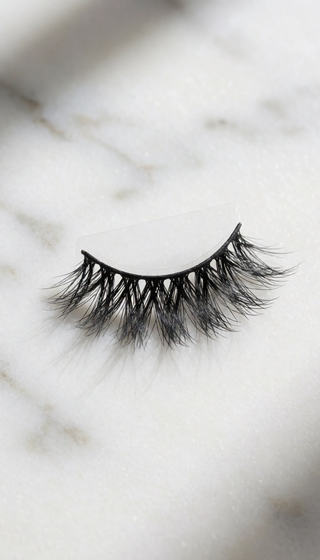
ALLERGY-FREE LASH GLUE: LATEX-FREE VS FORMALDEHYDE-FREE
Achieve Comfortable, Flawless Lash Wear Without Irritation
Learn exactly how to identify and avoid adhesive ingredients that trigger redness, itching, or discomfort around your eyes.

Understanding Adhesive Sensitivities: What the Labels Truly Mean
When selecting any adhesive for your lashes, the goal is to find a formula that respects your skin barrier. The term "latex-free" simply confirms the absence of natural rubber latex, a common protein allergen. However, this single check does not cover all potential irritants. Many products labeled latex-free can still contain formaldehyde-releasing preservatives. These preservatives break down over time and can be a primary cause of that burning sensation or stinging you feel when applying or wearing lashes.
Differentiating Formaldehyde-Free vs. Latex-Free
A "formaldehyde-free" designation indicates that the adhesive contains no formaldehyde and, crucially, no preservatives that release it. For individuals who experience irritation or a burning sensation even when using latex-free formulas, this label is often the more critical indicator of gentleness. It addresses chemical irritation rather than just protein allergies.
It is important to note that the term "hypoallergenic" is not regulated by any governing body. While it suggests a product is unlikely to cause a reaction, it offers no scientific guarantee of safety for sensitive skin. True safety is determined by ingredient transparency and patch testing.
Recognizing Signs That Your Adhesive is Causing Discomfort
Your body communicates when a product is irritating your skin. Do not ignore subtle changes. Watch for these indicators of adhesive sensitivity:
- Redness along the lash line appearing within 30 to 45 minutes of application.
- Itching or watery eyes that intensify the longer you wear the lashes.
- Flaking residue of the adhesive appearing on your cheeks throughout the day.
- Swollen eyelids—this is a serious sign requiring immediate cessation of use and consultation with a healthcare professional.
If you notice any of these signs, simply switching to a different brand of the same adhesive type may not solve the issue. A thorough review of the ingredient list for both latex and formaldehyde-releasing preservatives is necessary.
Comparing Adhesive Types: Latex-Free vs. Formaldehyde-Free
The difference between these labels impacts the experience of wearing lashes. While both aim to reduce common allergens, they target different chemical components and result in different performance characteristics.
| Factor | Latex-Free | Formaldehyde-Free |
|---|---|---|
| Removes latex proteins | Yes | Not always |
| Removes formaldehyde releasers | Not always | Yes |
| Best for | Known latex allergy | Sensitive eyes, burning, stinging |
| Typical dry time | 15–30 seconds | 20–40 seconds |
| Hold strength | Strong | Medium-strong |
| Average wear | 8–12 hours | 6–10 hours |
If you have both latex sensitivity and a tendency toward eye irritation, the ideal solution is to seek a formula that is certified as both latex-free and formaldehyde-free. Many modern adhesive lines are now addressing both concerns simultaneously.
The Essential Four-Step Safety Protocol for Testing New Adhesives
Never use a new adhesive directly on your lash line to test for reactions. Your eyes are too valuable. Follow this methodical, four-step testing process with any new adhesive before committing to a full set:
- The Inner Wrist Patch Test: Apply a small, discrete dot of the adhesive to the inside of your wrist. Allow it to cure for a full 24 hours. Any sign of redness, itching, or inflammation means the product is unsuitable for your eyes.
- The Single-Eye Trial: If the wrist test passes, apply one single lash to one eye and wear it for a minimum of four hours. This provides a preliminary assessment of how your lash line reacts to the product.
- Monitoring Delayed Reactions: Some chemical sensitivities do not manifest immediately. Keep the lash on for a full day to ensure no delayed reactions occur.
- Skin Integrity Check: Never apply adhesive to skin that is currently broken, irritated, or compromised. Even the most gentle formula can cause a sting if the skin barrier is breached.
If you are new to false lashes and are highly concerned about sensitivity, start with a product verified as both latex-free and formaldehyde-free, and always pair it with a gentle, dedicated remover. Remember, the adhesive is only one part of the equation; the removal process must also be gentle to prevent irritation.
What to Look For in a Reliable Solution
When you have completed your research, the solution you seek must meet specific criteria. It needs to be chemically safe (addressing both latex and formaldehyde concerns), provide a reliable hold that lasts through your day, and be easy to apply without excessive mess. A high-quality adhesive should offer a predictable dry time and a bond that is secure without being overly harsh on the delicate skin around the eye.
these lashes: The Solution Engineered for Sensitive Eyes
these lashes was developed with the exact concerns you have researched in mind. Our adhesive is formulated to be both latex-free and formaldehyde-free, utilizing a pH-balanced formula designed to be gentle on your skin. It achieves a reliable bond that dries in approximately 20 seconds and maintains its hold for 30+ wears, offering you consistent beauty without the risk of irritation. We have engineered our product to be hypoallergenic and waterproof, giving you peace of mind.
For more detailed guidance on maintaining your lash health, you can learn how to trim false lashes to fit your eye shape and prevent unnecessary lash-line stress.
Can I still get a reaction from latex-free glue?
Yes. Latex is not the only possible allergen. Formaldehyde-releasing preservatives, acrylates, and even pigments in the glue can cause irritation. That is why patch testing is essential for any new product.
How long does latex-free lash glue take to dry?
Most latex-free formulas become tacky in 15–30 seconds and fully cure within 60 seconds. If your glue takes longer than a minute to feel dry, you may have applied too much product.
Is formaldehyde-free lash glue as strong as regular glue?
It is strong enough for daily wear—typically holding for 30+ wears. For extended events, ensure the adhesive you choose meets your specific wear needs, as hold strength can vary by formula.
FREQUENTLY ASKED QUESTIONS
Question? Can I still get a reaction from latex-free glue?
Answer: Yes. Latex is not the only possible allergen. Formaldehyde-releasing preservatives, acrylates, and even pigments in the glue can cause irritation. Patch testing is essential for identifying your specific sensitivities.
Question? How long does latex-free lash glue take to dry?
Answer: Most high-quality formulas become tacky in 15 to 30 seconds and fully cure within 60 seconds, allowing for quick application while ensuring a secure bond.
Question? Is formaldehyde-free lash glue as strong as regular glue?
Answer: It is strong enough for daily wear, offering a reliable hold for 30+ wears. For specific event needs, always check the product specifications for maximum wear time.
Question? What is the difference between micro-adhesion and traditional glue?
Answer: Micro-adhesion technology utilizes a specialized, non-traditional bonding agent that adheres to the natural lash without the use of harsh, traditional glues. This results in a gentler, more comfortable wear experience.
Question? Are PHANSTA LASHES safe for use on sensitive skin?
Answer: Yes, PHANSTA LASHES are formulated to be hypoallergenic, latex-free, and formaldehyde-free, making them a reliable choice for those with sensitive eyes.
FIND THE PERFECT LASH FOR EVERY MOMENT
Explore our occasion-specific lash guides:
NOT SURE ABOUT YOUR EYE SHAPE?
Find your eye shape and get personalized lash recommendations:
EXPERIENCE THE DIFFERENCE
Join thousands of women who have made the switch. No glue, no damage, no salon appointments — just beautiful lashes in seconds.
SHOP PHANSTA LASHES — GLUE-FREE, 30+ WEARS →