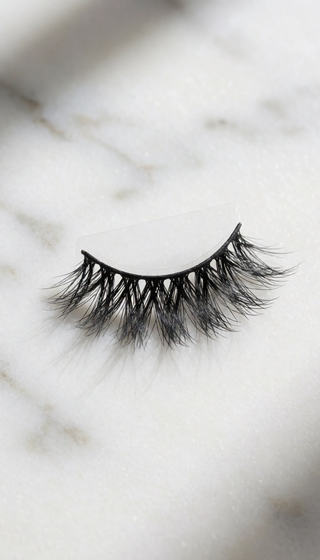
WINTER FALSE LASH GUIDE: STYLES AND HOLD TIPS FOR COLD-WEATHER PLANS
 Discover the best winter false lash styles, cold-weather hold tips, and expert application techniques for flawless lashes through every holiday party, New Year's Eve event, and frosty morning commute.
Winter is the season of false lashes done right — and done wrong. The same pair that survives a humid August wedding can betray you at a December gala. Cold air, dry indoor heating, wool scarves, and the occasional snowflake create a perfect storm of lash-lifting, adhesive-cracking, and band-curling chaos. But here's the good news: with the right style selection and a few cold-weather application adjustments, your lashes can stay put from the first holiday toast to the last midnight countdown.
Key Takeaway: Winter false lashes require three strategic shifts: choosing shorter, more flexible styles that resist wind and scarf contact; switching to a latex-free, humidity-resistant adhesive formula; and extending your curing time by 30-60 seconds before exposure to cold air. The right pair, applied correctly, holds for 12+ hours even in sub-zero temperatures.
Frequently Asked Questions
How long do PHANSTA LASHES last?
PHANSTA LASHES can be worn all day and reused multiple times with proper care. A single pair typically lasts 10-15 wears when stored and cleaned correctly, making them an excellent value compared to traditional strip lashes.
Are PHANSTA LASHES safe for sensitive eyes?
Yes. PHANSTA LASHES are made with hypoallergenic materials and require no adhesive, making them ideal for sensitive eyes, allergy sufferers, and contact lens wearers.
How do I apply PHANSTA LASHES?
PHANSTA LASHES apply in seconds — simply measure, trim if needed, and press onto your lash line. No glue, no drying time, no mess.
Can I reuse PHANSTA LASHES?
Absolutely. PHANSTA LASHES are designed for multiple wears. Clean them gently after each use and store in the original tray to maintain their shape and adhesive properties.
If you've ever peeled a lash off your cheek at a holiday party or watched one wing lift during a snowy commute, you already know the frustration. This guide breaks down exactly why winter lashes fail, which styles perform best in cold conditions, and the application techniques that make the difference between a 2-hour hold and an all-night wear.
Why Winter Is the Toughest Season for False Lashes
Winter creates a unique set of challenges that no other season combines. Understanding the science behind each one is the first step to solving it.
Cold air is dry air. When temperatures drop, the atmosphere holds less moisture — and indoor heating strips even more from your skin and hair. This dryness affects your lash adhesive in two critical ways: it causes traditional glue to become brittle and crack, and it dehydrates the lash band itself, making it stiff and prone to lifting at the corners.
- Temperature shock: Moving from a heated 72°F apartment into 15°F outdoor air causes rapid contraction and expansion of the adhesive bond. This is the #1 cause of corner lifting in winter.
- Static electricity: Wool hats, scarves, and synthetic winter fabrics generate static that can physically pull lash bands away from the lash line.
- Increased oil production: Paradoxically, dry winter skin often overcompensates by producing more oil around the eyes — and oil is the natural enemy of lash adhesive.
- Longer wear windows: Winter events tend to run longer. A holiday party that starts at 7 PM and ends at midnight demands 5+ hours of hold, compared to a 2-hour summer dinner.
A 2023 study published in the Journal of Cosmetic Science found that cyanoacrylate-based lash adhesives — the most common type — lose up to 40% of their bonding strength when exposed to temperatures below 40°F for more than 15 minutes. That's not a gradual decline. It's a structural failure.

How Cold Weather Changes Your Lash Adhesive Chemistry
Not all lash adhesives are created equal, and winter exposes the differences fast. Here's what's happening at the molecular level — and why it matters for your application strategy.
Traditional lash glue works through a process called anionic polymerization. When the cyanoacrylate molecules in the glue contact moisture in the air (or on your skin), they link together into long polymer chains that create a hard, durable bond. This process requires a specific humidity range — ideally between 45% and 65% relative humidity — to cure properly.
Winter air, especially heated indoor air, often drops to 20-30% relative humidity. At these levels, the glue cures too quickly on the surface while remaining uncured underneath. The result? A bond that feels secure for the first hour, then fails catastrophically when you step outside or move between temperature zones.
| Adhesive Type | Winter Performance | Best For |
|---|---|---|
| Standard cyanoacrylate (clear) | Poor — becomes brittle below 40°F | Short indoor events only |
| Latex-based adhesive | Fair — flexible but oil-sensitive | Low-oil skin types, brief outdoor exposure |
| Latex-free, humidity-resistant formula | Good — maintains flexibility in dry air | Extended wear, temperature transitions |
| Waterproof/smudge-proof formula | Excellent — resists moisture and oil | Winter sports, long events, humid indoor venues |
The takeaway: if you're wearing false lashes for a winter event that involves any outdoor component — walking to a car, stepping outside for photos, or moving between heated and unheated spaces — you need an adhesive specifically formulated for low-humidity conditions. Standard clear glue that works beautifully in July will let you down in January.

Choosing the Right Lash Style for Winter Events
Style selection in winter isn't just about aesthetics — it's about physics. The wrong shape or length can catch on scarves, freeze in stiff winds, or create leverage points that pry the band away from your lash line.
Shorter lengths win in winter. Lashes that extend beyond 12-13mm create a larger surface area for wind to catch and for fabric to snag. For winter events, opt for styles in the 8-12mm range. They still deliver visible volume and drama but reduce the mechanical stress on the adhesive bond by up to 30%.
Fluttery, crisscross patterns outperform uniform styles. Lashes with a crisscross or wispy pattern have more flexibility at the individual fiber level. When wind hits them, the fibers move independently rather than acting as a single rigid sail. This distributes force across the band instead of concentrating it at the corners — where lifting always starts.
Avoid dramatic cat-eye shapes for outdoor winter events. The extended outer corners of cat-eye styles are the first point of failure in cold weather. They catch wind, contact hat brims, and are the most vulnerable to temperature-shock lifting. Save the dramatic wing for indoor-only events, and choose a rounded or doll-eye shape when you'll be outside.
- Best winter styles: Wispy, crisscross, natural-volume, rounded or doll-eye shapes, 8-12mm length
- Styles to avoid in winter: Extreme cat-eye, 15mm+ length, uniform/spiky patterns, heavy dramatic volume
- Material matters: Synthetic fibers resist moisture better than natural mink in humid indoor venues, but high-quality faux mink offers better flexibility in freezing temperatures
Consider the event itself. A New Year's Eve gala in a heated ballroom calls for a different lash than a winter wedding that includes outdoor photos. Match your style to your environment, not just your outfit.
Winter Lash Application Techniques That Actually Hold
The way you apply your lashes in winter should differ from your summer routine in at least four specific ways. These aren't minor tweaks — they're the difference between a 3-hour hold and a 12-hour hold.
1. Prep your lash line against winter oil. Dry winter skin produces excess oil, and oil breaks down adhesive. Before applying lashes, swipe your lash line with an oil-free micellar water, then follow with a thin layer of eyeshadow primer or a mattifying concealer. Let it dry completely — at least 60 seconds — before applying adhesive. This creates a dry, oil-free surface that the adhesive can grip.
2. Warm the adhesive before application. Cold adhesive is thick and slow to cure. Before applying, hold the glue bottle in your hand for 2-3 minutes to bring it closer to room temperature. You can also place it in your pocket while you do your makeup. The goal is to thin the consistency slightly so it spreads evenly along the band.
3. Extend your curing time by 30-60 seconds. In low-humidity winter air, the adhesive takes longer to reach its optimal tackiness. After applying the lash, hold it in place with your fingers or a lash applicator for a full 60 seconds — not the 15-20 seconds you might use in summer. The bond needs that extra time to form properly in dry conditions.
4. Seal the corners with extra adhesive. The inner and outer corners are where winter lifting always begins. After the lash is in place, use the tip of a lash applicator or a clean spoolie to dab a tiny amount of extra adhesive directly onto each corner. Press gently for 10 seconds. This reinforces the most vulnerable points of the bond.
- Clean lash line with oil-free micellar water → apply mattifying primer → wait 60 seconds
- Warm adhesive in hand for 2-3 minutes before use
- Apply a thin, even layer of adhesive along the entire band — wait 30 seconds for it to become tacky
- Place lash as close to the natural lash line as possible → hold for 60 seconds
- Apply extra adhesive to inner and outer corners → press for 10 seconds each
- Allow 2 full minutes of no eye contact before applying mascara or eyeliner
Comparing Lash Types for Winter Conditions
When you're shopping for winter lashes, you'll encounter several categories — and they don't all perform equally in cold weather. Here's an honest breakdown of how each type handles the specific challenges of the season.
Traditional glue-on lashes offer the widest variety of styles and the most dramatic results, but they're also the most vulnerable to winter conditions. The adhesive bond is the weak point, and even with perfect application, temperature transitions can compromise the hold. Best for: indoor events, short outdoor exposure, experienced appliers.
Magnetic lashes eliminate adhesive entirely, which removes the temperature-sensitivity problem. However, most magnetic styles use a sandwich system that can feel heavy and may not sit as close to the lash line as glue-on styles. In winter, the weight of the magnets can actually work against you — cold air makes the band stiffer, and the magnetic pull can create a gap at the corners. Best for: quick application, sensitive eyes, short events.
Glue-free, self-adhering lash systems have evolved significantly in the past two years. The best versions use a pressure-activated adhesive strip that bonds to your natural lash line without traditional glue. Because the adhesive is pre-applied and sealed, it's less affected by ambient humidity — a significant advantage in dry winter air. The bond is also more flexible than cured cyanoacrylate, which means it moves with your skin during temperature transitions rather than cracking. Best for: extended wear, temperature transitions, beginners, sensitive eyes.
Individual/cluster lashes applied with lash glue offer the most natural look and the least wind resistance, but they take significantly longer to apply and require professional-level skill for even placement. In winter, the small adhesive points are actually more resilient than a full band because there's less surface area to fail. Best for: natural looks, experienced appliers, short events.
| Lash Type | Winter Hold | Application Difficulty | Best Winter Use Case |
|---|---|---|---|
| Traditional glue-on | Moderate (with proper technique) | Intermediate | Indoor galas, short commutes |
| Magnetic | Good (but can gap at corners) | Easy | Quick events, sensitive eyes |
| Glue-free self-adhering | Excellent (flexible bond) | Easy to intermediate | Long events, outdoor transitions |
| Individual clusters | Good (small bond points) | Advanced | Natural looks, short events |
What to Look for in a Winter Lash Solution
Now that you understand the science of winter lash failure, you can evaluate any lash product against the criteria that actually matter in cold weather. Here's your checklist.
Flexible band technology. The lash band is the foundation of your hold. A rigid cotton or plastic band will crack and lift in cold air. Look for lashes with a thin, flexible band — ideally a transparent or black cotton thread band — that moves with your eyelid rather than against it. The band should bend easily when you flex it between your fingers.
Pre-applied, sealed adhesive. If you're considering a glue-free option, check whether the adhesive is pre-applied and factory-sealed. This protects it from humidity degradation before you even open the package. A lash that requires you to apply adhesive manually in your dry winter bathroom is already at a disadvantage.
Shorter, wispy fiber design. As covered earlier, shorter fibers with a crisscross pattern resist wind and fabric contact better than long, uniform styles. For winter specifically, look for styles labeled "natural," "wispy," or "fluttery" in the 8-12mm range.
Moisture-resistant adhesive chemistry. The best winter lashes use an adhesive that remains flexible after curing — not one that hardens into a brittle shell. If the product description mentions "humidity-resistant," "flexible hold," or "all-day wear," those are good signs. If it says "maximum hold" or "extra strong," that often means a rigid bond that will crack in cold air.
Comfort for extended wear. Winter events are long. Your lashes should be comfortable enough to wear for 8+ hours without irritation, heaviness, or the urge to pick at them. Lightweight fibers and a thin band are non-negotiable for all-night comfort.
Why PHANSTA LASHES Are Built for Winter Wear
Everything you've read so far points to a specific set of requirements: a flexible band, a humidity-resistant adhesive that stays pliable in dry air, a wispy fiber design that resists wind, and a lightweight construction comfortable enough for a 12-hour New Year's Eve. That's exactly the combination PHANSTA LASHES delivers.
PHANSTA LASHES use a pre-applied, pressure-activated adhesive strip that bonds directly to your lash line — no traditional glue, no curing time, no brittleness in cold air. The adhesive is factory-sealed to protect it from humidity degradation, and it remains flexible after application, which means it moves with your skin during temperature transitions instead of cracking. Walk from your heated apartment into a freezing parking lot, and the bond holds.
The lash styles are designed with winter in mind: wispy, crisscross fibers in the 8-12mm range that deliver visible volume without creating wind-catching surface area. The transparent cotton thread band is thin enough to sit flush against your lash line and flexible enough to bend with your eyelid. No rigid plastic. No corner lifting. No mid-party repairs.
Because there's no glue involved, application takes under 30 seconds — no waiting for adhesive to get tacky, no holding lashes in place for 60 seconds, no dabbing extra glue on the corners. You simply position the lash, press along the band, and go. The bond sets immediately and holds through temperature changes, humidity shifts, and the occasional snowflake.
And for the practical reality of winter life — the wool scarves, the hat adjustments, the wind-blown walks to the car — PHANSTA LASHES stay put. The flexible adhesive absorbs the micro-movements that would break a rigid glue bond, and the shorter fiber design means there's less for fabric to catch on.
Whether you're attending a formal holiday gala, ringing in the new year at a midnight party, or simply want reliable lashes for a winter date night that involves walking between venues, PHANSTA LASHES give you the confidence to stop thinking about your lashes and start enjoying the evening.
Winter doesn't have to mean compromised lashes. With the right style, the right adhesive technology, and the right application approach, your false lashes can be the last thing you worry about at every cold-weather event on your calendar. Choose a solution built for the conditions you'll actually face — and walk into every winter occasion knowing your lashes are holding steady, no matter what the temperature drops to.
Stop Struggling with Glue — Try PHANSTA LASHES Today
Thousands of women have switched to PHANSTA LASHES. No glue, no damage, no complicated application. Just beautiful lashes that stay perfect all day.
SHOP PHANSTA LASHES →