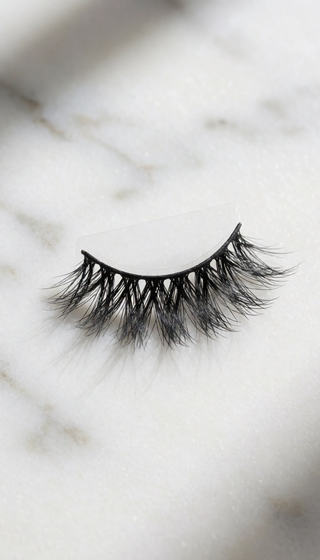
KEEP YOUR LASHES FLAWLESS ALL SUMMER — EVEN IN 90% HUMIDITY
If you've ever watched your false lashes peel off at a summer festival or slide sideways by 2 p.m. on a humid day, you're not alone — and it's not your fault. Humidity is the single biggest enemy of false lashes, and most application advice completely ignores it.
Here's what actually happens: traditional lash glue is water-based or contains moisture-sensitive polymers. When humidity rises above 60%, the adhesive re-activates, softens, and loses its grip. The result? Lifting corners, sliding bands, and that dreaded "lash flip" halfway through your event.
The good news: with the right lash type, application technique, and a few pro-level habits, you can keep lashes secure for 12+ hours — even at an outdoor festival in peak summer heat. This guide walks you through exactly how.
WHY HUMIDITY RUINS MOST FALSE LASHES
To understand why humidity destroys your lashes, you need to understand how lash adhesive works. Most traditional lash glues are cyanoacrylate-based — the same family of compounds used in medical-grade tissue adhesives. They cure (harden) when they react with moisture in the air, forming a bond between the lash band and your natural lash line.
The problem? That bond is reversible. When humidity spikes — think 80%+ at an outdoor summer festival — the moisture in the air re-activates the cured adhesive. It softens, loses tensile strength, and the bond begins to fail. This is why your lashes might look perfect at 10 a.m. but be lifting by 2 p.m.
Your skin also plays a role. Heat increases oil production, and that excess oil creates a barrier between the adhesive and your skin. Even if the glue itself holds, it can't grip through a layer of sebum. This is why oily skin types often struggle more with lash retention in summer.
Sweat compounds the issue. As perspiration rolls down your face, it can seep under the lash band, further weakening the adhesive bond. At festivals, where you're dancing and moving for hours, this is almost unavoidable with traditional glue lashes.
Timing matters, too. Humidity climbs through the day and peaks in the late afternoon — exactly when most festival photos happen. Lashes applied in the cool of the morning face their toughest test hours later, when moisture, heat, and sweat all hit at once.
LASH TYPES COMPARED FOR HUMID CONDITIONS
Not all false lashes are created equal — especially when humidity enters the picture. Here's how the three main categories stack up:
| Lash Type | Humidity Resistance | Comfort | Reusability | Best For |
|---|---|---|---|---|
| Traditional Glue | Poor — adhesive re-activates in moisture | Moderate — glue can irritate | Single wear | Short events in dry climates |
| Magnetic | Moderate — no adhesive to weaken, but magnets can shift | Moderate — weight of magnets | Multiple wears | Everyday wear, short outings |
| Micro-Adhesion | Excellent — no glue to re-activate | Lightweight — no glue, no magnets | Multiple wears | Long events, festivals, humid climates |
Traditional glue lashes are the most vulnerable to humidity because their entire bonding mechanism depends on moisture-sensitive adhesive. Once that adhesive softens, there's nothing holding the lash in place.
Magnetic lashes eliminate the glue problem but introduce a new one: the magnets add weight to the lash band, and that weight can cause the lashes to shift or slide when you're sweating. They also require a specific application technique that can be tricky for beginners.
Micro-adhesion lashes use a different approach entirely. Instead of glue or magnets, they use a medical-grade adhesive strip that bonds to the skin through surface tension — not chemical curing. This means humidity can't re-activate or weaken the bond, because there's no moisture-sensitive chemical reaction to reverse. In humid climates, that difference is the difference between lashes that last an afternoon and lashes that last the whole weekend.
APPLICATION TECHNIQUES FOR HUMID WEATHER
Even the best lashes will fail if applied incorrectly in humid conditions. These techniques maximize retention:
- Start with a completely clean, oil-free lash line. Use an oil-free cleanser and follow with an astringent toner to remove any residual sebum. Let it dry fully before applying lashes.
- Apply a thin layer of lash primer if you have oily skin. This creates a matte surface for the adhesive to grip.
- Wait 30-60 seconds after applying adhesive (if using glue lashes) before placing the lash. The adhesive should be tacky, not wet.
- Press the lash band firmly against your natural lash line for 10-15 seconds, starting from the center and working outward. This ensures full contact.
- Use a lash applicator or tweezers to press the band down every few hours if needed — especially after sweating or being outdoors.
- Carry a small lash adhesive pen or micro-adhesion strip for quick touch-ups throughout the day.
For festival settings, apply your lashes indoors in air-conditioned comfort before heading out. This gives the adhesive time to fully cure before it's exposed to humidity. Skip oil-based primers, setting sprays, and creamy highlighters near the lash line — they break down adhesion long before the humidity does.
REMOVAL, STORAGE, AND ALL-DAY CARE
How you remove and store your lashes directly affects how long they last — and how well they perform the next time you wear them.
- Always remove lashes gently. Pulling or peeling can damage the band and reduce reusability.
- Clean the lash band after every wear with an oil-free makeup remover to remove adhesive residue and skin oils.
- Store lashes in their original case or a clean, dry container. Humidity can warp the band shape.
- Avoid applying mascara directly to false lashes — it can clump and weaken the fibers. Apply mascara to your natural lashes first, then apply the falsies.
- If you're wearing lashes for a multi-day festival, bring a backup pair. Even the best lashes can fail after 12+ hours of wear in extreme conditions.
For all-day touch-ups, carry a small mirror and a lash applicator. If you notice a corner lifting, press it down firmly for 10 seconds. With micro-adhesion lashes, you can simply re-press the band — no additional adhesive needed. Between wears, let the band air-dry completely before storing — trapped moisture is the fastest way to warp the shape.
WHAT TO LOOK FOR IN A HUMID-WEATHER LASH SOLUTION
Now you understand why humidity ruins lashes and what techniques help. But what if you want a lash that's specifically designed to handle humid conditions — without the hassle of glue, primers, and constant touch-ups?
Here are the key features to look for:
- Glue-free adhesion: The lash should bond without traditional lash glue, eliminating the humidity-vulnerability problem at its source.
- Lightweight band: A thin, flexible band conforms to your lash line and stays put even when you're sweating.
- Waterproof construction: The lash fibers and band should resist moisture from sweat, rain, and humidity.
- Hypoallergenic materials: Sensitive eyes need a lash that won't cause irritation, especially in heat when pores are open.
- Reusable design: A quality humid-weather lash should be wearable multiple times without losing its shape or adhesion.
- Quick application: At a festival, you don't have 20 minutes for a complicated application. Look for lashes that go on in seconds.
If a lash checks all these boxes, it's built for exactly the conditions that destroy traditional lashes. That's the kind of solution that lets you focus on your event — not on your lash line. The right option should go on in seconds, stay put through a full day of festival heat, and be ready to wear again tomorrow — all without a drop of glue.
Still weighing your options? Here's how the most common lash complaints stack up:
PHANSTA LASHES: THE GLUE-FREE ANSWER TO HUMID-WEATHER LASH FAILURES
PHANSTA LASHES were designed to solve every problem you just read about. Instead of traditional glue, they use a proprietary micro-adhesion technology — a medical-grade adhesive strip that bonds to your skin through surface tension, not chemical curing. That means humidity can't re-activate or weaken the bond, because there's no moisture-sensitive reaction to reverse.
PHANSTA LASHES are hypoallergenic, waterproof, and available in 17 styles — from natural everyday looks to dramatic festival statements. At $59, they work out to under $2 per wear, making them a smarter long-term choice than disposable glue lashes that need constant replacement.
Whether you're heading to a summer music festival, a beach wedding, or just want lashes that survive a humid commute, PHANSTA LASHES deliver the humidity-proof performance that traditional lashes simply can't match.
- Glue & irritation: Traditional lash glue is the most common cause of summer lash failure — and the most common cause of eye irritation. A glue-free bond removes both problems at the source.
- Durability: Disposable glue lashes are single-use. A lash you can wear 30+ times survives an entire festival season without constant replacement.
- Price: At $59 with 30+ wears, that's under $2 per wear — far less than repeatedly buying disposable lashes every few weeks.

FREQUENTLY ASKED QUESTIONS
Can I wear false lashes in high humidity without them lifting?
Yes — if you choose the right lash and prep correctly. Humidity breaks down traditional glue, so a glue-free micro-adhesion lash is your best bet. Apply to a clean, oil-free lash line, press the band firmly for 10-15 seconds, and carry a small applicator for quick touch-ups throughout the day.
How are micro-adhesion lashes different from magnetic lashes?
Magnetic lashes clamp your natural lashes between two magnetized bands, which adds weight and can shift when you sweat. Micro-adhesion lashes use a thin adhesive strip that bonds to the skin through surface tension — no magnets, no glue, no added weight, and nothing for humidity to re-activate.
How many times can you reuse glue-free lashes?
With proper care — gentle removal, cleaning the band after each wear, and storing them in a dry case — a quality glue-free lash can be worn 30+ times. That makes them far more economical over a festival season than single-use disposable glue lashes.
Are glue-free lashes safe for sensitive eyes?
They can be, provided they're made with hypoallergenic materials. Glue-free designs eliminate the cyanoacrylate adhesives that commonly cause irritation, redness, and allergic reactions — especially important in heat, when pores are open and skin is more reactive.
How do I make my lashes last through a full festival day?
Apply indoors in air-conditioned comfort before heading out, press the band firmly from center to outer corners, and avoid touching your lash line. Carry a small mirror and applicator for touch-ups, and if a corner lifts, press it down firmly for 10 seconds to re-seal the bond.
STILL COMPARING OPTIONS? Explore our guides on finding your perfect lash, magnetic vs strip, and sensitive eyes.
FIND THE PERFECT LASH — Not sure which style suits you? Take the 30-second lash finder quiz →
SHOP PHANSTA LASHES — GLUE-FREE, 30+ WEARS →
NOT SURE ABOUT YOUR EYE SHAPE?
Find your eye shape and get personalized lash recommendations:
FIND THE PERFECT LASH FOR EVERY MOMENT
Explore our occasion-specific lash guides:
EXPERIENCE THE DIFFERENCE
Join thousands of women who have made the switch. No glue, no damage, no salon appointments — just beautiful lashes in seconds.
SHOP PHANSTA LASHES →