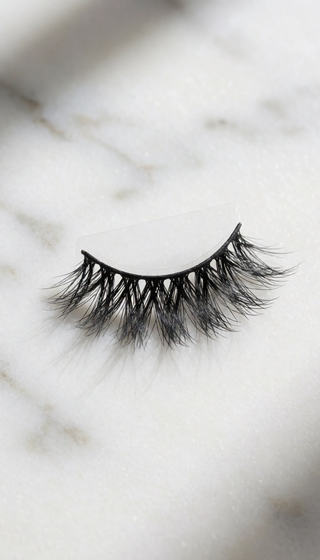
FIND FALSE LASHES THAT FIT MONOLID EYES PERFECTLY
If you have monolid eyes, you already know the struggle: most false lashes are designed for eyes with a visible crease, and they can feel uncomfortable, look unnatural, or slip out of place within hours. The good news is that the right pair of false lashes can look stunning on monolid eyes — you just need to know what to look for.


NOT SURE ABOUT YOUR EYE SHAPE?
Take our 60-second quiz to find your perfect lash match — no glue, no commitment.
TAKE THE QUIZ →Monolid eyes have a smooth eyelid without a visible crease, which means the eye shape is different from what most lash brands design for. This affects how lashes sit, how they open up the eye, and which styles will look most flattering. Understanding these differences is the key to choosing lashes that work with your eye shape, not against it.
In this guide, you'll learn exactly what makes false lashes work for monolid eyes, which features to prioritize, and how to apply them so they stay put and look natural all day.
UNDERSTANDING MONOLID EYE ANATOMY
Monolid eyes are characterized by a smooth eyelid surface without a visible supratarsal crease — the fold that typically appears when the eye opens. This eye shape is common among people of East Asian descent, though monolids occur across all ethnicities. The absence of a crease means the eyelid space between the lash line and the brow bone is continuous and often slightly fuller.
This anatomy creates specific challenges for false lashes. Without a crease to help anchor and hide the lash band, the band can be more visible. The smooth lid surface also means there's less natural grip for traditional lash adhesive, and the eye's natural shape can cause straight or downward-angled lashes to disappear into the lid.
Additionally, monolid eyes often have a slightly different lash growth direction — natural lashes may grow straighter or point more downward. This means the right false lash needs to provide enough lift and curl to open up the eye, rather than simply adding volume. The goal is to complement the eye's natural shape, not fight against it.
KEY FEATURES THAT MAKE LASHES WORK FOR MONOLIDS
Not all false lashes are created equal, and for monolid eyes, certain features make a significant difference in both comfort and appearance. Here's what to prioritize when evaluating any lash option.
- Curl intensity: A strong, dramatic curl (often labeled as C, D, or L curl) is essential for monolid eyes. The curl lifts the lashes upward and outward, creating the illusion of a crease and making the eye look more open. Straight or lightly curled lashes tend to get lost on a smooth lid.
- Band flexibility: A thin, flexible band conforms better to the smooth surface of a monolid eyelid. Thick or stiff bands can create gaps at the inner or outer corners, which are especially noticeable without a crease to hide them.
- Length distribution: Lashes that are longer in the center or outer corner create a lifting, eye-opening effect. Uniform length across the band can look flat on monolids, while a graduated or winged style adds dimension and draws the eye upward.
- Weight: Lightweight lashes are critical. Heavy lashes can weigh down the natural lash line on a smooth lid, causing the band to lift or the entire lash to shift throughout the day. Look for lashes made from lightweight materials that won't drag on the lid.
- Material: Synthetic fibers or fine silk tend to hold their curl better than natural hair, which can lose its shape over time. For monolid eyes, curl retention is a top priority since the smooth lid provides less support to keep lashes lifted.
LASH SHAPES THAT FLATTER MONOLID EYES
The shape of the lash — how length is distributed across the band — has a big impact on how it looks on monolid eyes. Some shapes naturally complement the monolid structure, while others can work against it.
- Cat-eye or winged styles: Longer lashes at the outer corner lift and elongate the eye, creating a flattering upward sweep that counteracts any downward angle. This is one of the most universally flattering shapes for monolid eyes.
- Doll-eye styles: Longer lashes in the center of the band open up the middle of the eye, making it appear rounder and more awake. This works well for monolids that tend to look narrow or elongated.
- Natural, graduated styles: A subtle increase in length from inner to outer corner provides a soft, everyday lift without looking dramatic. These are ideal for first-time lash wearers with monolid eyes.
- Avoid uniform or straight-across styles: Lashes with the same length from corner to corner can look flat and disappear into the monolid lid. They don't provide the lift that monolid eyes need to look open and defined.
COMMON MISTAKES TO AVOID WITH MONOLID LASHES
Even with the right lash style, certain mistakes can ruin the look or cause discomfort. Here are the most common pitfalls to avoid when wearing false lashes on monolid eyes.
- Choosing volume over lift: Dramatic, voluminous lashes may look impressive in the package, but on monolid eyes they can overwhelm the lid and make the eye look smaller. Prioritize curl and length over density for the most flattering result.
- Ignoring the band: A thick, black band is highly visible on a smooth monolid lid. Opt for clear or thin bands that blend seamlessly with the lash line and don't create a harsh line across the lid.
- Using too much adhesive: Excess glue can seep onto the smooth lid surface and create a visible, sticky residue that's difficult to remove. A thin, even layer is all you need for a secure hold.
- Skipping the lash curler: Curling your natural lashes before applying falsies helps them blend better with the false lashes and prevents a visible gap between the two layers that can be especially noticeable on monolids.
- Not trimming to fit: Lashes that are too long for your eye shape will lift at the outer corner. Always measure and trim the band to fit your exact eye width before application for a seamless fit.
APPLICATION TECHNIQUES FOR MONOLID EYES
How you apply false lashes matters just as much as which lashes you choose. For monolid eyes, these techniques make a noticeable difference in both hold and appearance.
- Start with clean, dry eyelids. Any oil or residue on the smooth lid surface will reduce adhesion. Use an oil-free cleanser and let the area dry completely before applying lashes.
- Apply a thin layer of adhesive along the entire band. Wait 20-30 seconds for the adhesive to become tacky before placing the lash. This tacky stage is crucial for grip on a smooth surface without a crease.
- Place the lash as close to the natural lash line as possible. On monolid eyes, even a small gap is visible. Use tweezers or a lash applicator to press the band firmly against the root of your natural lashes.
- Secure the corners first. Press the inner and outer corners down first, then work along the middle. This prevents the edges from lifting throughout the day, which is especially important on a smooth lid.
- Press and hold for 10-15 seconds. On a smooth lid, the adhesive needs time to bond. Hold the lash in place with your fingertips or a cotton swab until the adhesive sets completely.
- Apply mascara to blend. A light coat of mascara on both natural and false lashes helps them merge into one seamless layer, eliminating any visible line between the two that could be noticeable on a monolid lid.
WHAT TO LOOK FOR IN A LASH SOLUTION
Now that you understand what monolid eyes need, here's a quick checklist of the features that matter most when evaluating any lash option for monolid eyes.
- Strong, lasting curl that opens up the eye
- Thin, flexible band that sits flush against the lid
- Lightweight construction that won't weigh down the lash line
- Reliable adhesion that doesn't depend on a crease for grip
- Comfortable wear for extended periods without irritation
- Styles that complement the natural monolid shape rather than fighting it
If a lash checks all these boxes, it's worth a closer look. If it misses on curl, band, or adhesion, it's likely to frustrate rather than flatter. The right solution should feel effortless — like it was designed specifically for your eye shape.
PHANSTA LASHES: DESIGNED FOR MONOLID EYES
PHANSTA LASHES were created to solve exactly the problems monolid eyes face. Instead of relying on traditional glue that struggles to grip a smooth lid, PHANSTA LASHES use a glue-free micro-adhesion technology that bonds directly to your natural lashes — no glue, no magnets, no liner required. The micro-adhesion strips create a secure hold that stays put all day without irritation or residue.
With 17 styles to choose from, PHANSTA LASHES offer options specifically suited to monolid eyes — from natural, everyday lifts to dramatic, eye-opening curls. Each pair is hypoallergenic, waterproof, and designed to be worn 30+ times with proper care, making them under $2 per wear at $59 per pair.
The lightweight construction means no heaviness on the lid, and the flexible band conforms smoothly to the monolid shape without gaps. Because there's no glue involved, there's no sticky residue, no drying time, and no mess — just apply, press, and go.
Whether you're heading to work, a night out, or a special event, PHANSTA LASHES give monolid eyes the lift, length, and comfort that traditional false lashes rarely deliver.

FREQUENTLY ASKED QUESTIONS
Can you wear false lashes with monolid eyes?
Absolutely. False lashes can look beautiful on monolid eyes when you choose the right style and application method. The key is selecting lashes with a strong curl, thin band, and lightweight construction that complement the smooth lid surface rather than fighting it.
What curl is best for monolid eyes?
A strong curl — typically C, D, or L curl — works best for monolid eyes. The dramatic lift opens up the eye and creates dimension on a smooth lid. Straight or lightly curled lashes tend to disappear into the monolid shape and don't provide enough lift to open the eye.
How do you make false lashes stay on monolid eyes?
The most reliable approach is using a lash technology that doesn't depend on traditional glue. Micro-adhesion strips bond directly to your natural lashes without needing a crease for grip. If using glue, apply a thin layer, wait for it to get tacky, and press the band firmly against the lash line for 10-15 seconds.
Are PHANSTA LASHES suitable for sensitive eyes?
Yes. PHANSTA LASHES are hypoallergenic and use a glue-free micro-adhesion system, which eliminates the irritation that traditional lash adhesive can cause. The materials are gentle on the eye area, making them a good option for anyone with sensitivity to adhesives.
How many times can you reuse PHANSTA LASHES?
With proper care, each pair of PHANSTA LASHES can be worn 30+ times. Gently remove the lashes, clean the micro-adhesion strips with a soft cloth, and store them in their original case to maintain their shape and adhesion quality over time.
STILL COMPARING OPTIONS? Explore our guides on finding your perfect lash, magnetic vs strip, and sensitive eyes.
FIND THE PERFECT LASH — Not sure which style suits you? Take the 30-second lash finder quiz →
NOT SURE ABOUT YOUR EYE SHAPE?
Find your eye shape and get personalized lash recommendations:
FIND THE PERFECT LASH FOR EVERY MOMENT
Explore our occasion-specific lash guides:
EXPERIENCE THE DIFFERENCE
Join thousands of women who have made the switch. No glue, no damage, no salon appointments — just beautiful lashes in seconds.
SHOP PHANSTA LASHES →