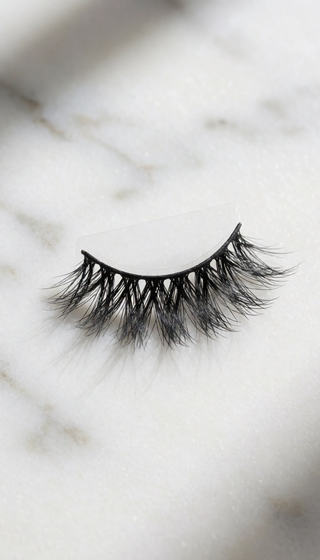
KEEP YOUR NATURAL LASHES FULL AND HEALTHY — EVEN WITH EVERYDAY FALSE LASH WEAR
If you love wearing false lashes but secretly worry they're thinning out your natural lashes, you're in good company — and you can relax. The short answer: false lashes do not ruin your natural lashes when they're applied and removed correctly. Real lash damage comes from a short list of avoidable mistakes — harsh adhesive, peeling strips off dry, and never letting your eyelids recover — not from the lashes themselves.
Here's what actually happens to your natural lashes when you wear falsies, which everyday-wear myths hold up under scrutiny, and the exact routine that lets you wear them daily without losing a single natural lash. The goal isn't to talk you out of wearing them — it's to make sure you never have to choose between great lashes and healthy ones.
WHAT ACTUALLY DAMAGES NATURAL LASHES
Each natural lash grows from its own follicle in a cycle of roughly three phases: an active growth phase of 30–45 days, a brief transition phase, then a resting phase that can last up to 100 days before the lash sheds. Because every follicle runs on its own schedule, you naturally lose one to five lashes a day — completely normal, and nothing to do with falsies.
The real question is whether the follicle stays healthy enough to grow a strong replacement. Damage happens when the follicle or the lash shaft comes under stress:
- Adhesive chemistry. Traditional lash glues are built on cyanoacrylate, a strong-bonding chemical that can irritate the skin, inflame the follicle, and leave stubborn residue along the lash line.
- Mechanical pulling. Peeling a still-bonded strip off rips out every natural lash caught under the band — the single most common cause of sudden lash loss.
- Friction and pressure. Sleeping in lashes for eight hours grinds the band against your natural lashes and the delicate eyelid skin, weakening shafts at the root.
- Residue left behind. Adhesive dried onto the skin and lash line blocks follicles, traps debris, and invites buildup-related irritation over time.
Notice what's not on the list: occlusion. Your follicles get oxygen from the bloodstream, not from the air, so a strip resting on your lash line cannot suffocate them. The follicle is the engine of every lash — as long as it stays healthy, it replaces each shed lash with a full-strength one, which is why some people wear falsies for decades with no thinning at all.
EVERYDAY WEAR: FIVE MYTHS VS THE FACTS
| Myth | Fact |
|---|---|
| False lashes suffocate your natural lashes. | Follicles breathe through blood, not air. A clean, lightweight band blocks nothing essential. |
| You need month-long "lash vacations." | Breaks don't restore follicle health. Gentle daily handling protects lashes better than occasional abstinence. |
| Extensions are always safer than strips. | Both can harm lashes when adhesive is mishandled. Removal method matters far more than the format. |
| Lashes that fall out at removal are lost forever. | A lash already in its resting phase sheds on schedule. Its replacement is already growing underneath. |
| Daily wearing always thins your lashes. | Damage tracks with glue, pulling, and poor cleanup — not with how often you wear them. |
THE SAFE DAILY-WEAR ROUTINE, STEP BY STEP
- Start clean. Wash your face and rinse the lash line with an oil-free cleanser. Natural oils are the enemy of any bond, so skin must be fully dry before application.
- Use the least adhesion necessary. A micro-thin layer — or a glue-free band — grips better than a heavy one and releases more cleanly.
- Wait for tack. Give the bond 30–60 seconds to turn tacky before placement. Applying too early is the top reason strips slide and end up pulled off mid-day.
- Place, don't drag. Set the band with tweezers directly against your natural lash line and press gently. Dragging stretches the band and levers against your real lashes.
- Dissolve before you detach. At night, always break the bond with an oil-based cleanser first — never peel a dry strip away from the eye.
- Clean the band after every wear. A quick, alcohol-free wipe removes oils and residue so the next application starts from a fresh surface.
- Store flat and dry. Keeping the band in its original shape preserves the curve and the grip for the next wear.
Consistency matters more than intensity — a calm sixty-second routine every morning and night beats an occasional perfect one. Inspect the band before each wear too: if the edge looks worn or the curve has flattened, the grip will be uneven and you'll be tempted to press harder.
Pro tip: if you wear falsies daily, book one or two recovery nights per week. Natural lashes love a break from handling — and mascara-free nights let you check how your own lashes are doing.
REMOVAL: WHERE MOST LASH DAMAGE HAPPENS
Most natural-lash loss isn't caused by wearing falsies — it's caused by taking them off wrong. A dry strip bonds tightly enough that pulling it takes real lashes with it every time. Oil dissolves adhesive polymers instead of fighting them, which is why water alone never works.
- Hold a cotton pad soaked in oil-based cleanser against the lash line for about 60 seconds. This dissolves the bond instead of fighting it.
- Slide the band gently outward, away from the eye. If it resists, soak it longer — never force it.
- Brush your natural lashes softly afterward to remove loosened shed hairs and leftover residue.
- Never cut a strip off your eye with scissors, and never remove lashes with wet, soap-covered hands that slip.
Aftercare matters too. A clean lash line overnight — free of adhesive and makeup — lets follicles recover, and keeping skin hydrated around the eyes supports healthy growth cycles.
NORMAL SHEDDING VS ACTUAL DAMAGE: HOW TO TELL THE DIFFERENCE
Not every lash in the sink is a crisis. Here's how to read the signs:
- Count what you lose. One to five shed lashes a day is normal. Finding a few on your pillow or in the sink means nothing.
- Check the root. A shed lash with a tiny, translucent bulb at the base completed its natural cycle. A lash that snaps mid-shaft signals breakage, not shedding.
- Watch for gaps. Bare patches along the lash line, or natural lashes that look visibly shorter over weeks, point to stress — pause wearing and reassess your routine.
- Judge over a full cycle. Lash cycles run 30–100 days, so evaluate lash health across a month, not a single week. Photograph your lash line monthly in the same lighting — gradual changes are far easier to spot side by side than in the mirror.
WHAT TO LOOK FOR IN A LASH SOLUTION
If you want daily wear without the damage checklist, any lash you consider should clear five bars:
- Glue-free or truly hypoallergenic adhesion — nothing cyanoacrylate-based anywhere near the eye.
- A lightweight, flexible band that sits flush without levering against your natural lashes.
- Reusable without residue buildup — the band should clean easily and grip well wear after wear.
- A waterproof hold that survives sweat, humidity, and long days without loosening.
- Fast, gentle application and removal — no drying wait, no tugging, no oil-heavy routine required.
Each of these criteria maps directly to a damage source above. Glue-free adhesion eliminates cyanoacrylate irritation. A lightweight band prevents levering. Reusable-without-residue means no buildup blocking follicles. A waterproof hold stops mid-day loosening that leads to tugging. And fast, gentle removal is the single biggest factor in keeping natural lashes intact.
When a lash checks every one of these boxes, daily wear stops being a gamble and becomes a habit you never have to think twice about. Here's one that does.
PHANSTA LASHES: THE GLUE-FREE ANSWER TO EVERYDAY WEAR
PHANSTA LASHES were engineered for exactly the routine above — daily wear with zero compromise on lash health. Instead of glue, the band uses micro-adhesion technology: a skin-safe, glue-free bond that grips through direct contact, needs no magnets, and requires no separate eyeliner.
The range comes in 17 styles, from barely-there natural to full glam, and the band is hypoallergenic and waterproof, so sweat, humidity, and long days never loosen it. Each pair is rated for 30+ wears — under $2 per wear at $59.
Three objections every daily wearer has — solved:
- Glue and irritation. No glue means no cyanoacrylate fumes, no itchy lash line, no red, swollen eyes.
- Durability. A hold built for 30+ wears keeps its grip wash after wash, night after night.
- Cost over time. At under $2 per wear, one pair outlasts months of disposable strips.
Join the lash lovers who switched to glue-free daily wear — no more picking dried adhesive off your lash line, no more finding natural lashes stuck to the strip at removal.

FREQUENTLY ASKED QUESTIONS
Can wearing false lashes every day make my natural lashes fall out?
No — daily wear itself doesn't cause lash loss. Damage comes from specific mistakes: peeling strips off dry, sleeping in lashes, or leaving adhesive residue on the lash line. When you dissolve the bond before removal and keep the lash line clean, your follicles stay healthy and continue replacing shed lashes on schedule.
Is glue-free application safer than traditional lash glue?
Yes. Traditional lash adhesives are built on cyanoacrylate, a strong-bonding chemical that can irritate the skin and inflame the follicle. Glue-free adhesion through direct contact eliminates that chemical exposure entirely, making it the gentler option for daily wearers with sensitive eyes.
How do I remove false lashes without damaging my natural lashes?
Always dissolve the bond first. Hold a cotton pad soaked in oil-based cleanser against the lash line for about 60 seconds, then slide the band gently outward, away from the eye. If it resists, soak longer — never force it. Water alone never works because oil dissolves adhesive polymers.
How many times can I reuse a pair of false lashes?
With proper care, a quality glue-free pair delivers 30+ wears. Clean the band with an alcohol-free wipe after every wear to remove oils and residue, and store it flat and dry to preserve the curve. When the edge looks worn or the grip feels uneven, it's time for a new pair.
What should I do if I notice my natural lashes thinning?
Pause wearing falsies and reassess your routine. Check that you're dissolving the adhesive fully before removal, not sleeping in lashes, and keeping the lash line free of residue. Photograph your lash line monthly in the same lighting — gradual changes are easier to spot side by side than in the mirror.
STILL COMPARING OPTIONS? Explore our guides on finding your perfect lash, magnetic vs strip, and sensitive eyes.
FIND THE PERFECT LASH — Not sure which style suits you? Take the 30-second lash finder quiz →
SHOP PHANSTA LASHES — GLUE-FREE, 30+ WEARS →
Glue-free micro-adhesion · 30+ wears · Seconds per eye · Under $2 per wear
NOT SURE ABOUT YOUR EYE SHAPE?
Find your eye shape and get personalized lash recommendations:
FIND THE PERFECT LASH FOR EVERY MOMENT
Explore our occasion-specific lash guides:
EXPERIENCE THE DIFFERENCE
Join thousands of women who have made the switch. No glue, no damage, no salon appointments — just beautiful lashes in seconds.
SHOP PHANSTA LASHES →