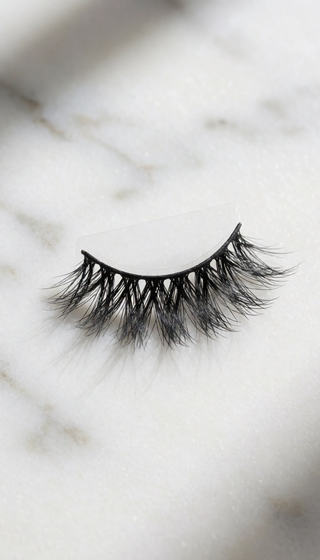
ASIAN MONOLID LASHES: SPECIAL CONSIDERATIONS AND PICKS

If you have a monolid or hooded eye, you have likely felt the frustration of lash products that promise volume but deliver an effect that looks heavy, unnatural, or simply doesn't align with your natural eye shape. The goal isn't to mask your anatomy; it's to enhance your natural beauty by choosing the right silhouette. The key takeaway is that for monolid eyes, the focus must shift from sheer density to strategic placement and texture. You need lashes that lift and define the outer corners without creating a heavy, drooping curtain across the lid. By understanding the mechanics of how different lash patterns interact with the mobile eyelid, you can select styles that create an illusion of depth and lift, making your eyes appear more open and defined.
UNDERSTANDING THE MONOLID ANATOMY
The structure of the monolid eyelid differs from those with a visible crease, meaning the way lashes sit and frame the eye is unique. Because the mobile lid is often flatter or more consistently curved, heavy, dense lash clusters can easily overwhelm the eye, making it appear smaller or more shadowed than intended. The goal is to mimic the natural upward sweep of the eye, which requires careful selection of lash density and length distribution.
Consider these anatomical factors when selecting a style:
- Lash Direction: Lashes that curve upwards or outwards naturally complement the eye shape, creating an illusion of lift. Avoid styles that are perfectly straight across the entire lash line, as this can pull the eye down visually.
- Density vs. Spacing: For monolid eyes, a wispy or sparse application is often more flattering than a thick, dense band. Strategic spacing allows the eye to remain the focal point, while the individual lashes provide definition.
- Outer Corner Emphasis: The most effective technique involves concentrating the longest, most voluminous lashes on the outer two-thirds of the lash line. This draws the viewer's gaze outward, creating an optical illusion of a more lifted, open eye.
THE POWER OF WISP AND TEXTURE
Texture is arguably more important than pure volume when working with monolid eyes. A dense, uniform band of lashes can look like a solid block of shadow, which is counterproductive. Wispy lashes, which feature varied lengths and gaps between clusters, mimic the natural variation found in human hair. This variation provides movement and dimension without adding unnecessary weight to the lid.
When evaluating lash styles, look for these textural cues:
- Gradual Taper: The lashes should start shorter near the inner corner and gradually increase in length toward the outer corner. This mimics natural growth patterns and provides a seamless transition.
- Feathered Ends: Instead of a blunt, uniform tip, lashes with feathered or tapered ends appear softer and less harsh against the skin. This softness is crucial for maintaining a natural, elegant look.
- Layered Effect: Some styles offer a layered look where shorter lashes sit underneath longer ones. This adds depth and dimension, making the eye appear more dimensional without requiring extreme length.
MASTERING THE APPLICATION TECHNIQUE
Even the most beautiful lashes will look wrong if applied incorrectly for your specific eye shape. The application process is less about gluing and more about strategic placement to achieve the desired lift. For monolid eyes, the placement must be precise to avoid creating a heavy line that sits too low on the lid.
Follow these actionable steps for optimal placement:
- Prep the Base: Ensure your natural lashes are clean and perfectly combed. If they are straight, a gentle curl is essential to give the false lashes a natural starting point to blend into.
- Start at the Middle: Begin placing the lash cluster slightly past the inner corner, rather than directly on the lash line. This slight offset helps create an immediate upward lift.
- Anchor the Outer Edge: Place the longest, most dramatic section of the lash cluster firmly on the outer two-thirds of the eye. This is where you build the illusion of extension.
- Blend and Feather: Use a clean, fine-tipped tool to gently fan out the outer lashes. Do not press them down flat against the lid; allow them to sit naturally to catch the light and create movement.
LENGTH VS. CURVE: FINDING YOUR BALANCE
Many beginners default to the longest lash available, assuming that more length equals more impact. However, for monolid eyes, excessive length without a corresponding upward curve can result in a heavy, drooping appearance. The relationship between the lash's length and its natural curve dictates whether the eye looks lifted or weighed down.
Here is how to assess the balance:
- Shorter, Curvier: If your natural lashes are very short, opt for a style that has a moderate length (8mm-10mm) but possesses a pronounced upward curve. This provides definition without the visual weight of extreme length.
- Longer, Wispy: If your natural lashes are already medium to long, you can afford a slightly longer lash (10mm+), but it must be paired with a wispy, feathered texture. This allows the length to add drama while the texture prevents heaviness.
- The "Lift Test": When applying, always check the reflection in the mirror. If the lash line appears to be pulling the eye downward, the length is too dominant over the curve.
MATERIAL CONSIDERATIONS FOR SENSITIVITY
When applying anything near the delicate eye area, material composition is paramount. Traditional adhesives can cause irritation, especially if you have sensitive skin or known allergies. The material used in the lash itself—whether synthetic or natural fiber—must be hypoallergenic to ensure comfort throughout the wear time. A high-quality lash material should be lightweight, allowing it to move with your natural blinking and facial expressions without causing undue strain.
Key material checks include:
- Hypoallergenic Composition: Ensure the lash fibers are free from harsh chemicals that commonly trigger contact dermatitis.
- Weight Distribution: Look for lashes that are lightweight. Heavier materials require stronger adherence, which increases the risk of discomfort or irritation.
- Water Resistance: If you have an active lifestyle, the material must be waterproof to maintain its shape and integrity through humidity or light moisture, preventing premature wear.
MAINTENANCE AND LONGEVITY OF THE LOOK
The longevity of your lash look is directly tied to how you treat the product and your natural lashes. Improper removal or poor initial application can lead to premature shedding or irritation. Since the goal is a natural enhancement, the removal process must be gentle to avoid damaging the natural lash bed.
To maximize wear time and maintain lash health:
- Gentle Removal: Never force the lashes off. Use a dedicated remover and allow the product to soften the adhesive bond before gently peeling the lashes away from the skin.
- Daily Hygiene: Keep the lash band clean. Residue from previous applications can irritate the skin and compromise the bond for future wear.
- Adhesion Integrity: The bond should be secure enough to last for multiple days of wear without lifting, but gentle enough that it can be removed without pulling on the natural lashes.
WHAT TO LOOK FOR IN A SOLUTION
When searching for the right enhancement, ignore the hype around extreme density or overly dramatic length if your eye shape demands subtlety. You need a product that prioritizes strategic design over sheer mass. Evaluate any option based on its adherence mechanism—is it gentle? Does it allow for natural movement? Does it offer a variety of textures that cater to different eye needs, rather than just one "perfect" style? The best solution will be one that feels like an extension of your natural beauty, not an addition to it.
Experience the Difference of PHANSTA LASHES
Discover the natural enhancement designed for every eye shape, offering a beautiful, effortless look that lasts.
SHOP PHANSTA LASHES — GLUE-FREE, 30+ WEARS →Glue-free micro-adhesion · 30+ wears · Seconds per eye
FREQUENTLY ASKED QUESTIONS
STILL COMPARING OPTIONS? Explore our guides on finding your perfect lash, magnetic vs strip, and sensitive eyes.
FIND THE PERFECT LASH — Not sure which style suits you? Take the 30-second lash finder quiz →