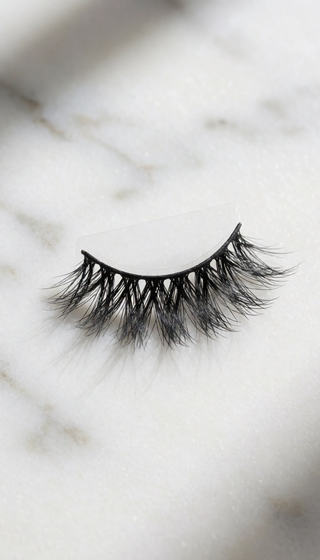
ALLERGIES AND LASHES: HOW TO APPLY GLUE SAFELY
Achieve Flawless, Comfortable Lashes Without Chemical Irritation
Discover how to maintain beautiful lash volume and length while protecting your eyes from common irritants.


Understanding Lash Irritation: It's Often the Application, Not the Lash Itself
If you experience redness, itching, or swelling after wearing false lashes, the culprit is frequently the method of application rather than the lash material itself. For many, the issue stems from the chemical reactions or physical application process of traditional lash adhesives. Understanding the science behind lash adhesion and skin sensitivity is the first step toward a comfortable routine.
The Science of Lash Adhesion and Skin Reaction
The primary concern with traditional lash application is the adhesive. Most commercial lash glues contain strong polymers and solvents designed to create a durable bond. However, for individuals with sensitive skin, these chemicals can trigger contact dermatitis or allergic reactions. It is important to note that irritation is often a response to the chemical composition or the way the adhesive is applied (e.g., excessive product or improper drying time), rather than an inherent property of the lash fibers.
Actionable Steps for Minimizing Irritation During Application
To ensure a safe and comfortable experience, focus on these procedural guidelines: First, always ensure your natural lashes and eyelid skin are perfectly clean and completely dry before starting. Any residual oil or moisture can interfere with adhesion and potentially cause irritation. Second, apply only the necessary amount of adhesive—too much product increases the risk of overflow onto the skin. Third, allow the adhesive to cure for the specific time recommended by the product instructions before placing the lash. Rushing this curing process is a leading cause of discomfort.
Differentiating Adhesion Technologies
The industry offers several methods of attachment, each with different implications for skin health. Traditional methods rely on strong liquid adhesives that create a permanent bond until removed. Alternative methods, such as magnetic or strip applications, offer different interaction points with the natural lash. When evaluating any lash system, the key factor is whether the attachment mechanism requires chemical bonding to the skin or the natural hair shaft.
What to Look For in a Gentle Lash Solution
When seeking a solution that prioritizes skin health, look for systems that eliminate the need for liquid adhesives entirely. The ideal solution should utilize a micro-adhesion technology that interacts gently with the lash base, allowing for easy removal without tugging or chemical exposure. Furthermore, check for hypoallergenic certifications, latex-free declarations, and fragrance-free formulations to mitigate risks associated with common allergens.
The these lashes Difference: Comfort Meets Durability
At these lashes, we engineered our entire system around the principle of skin safety. We have moved away from traditional liquid glues, utilizing a proprietary micro-adhesion technology that ensures a secure, comfortable hold without the chemical irritants associated with standard lash application. This means you get the look you want with the peace of mind that your eyes are protected.
Engineered for Wear, Designed for Comfort
Our lashes are designed for longevity and gentle wear. Each pair is crafted to provide a beautiful, full effect that lasts for 30+ wears, offering incredible value at under $2 per wear. Because our technology is glue-free, the application process is simplified, and removal is gentle, ensuring your natural lashes remain healthy and intact.
Your Guide to a Pain-Free Lash Experience
these lashes provides 17 distinct styles to suit every eye shape and mood, all while maintaining our commitment to hypoallergenic, waterproof, and residue-free wear. We have made the process effortless, allowing you to achieve a stunning look in seconds per eye, without the worry of irritation.
Frequently Asked Questions
Are these lashes safe for sensitive eyes?
Yes. these lashes are hypoallergenic, latex-free and fragrance-free, and they apply without liquid adhesive — the most common lash irritant. Patch-test any new product on your inner arm for 24 hours before first use.
How long do these lashes last per wear?
With clean, dry lids at application, these lashes hold comfortably through a full day — including workouts and light rain when you use the waterproof version. Hold depends mostly on clean, dry application.
Can you really reuse these lashes 30+ times?
Yes, when cared for properly. Gently peel them off by lifting from the outer corner, wipe the band with a damp swab after each wear, and store pairs curved-side-up in the tray. Never soak the band in remover.
Do these lashes damage natural lashes?
No — unlike tugging off dried glue, PHANSTA LASHES peel away cleanly without pulling natural hairs. Remove gently by lifting from the outer corner.
How much do PHANSTA LASHES cost?
PHANSTA LASHES are $59 per pair, reusable for 30+ wears — that works out to under $2 per wear over a full month of use.
Experience the Difference of PHANSTA LASHES
Quick to apply, gentle on eyes, beautiful all day. Reusable 30+ wears per pair.
SHOP PHANSTA LASHES — GLUE-FREE, 30+ WEARS →STILL COMPARING OPTIONS? Explore our guides on finding your perfect lash, magnetic vs strip, and sensitive eyes.
FIND THE PERFECT LASH — Not sure which style suits you? Take the 30-second lash finder quiz →