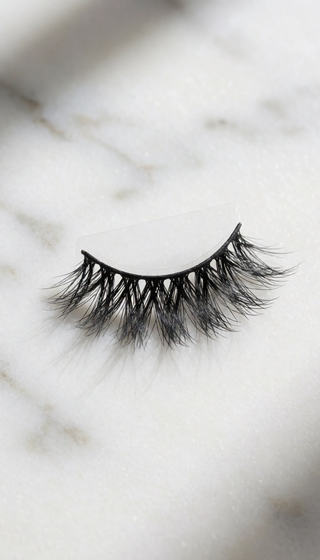
KEEP YOUR FALSE LASHES SECURE AND BEAUTIFUL THROUGH EVERY HUMID SUMMER DAY
The science of why humidity breaks down lash bonds — and the features that actually protect against it.
If you've ever had your lashes peel off at a summer wedding, slide down your face at a pool party, or lose their curl by noon on a humid day, you're not alone. Humidity is the number one enemy of false lashes — and it's not just about comfort. When moisture in the air breaks down the bond between your natural lash line and the adhesive, your lashes lift, droop, or detach entirely within hours.
The good news: not all lashes are equally vulnerable. Understanding how humidity interacts with lash adhesive — and knowing what features actually protect against it — can make the difference between lashes that last all day and ones that fail before lunch. Here's what you need to know to keep your lashes intact through every heat wave, outdoor event, and sticky summer evening.
WHY HUMIDITY DESTROYS YOUR LASHES
Humidity affects false lashes through a process called hydrolytic degradation. When water molecules in the air come into contact with the adhesive on your lash band, they begin breaking the polymer chains that hold the bond together. The higher the humidity, the faster this process occurs.
On a typical summer day with high relative humidity, traditional lash adhesive can begin losing bonding strength within a few hours. This is why your lashes may feel secure when you first apply them but start lifting at the corners or sliding along the lash line as the day progresses.
Sweat compounds the problem. When your skin produces perspiration, the salt and moisture mixture further weakens adhesive bonds. The oil from your skin (sebum) also creates a barrier that prevents adhesive from properly gripping your natural lashes in the first place. Summer heat increases sebum production, which means your lash line is oilier exactly when you need the strongest bond.
Several factors determine how quickly humidity will affect your lashes:
- Adhesive type: Traditional cyanoacrylate-based glues are most vulnerable to moisture. They cure by reacting with humidity in the air — which means they're designed to bond, but also designed to break down when exposed to prolonged moisture.
- Lash band material: Thick, rigid bands create more surface area for moisture to penetrate. Flexible, thin bands conform better to the natural lash line and leave less room for moisture to seep in.
- Application surface: If oils, moisturizer, or sunscreen are present on your eyelid when you apply lashes, the adhesive cannot form a proper bond from the start.
- Your environment: Direct exposure to water (pool, ocean, steam) is far more damaging than ambient humidity alone.
HOW LASH ADHESIVE REACTS TO MOISTURE
To understand why some lashes survive humidity while others don't, it helps to know the chemistry behind lash adhesion. Most false lashes use one of two bonding methods: traditional glue or adhesive strips.
Traditional lash glue works through a chemical reaction called polymerization. The glue contains cyanoacrylate, which hardens when it reacts with moisture — including the humidity in the air. This is why lash glue feels tacky before application and then sets as it dries. However, the same reaction that creates the bond also makes it vulnerable. When excess moisture hits an already-cured bond, it triggers a reverse reaction that softens the adhesive and weakens grip.
Adhesive strips (the kind used in glue-free lash systems) work differently. Instead of a chemical reaction, they use pressure-sensitive micro-adhesion — tiny adhesive dots that grip through physical contact rather than chemical bonding. Because they don't rely on a chemical reaction to stay in place, they aren't subject to the same hydrolytic degradation that destroys traditional glue bonds.
This distinction matters enormously in humid conditions. A pressure-sensitive adhesive maintains its grip regardless of moisture levels in the air, while a chemically-cured adhesive continues to degrade as long as humidity is present. Temperature also plays a role: heat softens traditional glue further, which is why lashes applied in the morning can feel loose by mid-afternoon on hot days.
WHAT TO LOOK FOR IN A HUMIDITY-RESISTANT LASH
If you want lashes that genuinely last through humid weather, these are the features that matter most:
1. A glue-free or micro-adhesion band. Lashes that use pressure-sensitive micro-adhesion strips rather than traditional glue are inherently more humidity-resistant. The adhesive doesn't chemically degrade when exposed to moisture, so the bond stays intact even on the stickiest days.
2. A thin, flexible band. A slim band conforms to your lash line with fewer gaps for moisture to penetrate. It also moves with your skin rather than against it, reducing the chances of the bond breaking under movement.
3. Waterproof or water-resistant construction. If the lashes themselves are waterproof, exposure to sweat, rain, or pool water won't damage the fibers or the band. This is different from waterproof adhesive — it means the entire lash is designed to withstand water exposure.
4. Hypoallergenic materials. In summer, your skin is more likely to react to foreign substances because it's already dealing with sweat, sunscreen, and increased oil production. Hypoallergenic lash materials reduce the chance of irritation that can cause you to touch or remove your lashes prematurely.
5. Lightweight fibers. Heavy lashes put more stress on the bond. Lightweight fibers reduce the gravitational pull that works against your adhesive all day long.
APPLICATION TIPS FOR SUMMER WEAR
Even the most humidity-resistant lashes can fail if applied incorrectly. These techniques maximize longevity in summer conditions:
Start with a clean, oil-free lash line. Before applying lashes, use an oil-free cleanser or micellar water to remove any moisturizer, sunscreen, or sebum from your eyelid. Let the area dry completely — even a small amount of residue can prevent proper adhesion.
Apply to dry skin. Never apply lashes to damp skin. If you've just washed your face, exercised, or stepped out of the shower, wait until your lash line is completely dry before application.
Press, don't slide. When applying adhesive-strip lashes, press the band firmly against your natural lash line and hold for several seconds. Avoid sliding or adjusting after initial placement — this disrupts the micro-adhesion before it has fully gripped.
Let adhesive cure (if using glue). If you're using traditional glue, wait 30-60 seconds after applying the adhesive to your lash band before placing it on your eye. This allows the glue to become tacky, which creates a stronger initial bond.
Avoid touching your lashes throughout the day. Every time you touch or adjust your lashes, you're introducing oils and moisture to the band. If you must adjust, use a clean cotton swab rather than your fingers.
SUMMER LASH MISTAKES TO AVOID
These common errors dramatically shorten the lifespan of your lashes in humid weather:
- Applying lashes over sunscreen or moisturizer. Even products labeled "oil-free" can leave a film that interferes with adhesion. Always apply lashes to a clean, dry lash line.
- Using waterproof mascara on false lashes. Waterproof mascara is extremely difficult to remove and can pull at the lash band, weakening the bond. Use a gentle, oil-free mascara only if needed.
- Applying too much adhesive. Excess glue takes longer to cure and creates a thicker band of adhesive that is more susceptible to moisture penetration. A thin, even layer is more effective.
- Ignoring the outer corners. The outer corners of your eyes produce the most movement (from smiling, squinting, talking) and are most exposed to sweat. Make sure these areas are securely bonded.
- Sleeping in your lashes. Friction against your pillowcase can dislodge lashes overnight, and morning sweat can weaken the bond before you even start your day.
COMPARISON: LASH TYPES AND HUMIDITY RESISTANCE
Not all lash systems perform equally in humid conditions. Here's how the most common types compare:
| Lash Type | Adhesion Method | Humidity Resistance | Best For |
|---|---|---|---|
| Traditional strip lashes | Cyanoacrylate glue | Low to moderate | Short-term wear in mild conditions |
| Magnetic lashes | Magnets (sandwich method) | Moderate | Those who want to avoid glue |
| Glue-free micro-adhesion lashes | Pressure-sensitive micro-adhesion strips | High | All-day wear, humid climates, sensitive eyes |
| Individual lash extensions | Professional-grade adhesive | Moderate to high | Those wanting a semi-permanent look |
WHAT TO LOOK FOR IN A SOLUTION
After understanding how humidity breaks down lash bonds and which features actually protect against it, the path forward is clear: you need a lash system that addresses every vulnerability we've covered.
The ideal summer lash combines a glue-free micro-adhesion band (to resist hydrolytic degradation), a thin flexible design (to conform to your lash line), waterproof construction (to handle sweat and water exposure), hypoallergenic materials (to prevent irritation from increased summer oil production), and lightweight fibers (to reduce stress on the bond). It should also be reusable enough to remain worthwhile across multiple summer events.
When a lash system checks every one of these boxes, humidity stops being a threat and becomes irrelevant.
THE SUMMER LASH THAT HOLDS UP WHEN IT MATTERS MOST
PHANSTA LASHES were engineered specifically to solve the problems that humidity creates. Instead of traditional glue — the weakest link in any lash system — PHANSTA uses glue-free micro-adhesion technology: pressure-sensitive strips that grip through physical contact, not chemical reaction. That means no hydrolytic degradation, no moisture-triggered breakdown, and no reapplication when the humidity climbs.
Every pair is waterproof, hypoallergenic, and built on a thin, flexible band with lightweight fibers — the exact combination the science above points to. And because each pair delivers 30+ wears, the cost works out to under $2 per wear, making them a practical staple for the whole summer season rather than a single-event gamble.
With 17 styles ranging from natural everyday looks to bold evening drama, there's a PHANSTA pair for every occasion on your summer calendar — weddings, beach days, rooftop parties, and everything in between.
The three biggest objections — answered:
- "Won't glue-free lashes fall off?" Micro-adhesion grips through physical contact and isn't subject to hydrolytic degradation, so humidity doesn't weaken the bond the way it does with traditional glue.
- "Will they last more than one wear?" Each pair is rated for 30+ wears with proper care — far beyond a single summer event.
- "Are they worth the cost?" At $59 per pair and 30+ wears, you're paying under $2 per wear — less than most single-use alternatives over a season.

FREQUENTLY ASKED QUESTIONS
Do glue-free lashes really hold up in humidity?
Yes. Glue-free micro-adhesion lashes grip through pressure-sensitive physical contact rather than a chemical reaction, so they aren't subject to hydrolytic degradation — the process that breaks down traditional lash glue when moisture hits the band. The bond stays intact even on the most humid days.
How many times can I wear the same pair?
With proper care — gentle removal, cleaning the band after each use, and storing them in their original case — each pair of PHANSTA LASHES delivers 30+ wears. That makes them suitable for repeated summer events, not just one occasion.
Are PHANSTA LASHES safe for sensitive eyes?
Yes. They're made with hypoallergenic materials and use no glue, no magnets, and no liner, which removes the most common sources of lash-related irritation. The glue-free design also means no adhesive fumes or residue near the eye area.
Can I wear them to the pool or beach?
Yes. PHANSTA LASHES are waterproof, so exposure to pool water, ocean spray, or sweat won't damage the fibers or the band. Just let them air-dry naturally after getting wet rather than rubbing or patting them with a towel.
How do I apply them without glue?
Simply press the micro-adhesion band directly onto your clean, dry lash line and hold for a few seconds. The pressure-sensitive strips grip immediately — no waiting for glue to get tacky, no mess, and no cleanup. Adjustments are easy: lift and re-press as needed.
STILL COMPARING OPTIONS? Explore our guides on finding your perfect lash, magnetic vs strip, and sensitive eyes.
FIND THE PERFECT LASH — Not sure which style suits you? Take the 30-second lash finder quiz →
NOT SURE ABOUT YOUR EYE SHAPE?
Find your eye shape and get personalized lash recommendations:
FIND THE PERFECT LASH FOR EVERY MOMENT
Explore our occasion-specific lash guides:
EXPERIENCE THE DIFFERENCE
Join thousands of women who have made the switch. No glue, no damage, no salon appointments — just beautiful lashes in seconds.
SHOP PHANSTA LASHES →