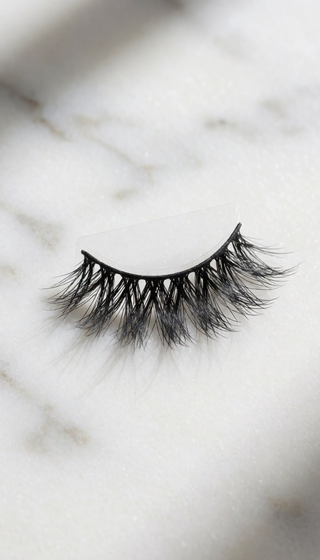
GET A SECURE, COMFORTABLE LASH BOND WITHOUT OVERLY STRONG ADHESIVES
MYTH: STRONGER ADHESIVES ARE ALWAYS BETTER FOR LASHES. In reality, compatibility, flexibility, clean preparation, and controlled removal determine whether a bond feels dependable without tugging.
The short answer is no: a stronger adhesive is not automatically better. Natural lashes move with every blink, and the eyelid is delicate. An excessively rigid bond may pull during normal movement, concentrate pressure at attachment points, or make removal harder. Repeated pulling can contribute to breakage or irritation even when the first hold feels impressive.
Balanced wear depends on enough hold, flexibility, compatibility with the lash materials, and a clean, dry surface. If a bond leaves residue, causes a reaction, or must be scraped away, extra strength has not improved the experience. Comfort, repeatability, and controlled removal belong in the same equation as durability.
A useful lash bond should remain secure during normal movement without demanding damage-removal methods. Strong hold is not measured by how difficult the lashes are to remove.
QUICK TEST: After a blink or a full day, the lashes should feel secure, not tight. Removal should require controlled, minimal force, with no redness, swelling, pain, or irritation.

THE MYTH VS. THE FACT: HOLD IS ONLY ONE PART OF BOND QUALITY
Stronger-is-better advice often oversimplifies how cosmetic lashes meet the natural lash and eyelid. Every application combines material contact, movement, and removal. Excessive force or an overly rigid chemical bond does not create superior wear automatically; it can shift the problem from early lifting to tension, residue, or difficult removal.
The myth persists because first impressions are misleading. A very strong bond often feels reassuring at application, so people credit the adhesive when the real contributors were a clean lash line, correct alignment, and a flexible band. When that same bond later demands forceful removal, the strength that seemed like a benefit becomes the problem.
BOND INTEGRITY VS. BOND FORCE
Bond integrity is the ability to stay attached as intended; bond force is simply resistance to separation. A sound connection should remain consistent while bending with the lash and distributing contact. If one small area carries most of the strain, that hotspot may lift sooner or tug with every blink.
Maximum hold is therefore the wrong benchmark by itself. The better question is whether attachment stays comfortable and predictable across repeated applications.
THREE FACTORS THAT MATTER MORE THAN THE “STRONGEST” ADHESIVE
Lasting, healthy-looking wear comes from matching the bonding method to the person, surface, and application—not maximizing force.
- THE BOND MATCH: Traditional adhesive should be compatible with the lash band and natural lashes. Follow its directions, review its ingredients, and avoid known allergens. A glue-free adhesion system should be evaluated using its stated mechanism rather than judged as though it were glue.
- SURFACE PREPARATION: A clean, dry lash line gives the bonding method the best starting point. Oils, mascara, skincare residue, moisture, and old adhesive can interfere with contact. Even a strong formula may lift early when applied over a compromised surface.
- APPLICATION GEOMETRY: Align the lash band with the natural growth direction and keep the connection close to the lash line at a controlled angle, roughly perpendicular to the skin rather than angled away. Even distribution helps prevent concentrated tension and early failure.
These factors work together. Compatibility cannot compensate for poor preparation, and strong adhesive cannot compensate for an unbalanced placement.
Removal should also match the bonding method. A system designed for gentle release will not respond well to the same techniques used for traditional glue, and vice versa. Treating every lash the same way at removal is how strong bonds cause the most avoidable damage.
PREPARE THE LASH LINE FOR A CLEANER, MORE EVEN BOND
Preparation takes less time than troubleshooting early lifting. Start by making the natural lashes as clean and dry as the bonding method requires.
- Remove old mascara, eye makeup, skincare, and previous adhesive according to their directions.
- Pat the lashes dry and avoid leaving oils, creams, or wet product near the attachment points.
- Allow serums and moisturizers to absorb fully before application, and avoid applying lashes right after a shower when residual moisture can weaken contact.
- Use clean hands and tools, and brush the lashes upward to separate clumps and improve alignment.
- Inspect the lash line and avoid applying over broken, painful, or visibly irritated skin.
- Follow the application directions exactly, including any required drying or setting time.
Patch-test or review ingredients when a manufacturer recommends it, but never place adhesive in the eye or directly on irritated skin.
APPLY WITH ALIGNMENT, NOT EXCESSIVE PRESSURE
More pressure does not automatically create a better bond. Controlled placement reduces pulling and helps the lash move naturally.
- MATCH THE WEIGHT: Choose a lash length and density that suits the strength and condition of your natural lashes.
- MEASURE BEFORE TRIMMING: Compare the band with the natural lash line before making any adjustment.
- USE THE ADHESIVE CORRECTLY: For traditional glue, apply the adhesive to the band as directed rather than onto the eye or eyelid.
- SET THE ANGLE: Place the band parallel to the natural lashes and close to the lash line, avoiding fibers that angle away from the skin.
- PRESS ONCE: Secure the middle and ends as directed, then release pressure. Repeated pressing or squeezing can create tension.
If you wear eye makeup, apply it around—not under—the band so oils and pigments do not sit at the attachment point. If the lashes pull when you blink, smile, or close your eyes firmly, remove and reapply them rather than enduring an unbalanced fit.
REMOVE GENTLY AND RESPOND TO WARNING SIGNS
Controlled removal protects both the natural lashes and the eyelid. The method should match the bonding system being used.
- For traditional adhesive, use a remover suitable for that formula and keep it away from the eye.
- For glue-free lashes, release the band slowly while supporting the skin around the lash line.
- Never twist, yank, or scrape dried adhesive from the lashes or eyelid.
- Remove any remaining makeup or residue and store reusable lashes on a clean surface.
Dermatologic and ophthalmic safety guidance emphasizes avoiding known irritants, keeping adhesive away from the eye, and stopping use when symptoms occur. Seek professional eye care for persistent redness, swelling, pain, discharge, light sensitivity, or changes in vision.
WHAT TO LOOK FOR IN A COMFORTABLE, LONG-WEARING LASH SOLUTION
Before choosing a lash system, look past maximum-strength language and assess the complete experience.
- COMFORTABLE HOLD: It should remain secure through normal blinking without creating visible pulling.
- FLEXIBILITY: The connection should bend with the lashes rather than act like a rigid extension.
- CLEAR MECHANISM: The bonding method, ingredients, preparation, and removal process should be explained plainly.
- CONTROLLED REMOVAL: The lashes should come away with minimal force and without scraping the lash line.
- REALISTIC DURABILITY: Look for a specific, supportable wear claim and understand that actual longevity depends on care and application.
- SUITABLE FIT: Weight, length, density, and style should complement your natural lashes and intended look.
A useful rule: if a description leads with strength language and says little about removal, flexibility, or preparation, treat the marketing as incomplete. The right solution balances dependable attachment, flexibility, preparation, and removal. If you also want to avoid glue, magnets, and liner, glue-free micro-adhesion is the next mechanism to evaluate.
The range covers 17 styles, from soft everyday definition to fuller evening looks, so the band weight can be matched to your natural lashes. The lashes are hypoallergenic and waterproof, and application is designed to take seconds per eye—no drying time, no adhesive mess.
- GLUE AND IRRITATION: Micro-adhesion avoids traditional glue, liner, and magnets while allowing the band to move more flexibly with the natural lashes—the two most common complaints with conventional strip lashes.
- DURABILITY: Each set is designed for 30+ wears with proper care and storage, so the bond stays dependable across repeated applications instead of weakening after a few uses.
- PRICE: One set is $59, which works out to under $2 per wear across 30+ wears—a cost that stays predictable as the wear count grows.
PHANSTA LASHES: GLUE-FREE MICRO-ADHESION THAT PUTS BOND BALANCE FIRST
PHANSTA LASHES were designed around the principle above: a secure bond should never depend on brute force. Instead of traditional glue, magnets, or liner, each band uses a glue-free micro-adhesion layer that grips the natural lash line and flexes with every blink. The result is a hold that stays put through normal movement yet releases in seconds with minimal force—no scraping, no tugging, no residue.
For readers seeking a defined lash look without a traditional glue step, PHANSTA LASHES directly answer the original problem: dependable wear without treating harsher adhesion as the only measure of quality.
FREQUENTLY ASKED QUESTIONS
ARE STRONGER ADHESIVES ALWAYS BETTER FOR LASHES?
No. A bond that is too rigid can pull with every blink, concentrate pressure on small attachment points, and force harsh removal. Dependable wear comes from flexibility, clean preparation, correct alignment, and a bonding method matched to your lashes—not from maximum strength alone.
HOW DO GLUE-FREE LASHES STAY IN PLACE Without adhesive?
They use micro-adhesion: a specially engineered band surface that grips the natural lash line through close, even contact. The bond flexes as you blink instead of resisting movement, so it stays secure through normal wear yet releases quickly with gentle, controlled removal.
HOW LONG DOES ONE PAIR OF PHANSTA LASHES LAST?
Each set is designed for 30+ wears when stored on a clean surface and removed gently. Actual longevity depends on application, care, and exposure to oils or waterproof makeup, so consistent removal and storage habits matter more than the adhesive itself.
ARE PHANSTA LASHES SUITABLE FOR SENSITIVE EYES?
They are hypoallergenic and glue-free, which removes the most common irritant in strip lashes. Still, patch-test if you have known allergies, keep the band on the lash line rather than the eyelid skin, and stop use if redness, swelling, or pain develops.
HOW DO YOU REMOVE GLUE-FREE LASHES WITHOUT DAMAGING NATURAL LASHES?
Support the skin near the lash line with one hand and lift the band away slowly with the other, starting at the inner or outer corner. Never twist or yank. If resistance feels high, loosen the edge gently first, then clean and store the pair for the next wear.
STILL COMPARING OPTIONS? Explore our guides on finding your perfect lash, magnetic vs strip, and sensitive eyes.
FIND THE PERFECT LASH — Not sure which style suits you? Take the 30-second lash finder finder →
Seconds per eye. No adhesive, no magnets, no liner.
NOT SURE ABOUT YOUR EYE SHAPE?
Find your eye shape and get personalized lash recommendations:
FIND THE PERFECT LASH FOR EVERY MOMENT
Explore our occasion-specific lash guides:
EXPERIENCE THE DIFFERENCE
Join thousands of women who have made the switch. No adhesive, no damage, no salon appointments — just beautiful lashes in seconds.
SHOP PHANSTA LASHES — GLUE-FREE, 30+ WEARS →