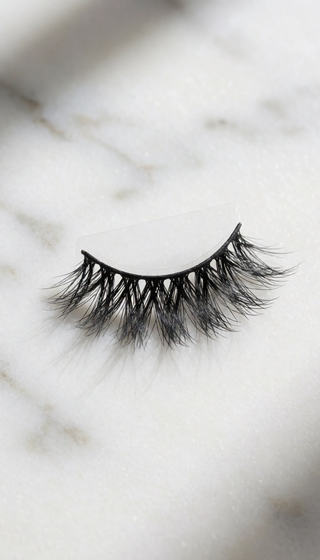
1-1 GEL LASHES VS CLASSIC LASHES: WHAT'S THE DIFFERENCE?
Achieving a natural, voluminous look without the worry of sticky residue, stinging fumes, or lifting corners is entirely possible by understanding the mechanics of lash application. The core difference between traditional strip lashes and gel-based alternatives lies in the adhesive system used—one relies on external liquid bonding, while the other integrates a physical, pressure-activated bond directly onto the band.
Achieve Seamless, All-Day Volume Without Liquid Glue or Irritation
The gel category was specifically engineered to eliminate the common frustrations associated with traditional lash application. If you have struggled with sticky residue, stinging fumes from chemical curing, or lashes lifting prematurely, the shift to gel technology addresses these issues by fundamentally changing how the lash adheres to your lid.
Understanding the Science Behind Lash Adhesion
To choose the right application, it is helpful to understand the chemistry. Traditional liquid lash glues typically utilize cyanoacrylates. These substances cure through a chemical reaction with moisture present in the air and on the skin. This curing process creates a very strong bond, which is excellent for longevity but requires a specific drying time and exposes the eyelid to chemical vapors.
Gel-based systems operate on a different principle. Instead of relying on a chemical cure, the adhesive is built into the band as a soft, tacky gel layer. This system functions through physical adhesion—similar to how a hydrocolloid patch bonds—meaning the bond is achieved through gentle pressure and tack rather than a chemical reaction. This distinction is critical when considering comfort and skin sensitivity.
Decoding Lash Terminology: What "1-1" Truly Means
The "1-1" designation originates from professional lash extension terminology. In that field, it signifies a one-to-one ratio: one extension fiber is applied to one natural lash. This contrasts with volume work, which uses fans of multiple fibers on a single natural lash. When this terminology is applied to at-home strip lashes, it indicates that the fibers are spaced along the band to visually align with your own natural lashes, creating a look that appears full yet dimensionally realistic.
This density matters because overly dense bands can create a heavy, unnatural line above the lash line. A 1-1 spacing allows your natural lashes to show through the fibers, promoting a more blended, cohesive appearance. Furthermore, the quality of the fiber tapering is key; high-quality lashes taper each strand to a fine point, mimicking the natural end of a human lash.
Comparing Comfort: Band Flexibility and Weight Distribution
Comfort during wear is heavily influenced by three factors: band stiffness, total weight, and how the lash interacts with your eyelid during natural movement. Since the eyelid blinks dozens of times per minute, any rigid or poorly balanced lash will become noticeable quickly.
Gel-band lashes often provide a structural advantage in comfort. The integrated gel layer acts as a slight cushion between the band and the skin, distributing pressure rather than concentrating it on a thin edge. Because gel designs are engineered for glue-free wear, their bands are typically designed to be thinner and more flexible than many entry-level classic strips. When evaluating any lash style, check the band flex—if it feels stiff like wire, it is likely to poke the inner corner over time.
Durability and Wear: The Difference in Longevity
The most significant divergence between the two categories is their functional lifespan. Classic strip lashes, which rely on liquid adhesive, are generally considered single-wear products. Once the glue saturates the band fibers, the band stiffens and collects residue, making a clean second application difficult and potentially risky for hygiene.
Gel-band lashes change this dynamic. Since the adhesive is integrated and not a separate liquid, the fibers and structure remain intact after wear. After use, the gel surface can be cleaned, and the tack restores for subsequent applications. This structural integrity allows for multiple wears from a single pair, significantly altering the cost-per-wear calculation compared to disposable alternatives.
Skin Health: Why Adhesive Choice Matters for Sensitive Eyes
If you have experienced irritation or redness from lash wear, the adhesive is often the primary factor. Eyelid skin is exceptionally thin, making it highly reactive to topical substances. Liquid lash glues can contain irritants such as latex or cyanoacrylates, which can release vapors during the curing process, leading to stinging or watering.
Gel formats bypass the entire category of liquid-adhesive reactions because there is no chemically curing substance sitting on the skin. However, "gentler" requires scrutiny; always look for hypoallergenic labeling and fragrance-free claims. Regardless of the format, it is crucial to never share lash pairs due to the risk of transferring bacteria to the eye area.
What to Look For in a Reliable Lash Solution
When moving beyond the basic difference between glue and gel, a few criteria determine if a lash will perform well for you. First, assess the band flexibility—it must conform to your lid without being rigid. Second, check the fiber tapering; a natural look requires a fine point at the end of every strand. Third, consider the application method: if you prefer a quick, mess-free application that doesn't require waiting for a chemical cure, a gel-based system is structurally designed for that ease of use. Finally, ensure the product is designed for extended wear without compromising the integrity of the band.
Common Application Hurdles and How to Avoid Them
Even with the best product, application technique matters. Here are the most common mistakes users make and the simple fixes:
- Mistake: Pressing too lightly. Fix: Apply firm, consistent pressure across the entire band for 5–10 seconds to ensure the micro-adhesion sets properly.
- Mistake: Applying over oily skin. Fix: Ensure your lash line is clean and dry. Any oils or creams will prevent the gel from achieving its full tack.
- Mistake: Not checking the alignment. Fix: After placement, look straight into a mirror at eye level to confirm the lashes are perfectly aligned with your natural lash line.
FREQUENTLY ASKED QUESTIONS
Question? Are PHANSTA LASHES truly glue-free?
Yes, PHANSTA LASHES utilize GLUE-FREE micro-adhesion technology. Instead of relying on liquid adhesives that can irritate the skin, our integrated gel layer bonds securely to your lid through physical tack, ensuring comfort and safety for sensitive eyes.
PHANSTA LASHES: THE GLUE-FREE SOLUTION ENGINEERED FOR YOUR LASH HEALTH
PHANSTA LASHES was developed to merge the high-impact aesthetics of professional lash artistry with the convenience of at-home application, specifically targeting the issues of chemical irritation and short wear cycles. Our entire collection utilizes proprietary GLUE-FREE micro-adhesion technology, ensuring that your lashes stay perfectly placed without the need for liquid glue or magnets.
We offer 17 distinct styles, each meticulously crafted with a 1-1 fiber placement strategy to guarantee a natural, dimensional look that blends seamlessly with your unique lash line. Because our technology relies on physical adhesion rather than chemical curing, PHANSTA LASHES are hypoallergenic, waterproof, and designed to last for 30+ wears per pair, giving you exceptional value at under $2 per wear.
Why PHANSTA LASHES Are Different
- GLUE-FREE MICRO-ADHESION: Our patented technology ensures a secure hold through gentle pressure, eliminating the need for liquid glue, fumes, or sticky residue.
- 30+ WEARS: Unlike traditional single-use strips, PHANSTA LASHES are designed for longevity, offering incredible value and reducing waste.
- HYPOALLERGENIC FORMULA: Crafted with skin health in mind, our lashes are designed to be gentle on even the most sensitive eyelids.
Question? How long do PHANSTA LASHES typically last?
Because our lashes are designed for physical adhesion rather than chemical bonding, they are built for longevity. With proper care, you can expect each pair of PHANSTA LASHES to last for 30+ wears, offering exceptional value over time.
Question? Can I wear these lashes if I wear contact lenses?
Absolutely. Since PHANSTA LASHES are glue-free, they eliminate the risk of chemical fumes or residue from liquid adhesives, making them a comfortable and safe choice for contact lens wearers.
Question? Are PHANSTA LASHES suitable for sensitive skin?
They are formulated to be hypoallergenic. We prioritize skin health by using a micro-adhesion system that avoids the common irritants found in liquid lash glues, making them ideal for sensitive eyelids.
Question? How do I remove PHANSTA LASHES safely?
To remove them safely, use an oil-free remover to dissolve the micro-adhesion gently. Do not pull the band off abruptly, as this can damage your natural lashes. Allow the remover to sit for a few moments before sliding the band away.
NOT SURE ABOUT YOUR EYE SHAPE?
Find your eye shape and get personalized lash recommendations:
FIND THE PERFECT LASH FOR EVERY MOMENT
Explore our occasion-specific lash guides:
EXPERIENCE THE DIFFERENCE
Join thousands of women who have made the switch. No glue, no damage, no salon appointments — just beautiful lashes in seconds.
SHOP PHANSTA LASHES — GLUE-FREE, 30+ WEARS →