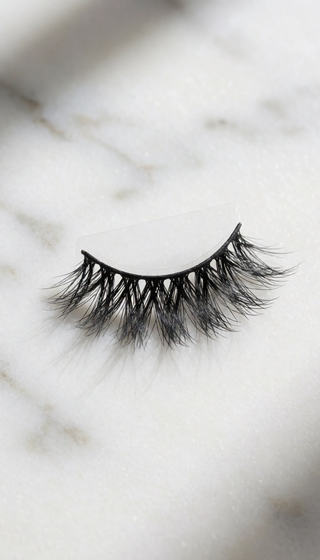
HOW TO ANALYZE YOUR LASH COMPETITORS

Three years ago, one of the fastest-growing lash brands I knew quietly shut down. They had thousands of followers, viral TikTok videos, and a product people loved. So why did they fail?
Their competitors knew what they didn't.
THE BRAND I WATCHED FAIL (AND WHAT IT TAUGHT ME)
The brand was a cult favorite in every way that felt important. But when I looked at their numbers, the story was obvious: they never analyzed what their competitors were doing right.
Their competitor had figured out three things they hadn't:
- Packaging that doubled as storage — creating repeat engagement without relying on ads.
- A loyalty program that wasn't just points — it gave early access to new styles.
- A customer support email that responded in under 4 hours.
Those all sound obvious in hindsight. But they killed the business because the founder made decisions from intuition, not competitor intelligence.
I've since built a simple framework that would have caught all three blind spots.
OUTSMART YOUR LASH COMPETITORS IN A WEEKEND — THE 4-PART ANALYSIS FRAMEWORK
1. Product. What lengths, styles, and materials are your top competitors using? How often do they launch new styles? What specific outcome do they sell in their best-performing ads — volume, lift, or convenience?
2. Price. What is the average price per lash set? Are they charging more for gradient sizes, eye-shape-specific packs, or lash tools? Where are you positioned compared to them?
3. Place. Are they selling on Amazon, their own Shopify store, or both? What bundles do they promote at checkout? Do they have a subscription option you don't?
4. Promotion. What angle dominates their messaging? Are they selling "convenience," "clean beauty," or "red carpet looks"? What keywords are they ranking for that you aren't?
THE NUMBERS THAT ACTUALLY PREDICT SUCCESS
When you analyze a lash competitor, most people look at likes. That's a vanity metric. Three numbers matter far more:
- Repeat-purchase rate: how many customers buy a second time within 30 days.
- Review velocity: how quickly they earn new reviews — a sign the product delivers results.
- Email retention: how many subscribers stay long-term without unsubscribing.
If a competitor has over 30% repeat-purchase, they have a product-market fit you need to study closely.
COMPETITOR BENCHMARK SNAPSHOT
| Metric | Strong Signal | Warning Sign |
|---|---|---|
| Repeat purchase | Over 30% within 2 months | Below 10% |
| Review velocity | New reviews daily | None in 2 weeks |
| Email retention | Under 5% unsubscribe per campaign | Over 1% every campaign |
| Launch frequency | New lash style every 30 days | Nothing in 6 months |
FAQ: COMPETITOR ANALYSIS QUESTIONS
How often should I reanalyze my competitors?
Every quarter. Seasonality affects lash sales at least as much as fashion, so every quarter is the lowest frequency that works.
What if my competitor is too big to analyze?
It doesn't matter. The framework works whether they have 1,000 customers or 1 million. The signal is in the patterns.
Are lash competitors defined only by price point?
No. A competitor is anyone who solves the same problem — beautifying the eye. That includes extensions, magnetic lashes, and lash serums. Run them all through the framework.
The best performers in the lash space all share a few things: they sell outcomes, not products. They measure repeat purchases, not likes. They know what makes customers feel beautiful — and they make the first unboxing unforgettable.
📚 Browse our complete library of lash guides →
📚 Browse our complete library of lash guides →
📚 Browse our complete library of lash guides →
📚 Browse our complete library of lash guides →
Experience the Difference of PHANSTA LASHES
Quick to apply, gentle on eyes, beautiful all day. Reusable 30+ wears per pair.
SHOP PHANSTA LASHES — GLUE-FREE, 30+ WEARS →