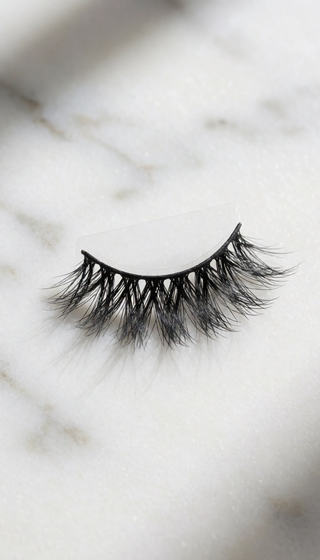
BEACH VACATION LASHES: SALTWATER-SAFE CHOICES
Achieve Flawless, Water-Resistant Lash Looks Without the Worry of Beach Damage
Discover how to maintain dramatic, beautiful lashes while swimming, sweating, and facing salty air.

THE SCIENCE OF RESISTANT LASH APPLICATION
When planning a look for high-moisture environments like the beach, humidity, or intense activity, the primary concern shifts from aesthetic appeal to structural integrity. Traditional lash applications often rely on adhesives that are susceptible to breakdown when exposed to water, salt, or oils. Understanding the mechanics of adhesion is key to longevity.
Understanding Environmental Stress on Lash Adhesion
Water and salt are natural detergents. They can weaken the chemical bonds or physical grip of many traditional lash adhesives. For a look to survive a dip in the ocean or a heavy sweat session, the application method must be inherently resistant to moisture penetration. This requires a bond that is either extremely robust or one that relies on a mechanical, non-liquid connection.
The Role of Micro-Adhesion Technology
Modern, advanced lash solutions are moving away from relying solely on liquid glue. Technology utilizing micro-adhesion offers a different approach. Instead of a chemical bond that can be dissolved by water, these systems utilize a specialized, non-liquid attachment mechanism. This allows the lash to remain securely in place even when subjected to submersion or high-humidity conditions, as the attachment point is designed to resist moisture ingress.
Actionable Tips for All Lash Wear
Regardless of the technology used, preparation is paramount. Always ensure your natural lashes are perfectly clean and completely dry before application. Any residual oils or moisture will compromise the hold of any lash system. Furthermore, when removing lashes, never force them off or pull sharply, as this is the leading cause of damage to the natural lash cycle.
Differentiating Adhesion Types
When researching lash options, it is important to distinguish between various attachment methods. Some systems use traditional liquid adhesives, while others employ mechanical or micro-adhesion. The latter is engineered specifically to provide a secure, water-resistant hold without the need for messy, potentially irritating liquid glue, making them ideal for active lifestyles.
WHAT TO LOOK FOR IN A WATER-RESISTANT LASH SOLUTION
When selecting lashes for outdoor adventures, prioritize systems that eliminate the need for traditional liquid glue and offer proven durability against moisture. Look for styles that are designed for reusability and feature a secure, non-irritating attachment.
THE these lashes SOLUTION FOR MOISTURE-PROOF BEAUTY
these lashes utilizes advanced GLUE-FREE micro-adhesion technology, specifically engineered to provide a secure, waterproof hold that withstand the elements. Designed for reusability, they offer a beautiful, dramatic look that lasts for 30+ wears, working out to less than $2 per wear. They are hypoallergenic, latex-free, and fragrance-free, ensuring comfort even on the most sensitive eyes.
FREQUENTLY ASKED QUESTIONS
Question?
Are these lashes safe for sensitive eyes?
Question?
How long do these lashes last per wear?
Question?
Can you really reuse these lashes 30+ times?
Question?
Do these lashes damage natural lashes?
Question?
How much do these lashes cost?
FREQUENTLY ASKED QUESTIONS
Question?
Are PHANSTA LASHES safe for sensitive eyes?
Question?
How long do PHANSTA LASHES last per wear?
Question?
Can you really reuse PHANSTA LASHES 30+ times?
Question?
Do PHANSTA LASHES damage natural lashes?
Question?
How much do PHANSTA LASHES cost?
STILL COMPARING OPTIONS? Explore our guides on finding your perfect lash, magnetic vs strip, and sensitive eyes.
FIND THE PERFECT LASH — Not sure which style suits you? Take the 30-second lash finder quiz →
Experience the Difference of PHANSTA LASHES
Quick to apply, gentle on eyes, beautiful all day. Reusable 30+ wears per pair.
SHOP PHANSTA LASHES — GLUE-FREE, 30+ WEARS →