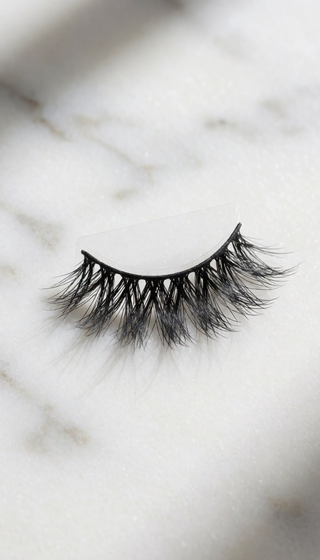
WHICH LASH TYPE IS ACTUALLY BETTER FOR YOUR EYES? THE DECISION COMES DOWN TO 5 FACTORS
If you've ever stood in the beauty aisle holding a glue-on lash kit in one hand and a magnetic set in the other, you already know the frustration: one promises a secure all-day hold but demands steady hands and tolerance for adhesive, while the other promises mess-free application but can slip, pinch, or refuse to cooperate with your eye shape. The honest answer is that neither type is universally "better" — but one of them is almost certainly better for your specific eyes, lifestyle, and patience level. This breakdown covers exactly how each type works, where each one fails, and the criteria that should drive your decision — so you can skip the trial-and-error phase and go straight to the right choice.
HOW MAGNETIC LASHES ACTUALLY WORK — AND WHERE THEY FALL SHORT
Magnetic lashes use two thin strips laced with tiny magnets that sandwich your natural lashes between them — one strip above, one below. The magnets click together through your natural hair, gripping without any adhesive. Application is fast: place the top strip, position the bottom strip, let the magnets snap together.
The biggest advantage is speed and reusability. You can apply a pair in under a minute, remove them just as quickly, and reuse them dozens of times. There's no adhesive residue, no drying time, and no sticky fingers.
The downsides are real, though. The magnets add weight, which can pull on natural lashes over a long day. The grip depends entirely on your natural lash thickness — if your lashes are fine or sparse, the magnets may not get a secure hold. And the fit is less customizable than glue: you're limited to the strip length and curvature the brand offers. For people with deeply hooded eyes or very short natural lashes, magnetic lashes can feel bulky or slip out of position by midday.
GLUE-ON FALSE LASHES: THE ORIGINAL STANDARD AND ITS REAL DOWNSIDES
Glue-on lashes are the traditional option: a strip lash (or individual flares) applied along your lash line with a thin layer of adhesive. When applied well, they offer the most secure hold of any lash type — they can survive a full day, a workout, and even swimming. The customization is unmatched: you can trim the strip to your exact eye width, layer multiple pairs, or mix lengths for a truly bespoke look.
The problems start with the adhesive itself. Lash glue commonly contains formaldehyde-releasing preservatives, latex, and cyanoacrylate — ingredients that are frequent allergens. Reactions range from mild redness and itching to contact dermatitis that can last days. Even people without sensitivities often report a stinging sensation during application. The mess factor is real too: glue on fingers, glue on eyelids, glue that dries before you've positioned the strip correctly. And removal requires either an oil-based makeup remover or a careful peel that can take natural lashes with it if you rush.
For people with sensitive eyes, allergies, or a history of reactions to cosmetics, glue-on lashes are often simply off the table.
THE HEAD-TO-HEAD COMPARISON: APPLICATION, HOLD, COMFORT, SAFETY, AND COST PER WEAR
| Factor | Magnetic Lashes | Glue-On Lashes |
|---|---|---|
| Application time | 30–60 seconds | 3–5 minutes + drying time |
| Hold duration | 6–10 hours (varies by lash thickness) | 8–12 hours |
| Reusability | 20–30 wears | 1–5 wears |
| Eye-safety risk | Low (no adhesive; magnets may pinch) | Moderate (adhesive allergens common) |
| Customization | Limited to brand's strip sizes | Fully trimmable and layerable |
| Best for | Quick routines, thick natural lashes | Maximum hold, dramatic looks |
Application speed: Magnetic wins. A pair of magnetic lashes can be applied in 30–60 seconds; glue-on lashes typically require 3–5 minutes for a clean application, plus drying time.
Hold and longevity: Glue-on wins for single-day wear. A well-applied glue-on pair lasts 8–12 hours without shifting. Magnetic pairs can slip if the magnets are weak or your natural lashes are too fine to create a solid sandwich.
Comfort: It's a tie that depends on the individual. Magnetic lashes add a small amount of weight from the magnets; glue-on lashes add a small amount of stiffness from the dried adhesive. Most wearers adapt to either within a few uses.
Eye safety: Magnetic wins for sensitive eyes — no adhesive means no adhesive-related irritation. However, the magnets themselves can pinch during application if the strips are misaligned.
Cost per wear: Magnetic wins on paper, since a single pair can be reused dozens of times with proper care. Glue-on lashes are often single-use or limited to a few wears before the band stiffens or the shape degrades.
YOUR EYE SHAPE AND LIFESTYLE: MATCHING THE RIGHT TYPE TO YOUR REAL LIFE
If you have monolid or hooded eyes, magnetic lashes can be tricky — the added bulk from the magnets may not sit comfortably under a heavy lid fold, and the strips may be visible when your eyes are half-open. Glue-on lashes applied closer to the natural lash line tend to disappear better under hooded lids.
If your natural lashes are long and thick, magnetic lashes work beautifully — the magnets have plenty of hair to grip. If your natural lashes are short or sparse, the magnetic sandwich may not close properly, and glue-on will give you a more reliable hold.
If you're always rushing out the door in under 10 minutes, magnetic wins for speed. If you enjoy a slower, more ritual-like beauty routine and want the most dramatic, customizable result, glue-on gives you more creative control.
If you have sensitive eyes, a latex allergy, or a history of cosmetic reactions, neither traditional option is ideal — and that's where the next section becomes relevant.
THE MOST COMMON MISTAKES THAT RUIN BOTH TYPES — AND HOW TO AVOID THEM
- Skipping the trim. Almost no strip lash fits every eye width straight out of the box. Measure the strip against your lash line and trim from the outer corner — never the inner corner.
- Applying glue too thick or too thin. A pea-sized amount spread thinly along the band is enough. Too much glue creates a messy, slow-drying application; too little causes the corners to lift within an hour.
- Waiting too long after applying glue. Lash glue needs 30–60 seconds to become tacky before application. Applying it while still wet means the strip will slide around and never set properly.
- Removing lashes by pulling. Whether magnetic or glue-on, always loosen the hold first — press the strips apart gently for magnetic, or dissolve the adhesive with an oil-based remover for glue-on. Pulling takes your natural lashes with it.
- Ignoring the band condition. A stiff, glue-crusted band will never sit flush against your lash line. Clean the band after every use with a cotton swab and micellar water, and replace lashes once the band loses flexibility.
WHAT TO LOOK FOR WHEN CHOOSING YOUR NEXT LASH SOLUTION
Now that you know how magnetic and glue-on compare, the criteria for choosing any lash solution should be clear:
- No adhesive required — eliminates the most common source of irritation and mess.
- Secure but gentle hold — grips without pulling on natural lashes or pinching skin.
- Customizable fit — works across different eye shapes and lash lengths.
- Long reusability — a pair should last far more than a single wear to justify the investment.
- Lightweight feel — you should forget you're wearing them by mid-morning.
- Waterproof and sweat-resistant — real life includes humidity, workouts, and long days.
Most lash types solve some of these problems. Very few solve all of them at once.
The technology is called micro-adhesion. Instead of magnets or glue, the lash band uses a skin-safe micro-adhesive surface that bonds gently to your eyelid on contact — secure enough to last a full day, gentle enough to remove without residue or pulling. No magnets means no added weight and no pinching. No glue means no irritation, no drying time, and no sticky fingers.
Each pair comes in 17 styles ranging from natural everyday looks to full glam, priced at $59 per pair. With 30+ wears per pair, that works out to under $2 per wear — significantly less than repeated purchases of disposable glue-on pairs. The formula is hypoallergenic and waterproof, making it suitable for sensitive eyes and real-life conditions like workouts, travel, and long days.
PHANSTA LASHES: THE GLUE-FREE MICRO-ADHESION ALTERNATIVE THAT SOLVES BOTH PROBLEMS
PHANSTA LASHES were designed specifically for the gap between magnetic and glue-on: a lash that applies in seconds, holds all day without adhesive, and can be reused 30+ times per pair — all without a drop of glue, a single magnet, or a separate liner.
The application takes seconds per eye: position the band along your lash line, press gently, and the micro-adhesion does the rest. Removal is just as simple — peel away cleanly, store the pair in its case, and it's ready for the next wear.
- Glue irritation and allergic reactions — the number-one reason people abandon false lashes. PHANSTA's micro-adhesion band contains zero adhesive chemicals.
- Lashes that slip or lose hold midday — micro-adhesion bonds securely on contact and stays put for a full day.
- Cost adding up — at $59 per pair with 30+ wears, you're paying under $2 per use instead of repeatedly replacing disposables.

FREQUENTLY ASKED QUESTIONS
Can you wear magnetic lashes if you have sensitive eyes?
Magnetic lashes avoid adhesive-related irritation, but the magnets themselves can cause discomfort if they pinch during application or if the added weight pulls on your natural lashes. If you have very sensitive eyes, look for a glue-free option without magnets — such as micro-adhesion lashes — that holds securely without any hardware pressing against your skin.
How many times can you reuse magnetic lashes?
Most magnetic lash pairs can be reused 20–30 times with proper care — cleaning the magnets after each use and storing them in their case. However, the magnets can weaken over time, especially if the strips are dropped or stored loosely. A high-quality micro-adhesion lash can achieve 30+ wears with no degradation in hold strength.
Are glue-on lashes bad for your natural lashes?
Glue-on lashes aren't inherently damaging, but the removal process is where most damage occurs. Ripping or peeling the strip off without first dissolving the adhesive can pull out natural lashes along with it. Always use an oil-based remover and give it time to break down the glue before gently sliding the strip away.
What is micro-adhesion technology?
Micro-adhesion uses a skin-safe adhesive surface built into the lash band itself — no separate glue, no magnets, no liner required. The band bonds to your eyelid on gentle contact and releases just as easily. It's the mechanism behind PHANSTA LASHES and eliminates the two biggest drawbacks of both magnetic and glue-on lashes: hardware weight and adhesive irritation.
How long does it take to apply PHANSTA LASHES?
Each eye takes just seconds. There's no glue to spread, no drying time to wait for, and no magnets to align. You simply position the band along your lash line and press gently — the micro-adhesion does the rest. Most wearers are fully done in under a minute for both eyes.
STILL COMPARING OPTIONS? Explore our guides on finding your perfect lash, magnetic vs strip, and sensitive eyes.
FIND THE PERFECT LASH — Not sure which style suits you? Take the 30-second lash finder quiz →
NOT SURE ABOUT YOUR EYE SHAPE?
Find your eye shape and get personalized lash recommendations:
FIND THE PERFECT LASH FOR EVERY MOMENT
Explore our occasion-specific lash guides:
EXPERIENCE THE DIFFERENCE
Join thousands of women who have made the switch. No glue, no damage, no salon appointments — just beautiful lashes in seconds.
SHOP PHANSTA LASHES — GLUE-FREE, 30+ WEARS →