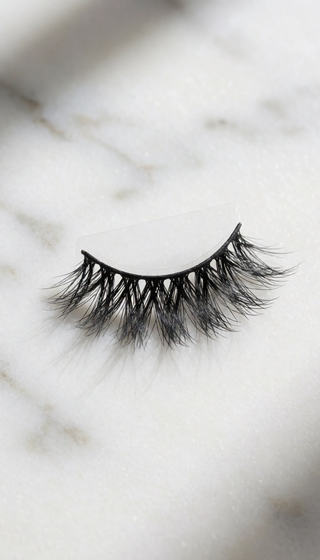
LASHES FOR FILMMAKERS AND ACTORS: CAMERA REHEARSAL TIPS
SECURE PERFECT ON-CAMERA LASHES THAT DON'T DISTRACT FROM YOUR PERFORMANCE
Master the art of on-set lash application so your eyes read naturally under intense studio lights, from the first rehearsal to the final take.

OPTIMIZING LASH APPEARANCE UNDER PROFESSIONAL LIGHTING
The primary goal of on-camera lashes is not high glamour, but functional clarity. In a controlled studio environment, lashes must translate as "human eyes with enhancement" across various camera sensors and distances. Unsuitable lashes can introduce visual noise, distracting the viewer from the performance.
Understanding How Lashes Fail Under Studio Conditions
In high-stakes filming environments, lash failure typically manifests in three predictable ways. First, the band becomes visible; intense, focused studio lighting catches the edges of the lash band, creating an artificial, distracting line. Second, the lash detaches; the combination of body heat, natural oils, and sweat generated under hot lights breaks down standard adhesives. Third, the lash feels unnatural; if it is too heavy or rigid, it forces the actor to blink stiffly, disrupting the natural flow of the performance.
The Science of Light Interaction: Matte vs. Gloss
Film lights are highly concentrated and dynamic, moving across the face during takes. A lash that appears perfect in ambient light can create severe specular highlights under a key light. The key to a professional look is managing light reflection. Shiny or glossy lashes create sharp, distracting glints that draw the eye away from the actor’s expression. Conversely, matte fibers absorb light, allowing the lash to blend seamlessly into the natural shadow of the eye socket.
- Band Design: Matte bands are essential. High-gloss finishes create unwanted specular highlights that look artificial and distracting to the camera.
- Density vs. Depth: On camera, a lash that is too thick or dense reads to the sensor as a solid block of black, resembling a strip of tape. Individual, well-placed lashes create the illusion of natural depth and volume.
- Color Selection: For fair skin tones, overly harsh black can appear too severe. Utilizing dark brown tones that harmonize with natural hair and brow color often yields a more integrated, realistic look, unless a specific character brief demands otherwise.
Application Techniques for Endurance During Long Takes
For extended rehearsal periods or long shooting days, the application method must prioritize bond integrity over quick application. The preparation of the natural lash base is critical for long-term hold.
- Base Preparation: Always start with completely clean, oil-free eyelids. This ensures the adhesive has maximum surface grip from the moment of application.
- Adhesive Choice: Select a brush-on adhesive formulated to dry with flexibility. Rigid, hard-drying formulas are prone to cracking when the eye moves—squinting, smiling, or blinking naturally.
- Placement Strategy: Applying the lash directly under the natural lash line, rather than sitting on top of the lid, is a technique used to completely conceal the band and anchor the lash firmly during facial movements.
- Curing Time: Allow the adhesive to cure for an extra 10 seconds beyond your standard application time. This extended curing period builds a more durable bond capable of withstanding the physical demands of rehearsals and movement.
- Enhancing Durability: After application, using a gentle fan or a hairdryer on the lowest setting for about 30 seconds helps accelerate the curing process, significantly increasing the bond's resistance to sweat and oils.
What to Look For in Lashes Before Booking a Set
Before committing to a specific lash style for a job, evaluate it against these technical criteria. These factors determine if the lash will perform under the rig of professional production.
- Band Width: Ideally, the band should be less than 2mm, allowing it to remain virtually invisible when correctly positioned under the natural lash line.
- Integration: The lash should appear woven into the natural lash line, not merely glued on top as an external addition.
- Finish: Strictly matte fibers are required. Any inherent gloss will cause unwanted light scatter.
- Length Control: Ensure the lash length does not extend significantly past the outer corner of the eye. Excessive length catches side light and creates distracting, unnatural shadows.
- Flexibility Test: When bent gently in your fingers, the lash should spring back into shape rather than folding or losing its structure. Flexibility ensures it moves *with* your face, not against it.
Maintaining Lash Integrity Between Scenes
Treat your set lashes as temporary costume pieces. Do not leave them on for the entire duration of a multi-scene shoot. Once the lighting setup changes or a significant break occurs, remove them to prevent adhesive degradation. Use an oil-free makeup remover and a soft cotton pad to lift the adhesive gently. Following removal, cleanse your natural lashes with a mild, gentle cleanser and water to keep the lash line clean and camera-ready for the next day.
THE PHANSTA LASHES SOLUTION: CONSISTENT PERFORMANCE
When you are on set, there is no time to manage a lash that curls or peels at the edge. The most reliable solution is rigorous pre-testing. We recommend wearing your chosen lashes through a full rehearsal, a workout, and a dinner to ensure they pass the stress test. For professional production environments, PHANSTA LASHES provides a system engineered to pass this test consistently. Our individual lashes are crafted from a bento-soft material that inherently resists light reflection, and their thin, matte base disappears into the natural lash line. This design allows actors to maintain a natural look, often forgetting they are wearing them even through extremely long location shoots.
FREQUENTLY ASKED QUESTIONS
How long do lashes need to dry before filming?
Answer: You need a minimum of 2 minutes of full drying time before moving your face. If you are working under intense heat or bright studio lights, wait a full 5 minutes to ensure the bond is completely solid and secure.
Should actors use waterproof mascara with lashes?
Answer: Generally, no. Waterproof mascaras contain heavy solvents that can rapidly break down the adhesive used for lashes. It is best to use a standard, non-waterproof mascara, applying it only to the tips if color enhancement is needed.
Can I reuse lashes after a day on set?
Answer: Yes, provided you remove them carefully and clean the adhesive residue using an oil-free remover. Storing them in a curved case after cleaning helps preserve their original shape and integrity for future use.
Are glue-free lashes safe for sensitive eyes?
Answer: Yes, PHANSTA LASHES are formulated to be hypoallergenic. Our micro-adhesion technology is designed to be gentle on the skin while providing a secure, comfortable hold that minimizes irritation during long wear.
How does PHANSTA LASHES attach without traditional glue?
Answer: PHANSTA LASHES utilize advanced micro-adhesion technology. This proprietary system allows the lash to adhere securely to the natural lash line without the need for harsh glues, magnets, or liners, ensuring a clean, comfortable application.
Find your eye shape and get personalized lash recommendations: Explore our occasion-specific lash guides:NOT SURE ABOUT YOUR EYE SHAPE?
FIND THE PERFECT LASH FOR EVERY MOMENT
Quick to apply, gentle on eyes, beautiful all day. Reusable 30+ wears per pair.
SHOP PHANSTA LASHES — GLUE-FREE, 30+ WEARS →