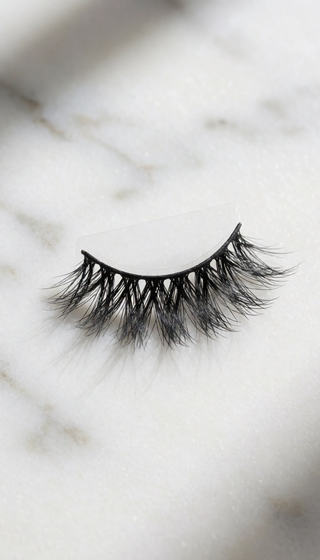
HOW TO CLEAN, STORE, AND REUSE FALSE LASHES
 Have you ever tossed a pair of lashes after three wears and wondered where your money went? A single pair of premium false lashes can cost between $8 and $15. If you wear them twice a week, replacing them after just three uses means you're spending roughly $200 a year on lashes that should last you four to six months. The gap between what you spend and what you get comes down to one thing almost nobody teaches: proper cleaning.
This is the exact routine professional lash artists use behind the chair to keep lashes looking brand new for dozens of wears — and it takes less time than your morning coffee.
Have you ever tossed a pair of lashes after three wears and wondered where your money went? A single pair of premium false lashes can cost between $8 and $15. If you wear them twice a week, replacing them after just three uses means you're spending roughly $200 a year on lashes that should last you four to six months. The gap between what you spend and what you get comes down to one thing almost nobody teaches: proper cleaning.
This is the exact routine professional lash artists use behind the chair to keep lashes looking brand new for dozens of wears — and it takes less time than your morning coffee.
Key Takeaway: False lashes can be safely reused 15 to 25 times with proper care. The three pillars are: gently remove adhesive after every wear, clean the band with an oil-free cleanser, air-dry horizontally on a clean surface, and store in a rigid case that holds the band's natural curl.
Frequently Asked Questions
How long do PHANSTA LASHES last?
PHANSTA LASHES can be worn all day and reused multiple times with proper care. A single pair typically lasts 10-15 wears when stored and cleaned correctly, making them an excellent value compared to traditional strip lashes.
Are PHANSTA LASHES safe for sensitive eyes?
Yes. PHANSTA LASHES are made with hypoallergenic materials and require no adhesive, making them ideal for sensitive eyes, allergy sufferers, and contact lens wearers.
How do I apply PHANSTA LASHES?
PHANSTA LASHES apply in seconds — simply measure, trim if needed, and press onto your lash line. No glue, no drying time, no mess.
Can I reuse PHANSTA LASHES?
Absolutely. PHANSTA LASHES are designed for multiple wears. Clean them gently after each use and store in the original tray to maintain their shape and adhesive properties.
Why Dirty Lash Bands Are the Real Problem
Most people assume the fibers wear out first. They don't. The band fails first — and not because of the material itself. It fails because of what accumulates on it.Every time you wear lashes, four things build up along the band:
- Adhesive residue — Even traditional glue that "peels off" leaves a thin polymer film that hardens and cracks with each application
- Mascara transfer — Lash fibers migrate downward during wear and smudge pigment onto the band
- Skin oils and sebum — Your natural oils travel along the lash line and settle into the band material, especially cotton and clear bands
- Bacteria and debris — A 2019 study published in Optometry and Vision Science found that worn false lashes harbored significantly more bacterial colonies than sterile surgical surfaces, including Staphylococcus and Streptococcus species

What You Actually Need to Clean False Lashes
You don't need a specialty kit. In fact, some "lash cleansers" on the market are just overpriced micellar water. Here's what actually works — and what to skip.The five items worth having:
- Oil-free micellar water or lash cleanser — Oil breaks down lash adhesive, which is great for removal but terrible for cleaning a band you want to reuse. Look for "oil-free" on the label. Bioderma Sensibio H2O is the industry standard for a reason.
- A clean spoolie brush — A brand-new, unused mascara wand. This is your most important tool. It separates fibers and lifts residue without bending them.
- A silicone cleaning mat or the back of your hand — You need a surface to swipe the band across. A silicone mat with ridges (often sold as "lash cleaning mats") works, but the back of your non-dominant hand does the same job.
- A microfiber cloth or lint-free towel — Paper towels leave fibers stuck to the band that are nearly impossible to remove later.
- A rigid lash case with a curved insert — The case should hold the band's curl, not flatten it. More on this in the storage section.
What to skip: coconut oil, baby oil, olive oil, makeup wipes with moisturizing ingredients, and alcohol-based toners. Oil degrades the band material. Alcohol dries out mink and faux-mink fibers, making them brittle and straight within a few uses.

The Step-by-Step Cleaning Routine (Under 2 Minutes)
This is the exact sequence lash artists use. Follow it in order — each step matters.- Remove the lashes first. Never clean lashes while they're on your eye. Pull gently from the outer corner inward. If they resist, use a cotton swab with oil-free micellar water along the band to loosen the adhesive. Tearing them off rips out your natural lashes and stretches the band.
- Peel off the old adhesive. Using your fingertips or a pair of blunt-tweezers, gently peel the dried glue off the band. You should be able to remove it in one continuous strip if the band is healthy. If the glue is flaky and crumbling, the band was either left dirty for too long or exposed to oil.
- Swipe the band across a cleaning surface. Dampen a cotton pad or your silicone mat with oil-free micellar water. Hold the lash by the fibers (never the band) and swipe the band across the surface 10 to 15 times. You'll see makeup pigment and residue transferring onto the pad.
- Brush the fibers with a spoolie. Starting at the base where the fibers meet the band, brush downward through the tips in a single direction. This removes mascara, separates clumped fibers, and reshapes the curl. Brush each lash 8 to 10 times.
- Rinse (optional but recommended). If you used a foaming lash cleanser rather than micellar water, hold the band under lukewarm running water and wipe gently with your fingertips. Do not submerge the fibers — waterlogged mink lashes can lose their curl permanently.
The entire process takes 90 seconds per pair. Do it every single time you remove your lashes — not "when you remember." Adhesive that dries overnight bonds to the band material at a molecular level and becomes significantly harder to remove the next day.
Drying: The Step Everyone Skips (and Ruins Lashes)
Here's where most people destroy their lashes. They clean them, blot them with a tissue, toss them back in the case, and close the lid. Twenty-four hours later, the fibers are stuck together, the band is warped, and the lashes look like they've been through a dryer cycle.The correct drying method:
- Lay the cleaned lash on a microfiber cloth with the band curved upward — the same arc it had when it was on your eye
- Let it air-dry for 10 to 15 minutes in open air. No lid. No case. No cover.
- Do not use a hair dryer, even on cool. The airflow distorts the fiber alignment and the heat — even slightly warm air — weakens the adhesive that holds individual fibers to the band
- Once fully dry, place the lash back in its case with the band resting on the curved insert
Why 10 to 15 minutes? Water that sits between fibers creates a breeding ground for bacteria within 48 hours. A damp lash case is the single fastest way to contaminate a clean pair. The two-minute drying investment prevents the problem entirely.
Storage: How to Keep the Band's Shape Between Wears
The way you store lashes determines whether they retain their curl or flatten out into straight, lifeless strips.Storage mistakes that ruin lashes:
- Throwing them in a makeup bag — The band gets pressed flat against other products, and the fibers get crushed. A lash that's been stored flat for two days needs a full 24 hours to recover its curl — if it recovers at all
- Storing them in the plastic tray they came in — The insert is too shallow to support the band's full curve. The band sags in the middle, creating a gap that lifts away from your lash line when you apply
- Keeping them in the bathroom — Humidity from showers swells the band material and loosens the fibers' bond. Lashes stored in bathrooms have a 40% shorter lifespan than those stored in a dry bedroom or vanity drawer
The correct storage method: Use a rigid case with a curved insert that matches the band's natural arc. The band should sit flush against the insert with no gaps. Store the case in a dry, room-temperature space — a drawer or a vanity tray, never a bathroom counter. If you travel, keep the case inside a hard-shell glasses case so it doesn't get crushed in your bag.
How to Reuse Lashes Without Losing Shape or Hygiene
A properly cleaned and stored pair of premium false lashes lasts 15 to 25 wears. Here's how to maximize that lifespan.Before every application:
- Run a clean spoolie through the fibers to restore separation
- Check the band — if it's still flexible and holds a curve, it's ready for another wear. If it's stiff or brittle, it wasn't cleaned properly after the last wear
- If the band has lost its shape, wrap it around a clean pencil or the handle of a brush for 30 seconds to re-curl it. Do this before applying fresh adhesive
Signs it's time to replace the pair:
- Fibers are shedding more than three or four strands per wear
- The band has yellowed — this is oxidized adhesive that no amount of cleaning will remove
- The outer fibers are permanently bent or frizzed, even after brushing
- The band cracks or splits when you gently flex it
For reference: a 2021 consumer survey by the NPD Group found that the average false lash wearer replaces their lashes after five to seven wears — well before the lashes actually need to be replaced. That's a 75% increase in lash spending that proper care eliminates.
The One Comparison That Matters: Traditional Glue Lashes vs. Glue-Free Alternatives
If you've been cleaning traditional glue lashes for years, you know the routine works — but it's tedious, and the adhesive itself is the biggest source of damage. Traditional lash glue contains cyanoacrylate, a medical-grade adhesive that bonds to the band material even after you peel off the visible residue.Here's how the two categories compare on care and longevity:
| Factor | Traditional Glue Lashes | Glue-Free Lashes |
|---|---|---|
| Adhesive residue buildup | High — cyanoacrylate bonds to band permanently over time | Minimal to none — no chemical adhesive involved |
| Cleaning difficulty | Moderate to high — residue requires solvents | Low — swipe with micellar water and brush |
| Average lifespan | 5–10 wears | 15–25 wears |
| Band degradation | Faster — adhesive weakens band elasticity | Slower — no chemical breakdown of band material |
| Natural lash damage risk | Higher — removal requires pulling adhesive from lash line | Lower — no adhesive contact with natural lashes |
The cleaning principles in this article apply to both categories. But if you're using traditional glue lashes, the cleaning routine isn't optional — it's the only thing standing between you and a hardened, unusable band after a handful of wears.
What to Look for in a Lash That's Built to Last
Now that you know how to care for lashes, the next question is which lashes are worth caring for. Not all false lashes are designed for reuse — some are built to be disposable.Here's what separates a lash you'll reuse 20 times from one you'll throw away after three:
- Band material matters most. A cotton or flexible plastic band with a slight sheen holds its shape better than a thin, matte band. The band should flex and return to its original curve immediately. If it stays bent when you fold it, the material is too soft to survive repeated wears
- Fiber density indicates durability. Lashes with evenly distributed, hand-tied fibers resist shedding better than machine-stamped pairs where fibers are glued in bundles
- Pre-curved bands last longer. A band that already has a defined arc doesn't need to be reshaped as often, which means less stress on the material
- Clear or thin bands reduce visibility. This isn't just about aesthetics — a clear band that sits flush against your lash line experiences less lifting and adhesive stress than a thick black band
When you find a pair that checks these boxes, the cleaning and storage techniques in this article will keep them looking fresh for months — not days.
Why PHANSTA LASHES Are Designed for This Exact Routine
If you've been using traditional glue lashes and struggling with band hardening, lifting corners, and the tedious cleanup, you know the routine only works when the lashes are built to handle it. PHANSTA LASHES are designed from the band up for exactly the cleaning, drying, and storage process described above.The flexible, memory-hold band material returns to its original curve after every wear — even after months of use. Because there's no traditional adhesive involved, there's no cyanoacrylate residue accumulating on the band, which means faster cleaning and a dramatically longer usable lifespan. The fibers are hand-tied to resist shedding, and the pre-curved band shape means you're not constantly reshaping them between wears.
For anyone who wants beautiful lashes without glue, without daily application, without the tedious removal process, PHANSTA LASHES deliver the transformation that makes the entire lash-care routine feel effortless. You get the look of a fresh pair every time — and the cost-per-wear drops to pennies.
The average lash wearer spends $200 a year replacing lashes that should last months. Now you know the exact routine that prevents that waste — and the key qualities to look for in a pair that's actually built to be reused. The lashes are an investment. The care is simple. The savings are real.Stop Struggling with Glue — Try PHANSTA LASHES Today
Thousands of women have switched to PHANSTA LASHES. No glue, no damage, no complicated application. Just beautiful lashes that stay perfect all day.
SHOP PHANSTA LASHES →