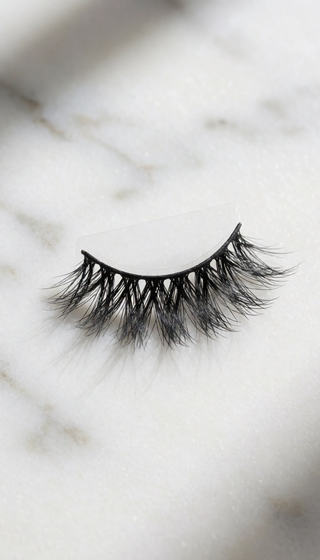
LASHES FOR BEACH VACATIONS: SALTWATER VS FRESHWATER
Achieve Flawless, Water-Resistant Lashes That Survive Salt Air and Pool Splashes
Learn the science behind how water affects lash integrity and discover the criteria for choosing lashes that look perfect from the boardwalk to the poolside.

Understanding How Water Impacts Lash Structure
When considering wearing decorative lashes near water, it is important to understand the chemical and physical interactions between water (both fresh and salt) and the materials used in lash construction. Water acts as a solvent and a weight, affecting both the lash fibers and the adhesive bond.
The Effect of Saline Solutions (Ocean Water)
Saltwater is a high-salinity environment. The salt content pulls moisture from surrounding materials, leading to a process called desiccation. For synthetic lash fibers, this can cause the material to become brittle, losing its natural curl and shape. Furthermore, as the water evaporates, salt crystals are left behind. These crystals add physical weight to the lash band, which can cause the entire lash to droop prematurely, regardless of the initial application quality.
The Impact of Freshwater and Chlorine (Pool/Lake Water)
Freshwater presents a different challenge. Many synthetic lash materials possess a degree of porosity. When submerged, these fibers absorb water, causing the lash band to swell. This swelling can lead to a noticeable loss of curl and a heavy, flat appearance. Chlorine, commonly found in pools, is a chemical agent that can break down both the structural integrity of the lash fibers and the adhesive bond holding the lash to your natural lashes.
Best Practices for Lash Longevity Near Water
To maintain the appearance and health of your lashes during humid or aquatic activities, specific preparation and care steps are recommended:
- Pre-Trim for Optimal Fit: Ensure the lash is trimmed to be 2–3 millimeters shorter than your natural lash line's outer corner. Excess length increases the surface area exposed to water, leading to faster peeling.
- Seal the Seam: Apply a waterproof top coat over the entire lash structure. This creates a protective barrier over the adhesive point where the lash meets your natural lashes.
- Drying Technique: Always pat the lashes gently with a clean, dry cloth after exposure to moisture. Rubbing creates friction, which is a primary cause of band slippage and bond failure.
- Time Limitation: For most lash types, any exposure exceeding 30 minutes in water will compromise the bond. If you wish to wear them, keep your face above the waterline.
- Emergency Kit Prep: Keep a small kit containing a specialized adhesive, a precision cutting tool (like a Q-tip), and a small fan for quick drying.
Key Criteria for Choosing Water-Resistant Lashes
When selecting lashes for environments with high humidity or water exposure, focus on material science and physical properties rather than marketing claims. Here is what truly matters:
- Weight Distribution: Opt for the lightest possible lash weight. Heavier lashes are more susceptible to gravity and water-induced drooping.
- Band Material Flexibility: A rigid band will not conform to the natural curve of your eyelid when wet, leading to lifting and detachment. Look for flexible bands.
- Fiber Composition: Seek materials specifically noted for water resistance. Avoid lashes constructed from materials known to absorb water, such as certain cotton or paper-based bands.
- Color Selection: A clear or deep brown band is often more forgiving when water is present, as it minimizes the visual impact of moisture droplets compared to stark black bands.
Comparing Lash Types for Outdoor Wear
The performance of different lash types under environmental stress varies significantly. The following comparison outlines how various lash formats handle the challenges of moisture and salt.
| Factor | these lashes | Standard Drugstore Lash | Classic Lash Extensions |
|---|---|---|---|
| Saltwater Resistance | Excellent—maintains curl integrity | Tends to droop after 20 min | Varies; prone to brittleness |
| Freshwater Resistance | High—minimal fiber swelling | Absorbs water, leading to flatness | Bond can swell at the attachment point |
| Cost Per Wear | Approximately $2 | Typically $3–$5 | Often $150+ |
| Removal Process | Seconds | Seconds | Requires professional removal |
The Ideal Lash Profile for High-Moisture Environments
Based on the material science of water resistance, the most effective lash solutions possess specific characteristics: they must be lightweight to resist gravity, possess a flexible band to maintain shape when damp, and utilize a bond that resists chemical breakdown from chlorine or salt. These features ensure that the lash maintains its intended aesthetic without the risk of premature detachment or structural damage.
Why these lashes Are Engineered for Durability
these lashes were developed specifically to address the limitations of traditional lash wear in humid and aquatic settings. Our formulation utilizes GLUE-FREE micro-adhesion technology, which provides a secure bond that resists the moisture-induced failures common in other products. The lightweight design ensures minimal drag, while the material composition is selected for its inherent resistance to water absorption and salt corrosion, allowing for consistent wear that lasts 30+ wears per pair.
FREQUENTLY ASKED QUESTIONS
Will saltwater ruin lash extensions?
Saltwater is tough on the extension bond. It can cause the adhesive to break down in as little as 15 minutes. If you have extensions, avoid diving and rinse with fresh water immediately after ocean exposure.
Can you swim with false lashes?
You can swim with strip lashes, but don't dunk your face underwater. Splashes, light swimming, and beach photo sessions are fine. Full submersion for longer than 30 seconds will loosen most lash adhesives.
What type of lashes are best for a tropical vacation?
Choose ultra-light, tapered lashes with a clear or brown flexible band and waterproof seal over the seam. They'll hold up to humidity and occasional splashes without looking dramatic.
How long do PHANSTA LASHES typically last?
PHANSTA LASHES are designed for high durability, offering 30+ wears per pair. Our GLUE-FREE micro-adhesion technology ensures the bond remains secure through daily wear, even with exposure to environmental moisture.
Are glue-free lashes safe for sensitive eyes?
Yes, PHANSTA LASHES are hypoallergenic. Because they utilize a GLUE-FREE micro-adhesion system, they eliminate the risk of irritation associated with traditional lash adhesives, making them suitable for sensitive eyes.
Find your eye shape and get personalized lash recommendations: Explore our occasion-specific lash guides:NOT SURE ABOUT YOUR EYE SHAPE?
FIND THE PERFECT LASH FOR EVERY MOMENT
Quick to apply, gentle on eyes, beautiful all day. Reusable 30+ wears per pair.
SHOP PHANSTA LASHES — GLUE-FREE, 30+ WEARS →