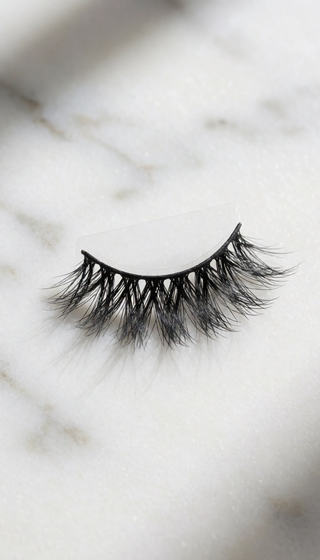
REUSE STRIP LASHES SAFELY — MAKE EVERY PAIR LAST WITHOUT DAMAGING YOUR LASHES OR YOUR EYE HEALTH
Strip lashes can be surprisingly expensive to replace every week, and tossing them after a single wear feels wasteful. The good news: you can safely reuse strip lashes many times over — the key is knowing how to clean, store, and handle the band correctly. The band material determines how many wears you'll get, and proper hygiene prevents the bacteria buildup that leads to eye irritation.
If you've ever thrown a pair away after one night out, you're not alone — and you're not wasting money by wanting to reuse them. You're just missing the technique. The steps below are exactly how to make every pair last as long as possible without risking your eye health.
WHY REUSING STRIP LASHES WORKS — AND WHEN IT DOESN'T
Strip lash bands are made from one of three materials: cotton thread, clear plastic (PVC), or flexible fabric. Cotton and fabric bands are the most durable and tolerate repeated cleaning best. Clear PVC bands are thinner and lighter but crack and warp faster with handling. If you want a pair that survives dozens of wears, the band material is the single biggest factor.
Beyond the band, the lash fibers themselves matter. Synthetic fibers hold their shape through cleaning better than real mink or silk, which can mat and clump if handled too aggressively. This doesn't mean natural fibers can't be reused — they just need a gentler touch and a shorter overall lifespan.
The health concern with reuse is straightforward: every time you wear lashes, the band collects makeup, oils, skin cells, and bacteria. Without proper cleaning between uses, that buildup transfers directly onto your eyelid, increasing the risk of styes, conjunctivitis, and contact dermatitis. Proper hygiene eliminates that risk entirely. Understanding these differences up front helps you choose a pair that matches how long you want it to last.
THE COMPLETE STEP-BY-STEP CLEANING GUIDE
Cleaning your lashes properly after every single wear is the difference between a pair that lasts 30+ wears and one that falls apart in five. Here's the exact process:
- Remove gently. Starting from the outer corner, slowly peel the band away from your eyelid. Never yank or pull from the center — this stretches and warps the band.
- Clean the old adhesive. Using a pair of tweezers or your fingertips, carefully peel off any remaining glue from the band. If the adhesive is stubborn, soak a cotton pad in micellar water or oil-free makeup remover and press it against the band for 20 seconds to dissolve the residue.
- Wipe the band clean. Dampen a lint-free cloth or cotton pad with micellar water and gently wipe both sides of the band. Work from the outer edge inward. Avoid getting the lash fibers soaking wet — excess moisture weakens the band and causes fibers to lose their curl.
- Let them air dry. Place the cleaned lash on a lint-free tissue or the original lash tray with the band resting on the raised edge so it keeps its curved shape. Allow to air dry completely — at least 15 to 20 minutes — before storing.
- Reshape the band. Once dry, gently press the band back into its natural curve using your fingertips or the tweezers. If the band has lost its shape, you can briefly hold it near warm (not hot) air from a hair dryer for two seconds to soften it, then reshape.
Never use oil-based makeup removers on cotton or fabric bands — oil degrades the fibers over time. Micellar water or a lash-specific cleanser is your safest option. Clean your lashes after every single wear, even if they look clean — bacteria and oils are invisible, and residue you can't see still degrades the band and irritates your eyelid.
HOW TO STORE YOUR LASHES BETWEEN WEARS
Storage is where most people unknowingly damage their lashes. The original lash tray or a dedicated lash storage case is the best option because it holds the band in its natural curved shape. Never store lashes flat, loose in a drawer, or in a bathroom cabinet — humidity and temperature fluctuations break down both the fibers and any residual adhesive on the band.
If you don't have the original tray, a clean, flat pill organizer or a rigid glasses case works well. The key requirements are: dry environment, protection from dust and crushing, and something that holds the band's curve. Some lash enthusiasts shape a small piece of tissue paper into a half-moon and place it inside the band to preserve the curve during storage.
Keep lashes away from direct sunlight, heaters, and bathroom steam. UV exposure degrades synthetic fibers, and repeated humidity cycles cause the band to lose its structural integrity faster than anything else. If you travel often, a rigid lash case beats the original tray — it protects the band from being crushed in a bag and keeps dust off the fibers. A small silica gel packet tucked into your storage case absorbs excess moisture and extends the life of the fibers.
5 MISTAKES THAT RUIN YOUR LASHES FAST
Most lash damage isn't dramatic — it's the small habits repeated every wear that quietly ruin a pair. Here are the five that do the most harm:
- Applying new glue over old glue. This is the most common mistake. Each wear must start with a completely clean band. Layering new adhesive over dried residue creates a bumpy, uncomfortable surface that causes the lash to lift and also traps bacteria against your eyelid.
- Getting the band soaking wet. Water weakens the band material and loosens the bond between the fibers and the band. Clean with a damp — not wet — cloth.
- Using oil-based removers. Oil breaks down cotton threads and causes natural fibers to mat. Stick to oil-free micellar water or alcohol-based lash cleansers.
- Pulling lashes off roughly. This stretches the band permanently. A gentle peel from the outer corner preserves the shape.
- Storing lashes loose or flat. A flattened band loses its curve and won't sit properly against your lash line, causing lifting and an uneven look.
SIGNS IT'S TIME TO REPLACE YOUR LASHES
Even with perfect care, lashes don't last forever. Here's when to retire a pair:
- The band has become stiff, cracked, or permanently straightened and no longer hugs your lash line.
- Fibers are visibly matted, clumped, or shedding in noticeable patches.
- The band leaves visible residue that won't clean off, no matter how thoroughly you wipe it.
- You've developed any eye irritation, redness, or itching after wearing a pair — replace it immediately and never wear it again.
- The inner corner or outer edge fibers have fallen out completely, leaving gaps.
On average, a well-cared-for cotton or fabric band strip lash will give you anywhere from 10 to 20 wears with proper hygiene. Glue-free strip lashes with micro-adhesion technology can reach 30+ wears because the band isn't being stressed by repeated adhesive application and removal. When in doubt, replace them — no pair is worth an eye infection.
WHAT TO LOOK FOR IN A REUSABLE STRIP LASH
If you want a lash you can genuinely reuse many times, four criteria matter most: a cotton thread or flexible fabric band that outlasts clear PVC; an adhesive system that doesn't degrade the band with every application and removal cycle; hypoallergenic construction free from latex, formaldehyde, and harsh chemicals if you have sensitive eyes; and waterproof, sweat-resistant fibers that hold their shape through humidity with less damage between cleanings.
The single biggest structural advantage for longevity is a glue-free band. Traditional lashes fail because adhesive residue builds up and the band warps with every cycle. A glue-free micro-adhesion design eliminates that failure point entirely — you press on and peel off without stressing the band, which is what makes 30+ wears realistic rather than aspirational.
Finally, consider how the lash applies. A band that requires liquid glue will degrade with every application and removal cycle, no matter how gently you handle it. A glue-free design removes that variable entirely, which is why it's the single most important feature if reuse is your priority.
MEET PHANSTA LASHES: THE GLUE-FREE STRIP LASH ENGINEERED FOR REUSE
PHANSTA LASHES were designed specifically to solve the two biggest problems with traditional strip lashes: the mess and irritation of glue, and the limited lifespan of glue-dependent bands. Instead of adhesive, PHANSTA LASHES use a proprietary micro-adhesion band — a flexible, skin-safe polymer strip that grips your natural lash line through gentle surface tension, not chemical bonding.
Because there's no glue to apply, remove, and reapply, the band stays in its original shape far longer. Each pair delivers 30+ wears with proper care — that's under $2 per wear at $59. The lashes are hypoallergenic, waterproof, and available in 17 styles ranging from natural everyday to dramatic volume.
The application takes seconds per eye: peel the band from its liner, press it along your lash line, and adjust. Removal is a gentle peel with no oily cleanser needed, which means the fibers and band stay clean and intact for the next wear.
Why PHANSTA LASHES last — the three things that matter most:
- Glue and irritation: No latex, no formaldehyde, no harsh adhesive chemicals — nothing to sting, clump, or build up on the band between wears.
- Durability: Micro-adhesion releases cleanly without pulling or stretching, so the band keeps its curve and grip wear after wear.
- Cost per wear: $59 divided across 30+ wears comes out to under $2 per wear — a fraction of repeatedly replacing disposable pairs.

FREQUENTLY ASKED QUESTIONS
How many times can you safely reuse a pair of strip lashes?
With proper cleaning and storage, a cotton or fabric band strip lash can last 10 to 20 wears. Glue-free micro-adhesion bands can reach 30+ wears because the band isn't stressed by repeated adhesive application and removal. Replace immediately if you experience any eye irritation.
Is it safe to reuse strip lashes without cleaning them?
No. Every wear leaves makeup, oils, skin cells, and bacteria on the band. Skipping cleaning transfers that buildup to your eyelid, raising the risk of styes, conjunctivitis, and contact dermatitis. Always remove old adhesive and wipe the band with micellar water before storing.
What's the best way to clean a strip lash band?
Peel off leftover glue with tweezers, then wipe both sides of the band with a lint-free cloth dampened with micellar water or oil-free makeup remover. Let the lashes air dry for 15 to 20 minutes on a tissue or the original tray, then reshape the band before storing.
How do you know when to throw away strip lashes?
Replace them when the band is stiff, cracked, or permanently straightened; fibers are matted or shedding in patches; residue won't clean off; gaps appear at the inner or outer corners; or any irritation develops after wear. A flattened band that no longer hugs the lash line is also a sign.
Are glue-free strip lashes better for reuse?
Yes. Traditional bands fail because adhesive residue builds up and the band warps with every application and removal cycle. A glue-free micro-adhesion band eliminates that failure point — you press on and peel off without stressing the band, which is what makes 30+ wears realistic.
STILL COMPARING OPTIONS? Explore our guides on finding your perfect lash, magnetic vs strip, and sensitive eyes.
FIND THE PERFECT LASH — Not sure which style suits you? Take the 30-second lash finder quiz →
SHOP PHANSTA LASHES — GLUE-FREE, 30+ WEARS →
NOT SURE ABOUT YOUR EYE SHAPE?
Find your eye shape and get personalized lash recommendations:
FIND THE PERFECT LASH FOR EVERY MOMENT
Explore our occasion-specific lash guides:
EXPERIENCE THE DIFFERENCE
Join thousands of women who have made the switch. No glue, no damage, no salon appointments — just beautiful lashes in seconds.
SHOP PHANSTA LASHES →