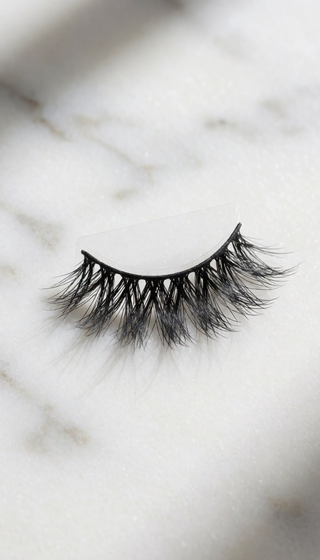
YES—CONTACT LENS WEARERS CAN WEAR FAKE LASHES WITH STABLE PLACEMENT AND STRICT HYGIENE

The myth, placement anatomy, a practical routine, and the warning signs that mean it is time to stop.
Yes—contact lens wearers can wear fake lashes. The blanket claim that a false lash automatically damages a lens or makes lens wear unsafe is a myth. The practical risks come from a shifting band, adhesive touching the lens, contamination, and symptoms that signal irritation. Stable placement, clean hands, and checking comfort after every blink matter more than the word “false” on a package.
Your concern is reasonable, especially if you have sensitive eyes or wear lenses daily. Treat the lash, fingertips, and lens as separate surfaces; never use product residue, dirty tools, or wet hands around the lens.
- HAND HYGIENE: Wash and fully dry your hands before touching contacts, lashes, or tools.
- SEQUENCE: Insert lenses before applying lashes, confirm comfort, and see the lash line clearly.
- PLACEMENT: Keep the band and any residue above the lens; never deliberately touch the lens with the lash or adhesive.
- STOPPING RULE: Remove both for pain, persistent redness, discharge, light sensitivity, or blurred vision.
If the band cannot stay fixed—or shifts after a blink—the cleanest choice is not to wear that lash. Remove it rather than repeatedly repositioning it over the lens. Build in extra time for first placement, and do not use a lash to cover an eye that already feels dry, gritty, or uncomfortable.
THE MYTH IN CONTEXT: KEEP THE BAND ABOVE THE LENS
A contact lens sits on the cornea, while a false lash belongs at the eyelid margin. A band may rest at the lash line or on skin just above it, but it should never rest on the lens. A runny adhesive, an overly thick band, or repeated rubbing can disrupt that arrangement. Tear moisture may loosen or move residue, causing watering, slipping, blur, or discomfort.
Whether a style suits you depends on its construction, attachment, placement, hygiene, and your own tolerance. Pairing a lash with a lens does not automatically cause damage, but a poor fit can make blinking interfere with comfort.
UNDERSTANDING THE MAIN SOURCES OF RISK
These basics align with CDC lens-hygiene guidance, which emphasizes clean, dry hands, appropriate lens solution, and contamination control. FDA cosmetic guidance also makes intended use and label directions important. Neither framework guarantees that every cosmetic product suits every eye.
- MECHANICAL INTERFERENCE: A shifting band, trapped fiber, or rigid edge can rub the lens during blinking and interfere with a comfortable blink.
- ADHESIVE TRANSFER: A thick or slow-setting adhesive may move with tears, touch the lens, or leave residue on the eyelid.
- CONTAMINATION: Fingers, applicators, mascara, and lens cases can transfer material between the eye and lens when hygiene breaks down.
- INDIVIDUAL SENSITIVITY: Adhesive ingredients, fibers, makeup, skincare, or lens solution may cause irritation even when placement is careful.
A CONTACT-FRIENDLY APPLICATION ROUTINE, STEP BY STEP
For any lash style, use clean tools and follow the product directions. This sequence reduces avoidable contact with loose adhesive, makeup, and contaminated surfaces.
- START CLEAN: Wash and fully dry your hands. Use a clean, dry fingertip or applicator for each eye, and keep the lens case in a separate area.
- INSERT LENSES FIRST: Follow your prescribed lens routine, then blink and look around. Do not apply lashes over an eye that feels dry, gritty, or uncomfortable.
- INSPECT THE BAND: Check for bent fibers, buildup, cracks, or sharp points. Prefer a thin, flexible band that follows the eyelid without pressing against the lens.
- SET GLUE WHEN REQUIRED: For a traditional glued strip, follow its directions and allow the adhesive to become tacky. Many formulas need at least 30 seconds, but the product label takes priority.
- POSITION ABOVE THE LASH LINE: Place the band where the design intends, often roughly 1 to 2 millimeters above the visible lash line when instructions allow. Do not push it onto the lens.
- CHECK EACH BLINK: Look forward, down, and side to side. The band should move with the eyelid without lifting, folding, or entering the space occupied by the lens.
- KEEP CONTACT TOOLS SEPARATE: Never touch a lens with glue residue, lash adhesive, mascara, or an applicator that has been near the lash band.
If the lens moves, the band shifts, or watering begins after a blink, remove the lash instead of repeatedly pushing it into place. Use a mirror and good lighting, and check comfort before adding mascara or eye makeup; another wet product can change how the band moves.
REMOVE LASHES WITHOUT SPREADING ADHESIVE OR REINSERTING A CONTAMINATED LENS
For a firmly attached glued lash that is not shedding, removing the lash first may reduce unnecessary pulling on the eyelid. Change the sequence when adhesive is loose so falling residue cannot reach the lens.
- REMOVE SLOWLY: Peel a lash from the outer corner toward the center while supporting the eyelid. Avoid snapping the band or pulling natural lashes with it.
- CHANGE THE SEQUENCE WHEN NEEDED: If adhesive is lifting, sticky, or likely to flake, take out the contacts before disturbing the lash.
- INSPECT BEFORE REINSERTING: Wash and dry your hands, then check the lens under good light. If fibers, makeup, or adhesive are present, discard the lens rather than trying to clean away debris.
- REPLACE ONLY WHEN COMFORTABLE: Put the lens back only after your eye feels normal and your hands are clean and fully dry.
Build a rotation instead of repeatedly using one glued strip. Where reuse is allowed, replace the lash when its adhesive, band, or fibers deteriorate. Never share lashes or applicators, and remove contacts before sleep.
WHEN TO STOP: WARNING SIGNS AND SAFE RECOVERY
Remove the lash and contact lens when symptoms appear rather than waiting for them to pass. The source may be mechanical, cosmetic, or lens-related, so continuing the routine can worsen irritation or contamination.
- SEEK URGENT EYE CARE: Severe pain, sudden vision changes, marked light sensitivity, or significant blurred vision require prompt professional assessment.
- STOP FOR OTHER WARNING SIGNS: Persistent redness, repeated watering, discharge, burning, or a feeling that something is trapped also mean the lash and lens should come out.
- CONSIDER EVERY EXPOSURE: A reaction may come from lash fibers, adhesive, mascara, skincare, or lens solution rather than the false lash alone.
- DO NOT MASK SYMPTOMS: Do not cover irritation with leftover solution or extra cosmetics. Discard a contaminated lens according to your eye-care professional’s guidance.
WHAT TO LOOK FOR IN A CONTACT-FRIENDLY LASH SOLUTION
Contact-lens compatibility depends on construction and use, not appearance alone. Compare these physical details before considering a style:
- BAND PROFILE: Look for a thin, flexible band that does not press into the eyelid or enter the space above the contact lens when the eye closes.
- WEIGHT DISTRIBUTION: Lightweight construction reduces avoidable pulling on the eyelid. Avoid styles that feel heavy during a full blink.
- ADHESIVE CHEMISTRY: If a lash uses glue, follow its eyelid directions exactly. A clear, low-fume formula may reduce odor, but it does not prove compatibility.
- FLEXIBILITY: The band should contour to the eye without sharp ends, hard corners, or fibers that bend toward the lens.
- CARE AND HYGIENE CLARITY: Follow the stated removal, storage, and replacement guidance. Replace a lash when cleaning it would require force or harsh contact near the eye.
Treat these as screening criteria, not a safety promise. The most contact-friendly choice is the one that stays fixed above the lens, is easy to remove, leaves no residue, and still allows you to notice discomfort. An attachment that avoids a separate glue step can remove one potential source of movement and residue; it does not replace clean hands or symptom-based removal.
WHY GLUE-FREE MICRO-ADHESION REDUCES ATTACHMENT VARIABLES
- GLUE OR IRRITATION: There is no separate glue, magnet, or liner. The lashes are labeled hypoallergenic, but that label cannot rule out individual sensitivity.
- DURABILITY: The stated product facts are waterproof and 30+ wears. Follow the care and replacement directions rather than assuming every person gets an identical result.
- COST: The product is $59, with under $2 per wear.
That screening leads to one final attachment goal: reduce avoidable movement and residue around the lens without pretending every eye reacts the same way. For readers who want fewer variables, PHANSTA LASHES uses micro-adhesion rather than requiring a separate glue step.
PHANSTA LASHES uses micro-adhesion: no adhesive, no magnets, no liner. The range includes 17 styles, and the lashes are labeled hypoallergenic and waterproof. At $59, the product fact is 30+ wears and under $2 per wear. Those facts address attachment, durability, and cost, but they do not mean a lens wearer should ignore discomfort or skip lens hygiene.
Use the 17-style range to compare looks, not to decide which one is safest. Band profile, stable placement, and your own comfort remain more useful selection points than color or density. Still follow your normal lens routine and the product directions. A waterproof, hypoallergenic label does not guarantee that your eye will have no reaction, so stop if symptoms appear.
FREQUENTLY ASKED QUESTIONS
CAN CONTACT LENS WEARERS WEAR FAKE LASHES?
Yes. The lens does not make lash wear automatically unsafe, but placement and hygiene must be controlled. Insert lenses first, keep the lash band above the lens, and check comfort with every blink. Remove both if the band shifts or pain, redness, watering, discharge, light sensitivity, or blurred vision develops. A full blink must stay part of the check.
CAN LASH GLUE TOUCH A CONTACT LENS?
Adhesive transfer can interfere with a lens and increase the chance of irritation or contamination. Do not deliberately let glue touch the lens, and never use residue-covered fingers or applicators to handle it. If a glued band is not stable, remove the lash and contact rather than repeatedly repositioning either one. Repeated adjustment can make the problem worse.
WHAT SHOULD I DO IF MY LENS FEELS DRY OR MY VISION BLURS?
Remove the lash and lens when the eye feels dry, gritty, painful, or blurred. Persistent redness, repeated watering, discharge, burning, or light sensitivity also warrant removal. Severe pain, sudden vision changes, marked light sensitivity, or significant blurred vision call for prompt professional eye care rather than another cosmetic attempt. Do not test the eye by wearing the lens again.
HOW SHOULD I REMOVE A GLUED LASH WHILE WEARING CONTACTS?
For a firmly attached glued lash, peeling it slowly from the outer corner toward the center may reduce pulling on the eyelid. If adhesive is lifting or sticky, remove the contacts first so residue cannot fall onto them. Inspect lenses under good light and discard any lens carrying fibers, makeup, or adhesive. Good lighting makes debris easier to see.
ARE GLUE-FREE LASHES BETTER FOR CONTACT LENS WEARERS?
A glue-free design can reduce one avoidable variable: loose adhesive moving near the lens. It does not eliminate every sensitivity risk, so clean hands, a stable band, and symptom-based removal still matter. No lash should be worn when the eye is already uncomfortable, and contacts should always be removed before sleep. Comfort takes priority over a finished look.
STILL COMPARING OPTIONS? Explore our guides on finding your perfect lash, magnetic vs strip, and sensitive eyes.
FIND THE PERFECT LASH — Not sure which style suits you? Take the 30-second lash finder finder →
NOT SURE ABOUT YOUR EYE SHAPE?
Find your eye shape and get personalized lash recommendations:
FIND THE PERFECT LASH FOR EVERY MOMENT
Explore our occasion-specific lash guides:
EXPERIENCE THE DIFFERENCE
Join thousands of women who have made the switch. No adhesive, no damage, no salon appointments — just beautiful lashes in seconds.
SHOP PHANSTA LASHES — GLUE-FREE, 30+ WEARS →