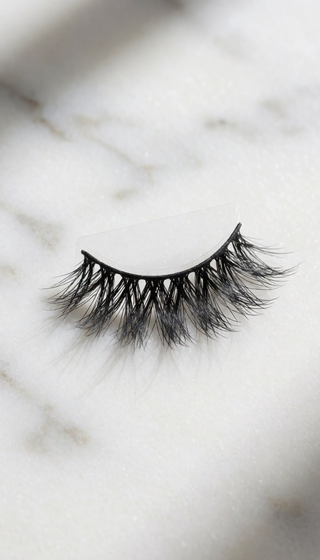
THE TOP LAYERED LASHES FOR HOODED EYES ENGINEERING LIFT AND SPACE
Achieve Visible Eye Lift and Openness with Layered Lash Architecture
If you have hooded eyes, the goal isn't just to add volume; it's to create an optical illusion of height and space by strategically layering fibers to counteract the natural downward fold of the lid. Understanding the structure of these lashes is the first step to maximizing your look.
The Science Behind Layered Lash Design for Hooded Eyes
An effective layered lash system is not simply a thicker lash; it is a meticulously engineered stack of fibers designed to interact with the unique anatomy of a hooded lid. This requires a specific structural approach to ensure the lash lifts the perception of the crease rather than simply resting on the fold.
Understanding Fiber Tiers for Vertical Lift
The ideal layered lash utilizes three distinct tiers of fiber to create physical and optical lift. The foundational tier should be a 6-8mm base layer, designed to sit flush against the lid. Above this, a 10-12mm middle layer serves to bridge the vertical gap created by the fold. Finally, a 12-14mm top accent layer projects outward, providing the necessary outward projection to lift the entire eye area. A single-layer, uniform lash lacks the necessary vertical architecture to effectively counteract the downward drag of the skin fold.

Curl Profile and Fiber Density: The Technical Specifications
The performance of any lash is dictated by its curl and the diameter of its fibers. For hooded eyes, the curl type must be chosen to clear the skin fold entirely. An L curl is often preferred because it bends sharply at the base, providing a 90-degree angle lift that bypasses the fold. A D curl offers a similar lift but with a softer, more natural curve. In terms of thickness, a fiber diameter between 0.07mm and 0.10mm is considered optimal. Thinner fibers (0.03mm) may lack the rigidity needed to maintain vertical shape, while excessively thick fibers (0.15mm) can add weight, leading to premature sagging.
- Band Structure Matters: Look for a flexible, invisible band measuring no more than 0.05mm. A rigid band will not conform to the curved architecture of the hooded lid, resulting in lifting at the corners.
Application Technique for Maximum Exposure
To ensure the layered effect works optimally, the application method is crucial. The lash must be applied directly at the waterline, not resting on the skin above the lashes. The band must be positioned precisely at the base of the natural lashes so that the skin fold rests over the band, not in front of it. When applying, anchor the center of the band first, followed by the outer corner. This anchoring technique secures the highest point of the hood, preventing the skin fold from causing the lash to drop prematurely.
- Select a lash that explicitly markets a tri-level or multi-layer weave; single-layer lashes do not provide the necessary vertical architecture.
- Apply the lash directly at the waterline, ensuring the band sits at the exact base of the natural lashes.
- Secure the center of the band first, then the outer corner to anchor the highest point of the hood.
What to Look For in a High-Performance Lash System
When seeking a solution for hooded eyes, the key criteria are structural integrity, adhesion mechanism, and material flexibility. You need a system that offers substantial visual impact without the weight or irritation associated with traditional methods. The ideal product must utilize a glue-free micro-adhesion technology that provides a secure bond without the need for a curing process that can weigh down the lash or cause slippage against the skin fold.
The these lashes Solution: Engineered for Your Anatomy
these lashes have developed a multi-layer volume collection specifically engineered to address the unique requirements of hooded eye anatomy. Our design employs a three-tier knotting technique that generates significantly more surface area visibility compared to standard volume lashes. The fibers are crafted from pre-curled synthetic silk, ensuring they retain their shape throughout the entire wear cycle. Because these lashes utilize a glue-free micro-adhesion strip, there is no wet adhesive stage that can weigh down the band or cause the lash to slip during application. This immediate bond provides the precise, secure placement required for working seamlessly around a skin fold.
FREQUENTLY ASKED QUESTIONS
Can layered lashes correct a drooping skin fold?
Layered lashes do not correct the skin fold itself but they do create an optical lift. The vertical length of the layered fibers draws the gaze upward, minimizing the visual weight of the hood.
What is the best curl for hooded eyes?
The L curl or D curl is the most effective. An L curl creates a 90-degree angle at the base, which immediately clears a low-set skin fold. A D curl provides a similar effect with a slightly more natural curvature.
Do glue-free lashes stay on a hooded lid?
Yes. these lashes use a high-tack adhesive strip that bonds on contact. The bond strength is sufficient to hold the lash in place against the natural tension of a hooded lid for 30+ wears.
How do I ensure the lash doesn't lift at the corners?
To prevent corner lifting, ensure the lash band is flexible and measures no more than 0.05mm. Always anchor the center of the lash first, as this point bears the most tension from the skin fold.
Are glue-free lashes safe for sensitive eyes?
Yes, our lashes are hypoallergenic and utilize a glue-free micro-adhesion technology. This eliminates the need for harsh chemical adhesives, making them gentle enough for sensitive eyes while maintaining a strong, secure bond.
Experience the Difference of PHANSTA LASHES
No adhesive, no damage. Just beautiful lashes.
Experience the Difference of PHANSTA LASHES
SHOP PHANSTA LASHES — GLUE-FREE, 30+ WEARS →📚 Browse our complete library of lash guides →
FIND THE PERFECT LASH FOR EVERY MOMENT
From weddings to workdays, there's a PHANSTA style for every occasion.