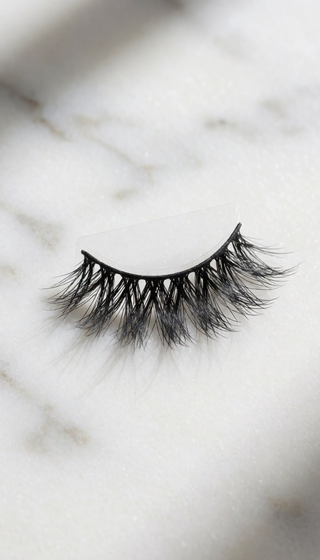
KEEP YOUR FALSE LASHES SECURED FLUSH AGAINST YOUR LID — ALL DAY, EVERY TIME
THE COMPLETE GUIDE TO DIAGNOSING AND FIXING LASH LIFTING — FROM PREP TO TECHNOLOGY
Understand the science of adhesion to prevent premature lifting and achieve consistent, flawless wear.
Lifting is a common frustration for false lash wearers, but it is rarely a random occurrence. It is almost always the predictable result of the interaction between your specific eye environment and the application method you use. The failure point is often not the lash itself, but the bond formed between the lash band and your eyelid. Understanding the chemistry of adhesion and the physical factors at play is the first step toward achieving consistent, all-day wear.
THE FOUR ROOT CAUSES OF LASH LIFTING
Lifting is never random; it is the predictable result of specific environmental or application factors. Pinpointing which one is at play is the first step toward consistent all-day wear.
- Oily Eyelids: Natural sebum breaks down most lash adhesives faster than any other factor. If your T-zone becomes shiny by midday, your eyelids likely produce enough oil to weaken the bond within a few hours.
- Skipped or Rushed Preparation: Makeup, moisturizer, or sunscreen left on the lash line creates a physical barrier between the adhesive and the skin. Even a microscopically thin film drastically cuts your expected wear time.
- Incompatible Adhesive Selection: Lash adhesives are formulated for specific climates. Using a dry-climate formula in a humid setting—or the reverse—inevitably leads to premature bond failure.
- Improper Application Timing: Placing the band too close to the waterline, skipping the tacky wait, or not applying enough pressure on first placement all compromise the bond from the very start.
PREPARATION STEPS TO ENSURE MAXIMUM ADHESION
Preparation is the single most impactful step you can take—and it requires less than 60 seconds to execute correctly. The goal is a perfectly clean, oil-free surface for the bond to grip.
- Cleanse the Lash Line Thoroughly: Use an oil-free micellar water or a gentle, dedicated cleanser to remove every trace of makeup, moisturizer, and sunscreen from the entire lash line area. Allow the skin to dry completely before proceeding.
- Eliminate Eyeliner Residue: Eyeliner pencils and liquid liners leave behind an oily film that prevents adhesive from gripping. Carefully check the waterline with a clean cotton swab to ensure complete removal.
- Blot, Do Not Rub: If you notice natural oil on your lids, gently press blotting paper or a clean tissue along the lash line to absorb excess sebum without stripping the skin barrier.
- Timing Eye Creams: Eye creams are typically oil-based products. To ensure maximum adhesion, apply these treatments at night, never immediately before applying lash adhesive.
- Utilize a Lash Primer (Optional): For extra security, a thin layer of lash primer or a light dusting of translucent powder along the lash line creates a more grippy surface to anchor to.
APPLICATION TECHNIQUE TO MAXIMIZE BOND STRENGTH
Even when preparation is perfect, application technique dictates the final bond strength. Follow these steps to avoid the common pitfalls that undo meticulous prep work.
- Measure and Trim First: Hold the band against your eyelid and trim the outer corner if it extends past your natural lash line. An overly long band is the primary cause of outer-corner lifting.
- Apply Adhesive Evenly: Do not simply dab glue on the corners. Run a thin, consistent line along the entire length of the band to ensure full coverage.
- The Tacky Wait: Let the adhesive cure until tacky—a minimum of 30 to 60 seconds. This is the most skipped step and the primary reason bonds fail early.
- Placement Strategy: Press the band down starting at the center of your lash line, then carefully secure the inner and outer corners for even distribution.
- Press and Hold Firmly: Once placed, hold the band in position for 10 to 15 seconds per eye so the adhesive sets fully and creates a robust bond.
- Merge the Bands: Press your natural lashes and the false lashes together with your fingertips or a lash curler, merging them into one seamless unit with no visible gap.
UNDERSTANDING THE CHEMISTRY OF LASH ADHESION
To understand longevity, you must understand the mechanism of hold. Traditional lash glue creates a chemical bond between adhesive and skin—a bond that is strong initially but is highly vulnerable to environmental factors like oil, moisture, and body heat. This chemical bond is why lifting often starts at the corners, the thinnest point of the application, and spreads inward.
Heat and humidity significantly accelerate this chemical breakdown, meaning wear time naturally decreases in warmer months. Oily skin actively works against traditional adhesive, making oilier eyelids far more prone to premature failure than drier ones.
Micro-adhesion operates on a fundamentally different principle. Instead of relying on a chemical bond that can degrade, it forms a direct physical grip between the band and the skin. With no adhesive layer to fail chemically, oils and humidity cannot weaken the grip—the hold remains consistent from application until the lashes are physically removed. Because the grip is physical rather than chemical, the band peels away cleanly without tugging at your natural lashes, allowing for safe reapplication.
| Technology | How It Works | Lifting Risk | Best For |
|---|---|---|---|
| Traditional Glue | Liquid or strip adhesive applied to the band | Moderate to high — sensitive to oil and humidity | Occasional wear, short events |
| Magnetic Lashes | Two bands sandwich natural lashes with magnets | Low lifting, but can feel heavy and pinch | Those who want no adhesive |
| Micro-Adhesion | Glue-free band that bonds to skin via micro-grip | Very low — no glue to break down | All-day wear, sensitive eyes |
HOW EYE ANATOMY INFLUENCES LASH STABILITY
Your eye's unique anatomy dictates where pressure lands on the band—and consequently, where lifting begins. Round eyes expose more lid space, allowing the band to sit relatively flat against the skin. Conversely, hooded or monolid eyes show less visible lid, causing the band to sit closer to the crease where it naturally folds, which can press the outer corner upward throughout the day.
Deep-set eyes tend to trap more natural oil along the lid margin, increasing the risk of premature bond failure. Downturned eyes place constant gravitational pressure on the outer corner, which is the classic first failure point for any lash application. To determine your specific needs, observe your eye in a neutral expression: the amount of visible lid between your lash line and crease tells you exactly where pressure will be exerted.
Regardless of your specific eye shape, the foundational fix remains the same: trim the band precisely to fit your natural lash line, place it just above the waterline rather than directly on it, and ensure you hold it firmly through the full curing period. If you have perfected every technique step and lifting still occurs, the limitation may not be your method—it may be the technology of the lash itself.
HOW ENVIRONMENTAL FACTORS BREAK DOWN LASH BONDS
Beyond skin type and application technique, your daily environment plays a larger role in lash longevity than most wearers realize. Here is how common conditions affect your bond—and what to do about it.
- Humidity: High humidity prevents traditional adhesives from curing fully, leaving them weak and prone to slipping. If you live in a humid climate or wear lashes during summer months, expect traditional glue to fail faster than usual.
- Heat Exposure: Hot showers, saunas, and warm indoor environments accelerate the chemical breakdown of lash adhesives. Even brief exposure to steam can soften an otherwise secure bond within minutes.
- Water Contact: Swimming, excessive tears, or steam from cooking can saturate adhesive bands and dissolve the chemical bond. Waterproof formulations resist this better, but no traditional adhesive is fully immune.
- Mechanical Friction: Rubbing your eyes, sleeping face-down, or using rough pillowcases creates physical stress on the band. Even perfect application cannot withstand repeated friction throughout the day.
WHAT TO LOOK FOR IN AN ALL-DAY LASH SOLUTION
When evaluating any lash product that promises all-day hold, you must look beyond marketing and check for these technical markers:
- A Glue-Free, Oil-Resistant Bond: The most reliable indicators of longevity are those that do not rely on chemical adhesives. A bond that is physically anchored rather than chemically bonded resists breakdown from natural oils and humidity.
- Micro-Adhesion Technology: Look for systems that utilize micro-adhesion. This technology creates a direct physical grip, meaning the bond is not susceptible to the degradation that affects traditional glue.
- Proven Wear Cycles: A dependable product will consistently deliver 30+ wears, indicating the bond is robust enough to withstand daily friction and environmental stress without compromising integrity.
- Hypoallergenic Composition: For long-term wear, the product must be formulated to be hypoallergenic, ensuring that the physical grip does not cause irritation or allergic reactions over repeated use.
Every pair is hypoallergenic and waterproof, with a flexible band engineered to move with your natural lid rather than fight against it. With 17 styles ranging from natural everyday looks to dramatic evening options, there is a fit for every eye shape and every occasion.
PHANSTA LASHES: ENGINEERED TO ELIMINATE LIFTING AT THE SOURCE
If you have perfected every preparation and application step but lifting still occurs, the limitation may not be your method—it may be the technology of the lash itself. This is exactly the problem PHANSTA LASHES was designed to solve.
PHANSTA LASHES use a glue-free micro-adhesion technology that forms a direct physical grip between the band and your skin. Unlike traditional adhesive, there is no chemical layer to break down—oils, humidity, and body heat cannot weaken the hold. The result is a secure, flush fit that lasts from the moment you apply them until you decide to remove them. The band peels away cleanly without tugging at your natural lashes, making every application gentle and every removal damage-free.
- Glue-Free, No Irritation: No adhesive means no chemical exposure to the delicate eye area. The micro-adhesion grip holds securely without triggering the allergic reactions or sensitivity that traditional lash glue often causes.
- 30+ Wears Per Pair: The physical grip does not degrade with use. Each pair delivers 30+ wears, making the investment work harder for you every single time you apply them.
- Under $2 Per Wear: At $59 per pair and 30+ wears, the cost per wear drops below $2—a fraction of what salon applications or single-use alternatives cost over time.
Customers with oily lids, sensitive eyes, and consistently busy schedules report that PHANSTA LASHES stay secure through humidity, sweat, and 12+ hour days—without the irritation or midday lifting they experienced with traditional adhesive. The glue-free design and flexible band have earned a loyal following among wearers who struggled with lifting for years.

FREQUENTLY ASKED QUESTIONS
Why do my false lashes always lift at the corners?
Corner lifting is almost always caused by one of three factors: excess oil on the lash line, an improperly sized band that extends past your natural lash line, or insufficient pressure during the initial application. Trimming the band to fit, thoroughly cleansing the lid, and holding each corner firmly for 10–15 seconds after placement resolves the issue in most cases.
How long should I wait for lash adhesive to become tacky?
Wait a minimum of 30 to 60 seconds after applying adhesive before placing the band on your lash line. The adhesive should feel tacky to the touch, not wet. Skipping this step is the single most common reason bonds fail prematurely, as the adhesive needs time to reach optimal viscosity for grip.
Can I wear false lashes if I have oily eyelids?
Yes, but preparation is critical. Thoroughly cleanse the lash line with an oil-free cleanser, blot away any residual sebum, and avoid applying eye cream before lash application. Choosing a glue-free micro-adhesion system also eliminates the chemical breakdown that oils cause in traditional adhesives, giving you significantly longer hold.
What is the difference between micro-adhesion and traditional lash glue?
Traditional lash glue creates a chemical bond between the band and skin that breaks down when exposed to oil, moisture, and heat. Micro-adhesion forms a direct physical grip with no chemical layer, meaning environmental factors cannot weaken the hold. The result is longer wear, cleaner removal, and no adhesive-related irritation.
How many times can I reuse a pair of PHANSTA LASHES?
Each pair is designed for 30+ wears with proper care. Gently peel the band away after each use, clean any residue from the band with a soft cloth, and store them in their original case. The micro-adhesion grip does not degrade with repeated application, so hold quality remains consistent across dozens of uses.
STILL COMPARING OPTIONS? Explore our guides on finding your perfect lash, magnetic vs strip, and sensitive eyes.
FIND THE PERFECT LASH — Not sure which style suits you? Take the 30-second lash finder quiz →


NOT SURE ABOUT YOUR EYE SHAPE?
Find your eye shape and get personalized lash recommendations:
FIND THE PERFECT LASH FOR EVERY MOMENT
Explore our occasion-specific lash guides:
EXPERIENCE THE DIFFERENCE
Join thousands of women who have made the switch. No glue, no damage, no salon appointments — just beautiful lashes in seconds.
SHOP PHANSTA LASHES — GLUE-FREE, 30+ WEARS →