WISPY FALSE LASHES: SOFT STYLES AND EYE MAKEUP PAIRINGS
GET THE SOFTEST, MOST NATURAL LASH LOOK WITH WISPY STYLES AND THE EYE MAKEUP PAIRINGS TO MATCH
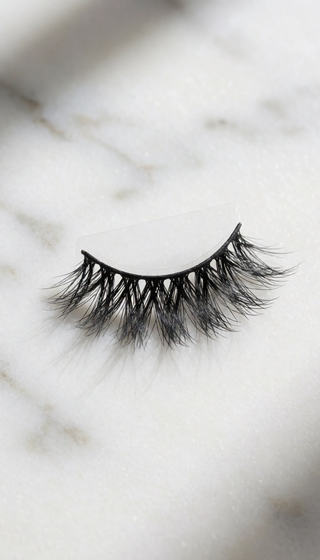
Wispy false lashes are the sweet spot between "clearly wearing lashes" and "not wearing any at all." The style comes down to three features: fibers of varied lengths — shorter at the inner corner, longer toward the outer edge — open spacing between clusters, and tapered tips that mimic real lash texture. The result is a soft, airy fringe that lifts your eyes without reading heavy, strip-like, or costumey.
If you've ever avoided false lashes because they felt too dramatic, too itchy, or too much work, wispy styles are the easiest entry point — and they pair with more makeup looks than any other category. Below, you'll learn exactly what makes a lash wispy, how to match it to your eye shape, which eyeshadows make it shine, and how to choose a pair you can wear day after day.
Here's the core idea to remember: wispy is a fiber pattern, not a length. Once you can spot the pattern, you can identify a flattering pair instantly — and stop guessing why some strips photograph beautifully while others feel like a costume.
WHAT MAKES A LASH STYLE WISPY
Every lash strip is a pattern of fiber length, spacing, and taper. Wispy styles break the pattern on purpose:
- Varied fiber lengths. A single strip mixes short and long fibers — typically spanning roughly 6–14mm — so the silhouette looks feathered rather than uniform.
- Open spacing. Clusters sit slightly apart, leaving tiny gaps that keep the band from reading as one solid dark line.
- Tapered tips. Fibers end in fine points instead of blunt cuts, so they blend into your natural lashes rather than sitting on top of them like a shelf.
- A thin, flexible band. Wispy strips use an ultra-slim cotton or polymer band that flexes with your eyelid and nearly disappears against the lash line.
Two quick tests before you commit: hold the strip up to the light — a truly wispy strip lets the background show through the gaps. Then run a fingertip along the fibers — tapered tips feel smooth, while blunt-cut fibers catch and feel scratchy against the skin.
The overall effect is what makeup artists call "your lashes, but on their best day" — visible in photos, weightless in person, and flattering at every age.
WISPY VS. NATURAL VS. DRAMATIC: CHOOSING YOUR INTENSITY
"Natural," "wispy," and "dramatic" are points on one spectrum. Here's how they differ:
| Feature | Natural | Wispy | Dramatic |
|---|---|---|---|
| Fiber pattern | Even, uniform lengths | Varied, feathered | Dense, full-coverage |
| Spacing | Moderate | Open, gapped | Minimal |
| Band visibility | Low | Very low | Medium |
| Best for | Everyday polish | Soft glam, photos | Evenings, bold looks |
| Makeup pairing | Barely-there makeup | Neutral mattes, soft smoky eyes | Graphic liner, full smoky eyes |
Wispy sits in the middle: more dimension than natural styles, lighter than dramatic ones. If you're unsure where to start, choose a wispy strip with a medium length map — it works with both a bare face and a full face of makeup. Think of natural as your everyday polish, dramatic as your statement, and wispy as the versatile bridge between the two.
MATCHING WISPY LASHES TO YOUR EYE SHAPE
The same wispy strip can look completely different depending on your eye shape. The rule of thumb: place the longest fibers where you want the eye to appear lifted or opened.
Not sure of your shape? Stand in natural light, look straight into a mirror, and check whether you can see a visible crease above your lash line — and where the iris sits relative to the white of the eye.
- Almond eyes: almost any wispy style works — choose a medium length map with even flutter from corner to corner.
- Round eyes: longest fibers toward the outer corner elongate the eye; avoid equal-length styles that emphasize roundness.
- Hooded eyes: slightly longer, lifted fibers on the outer half stay visible when your eyes are open; avoid center-heavy lengths that disappear under the lid.
- Monolids: medium-to-long flared styles add dimension, and a subtle cat-eye placement creates the illusion of a lifted outer corner.
- Downturned eyes: concentrate length at the outer corner to raise the eye line.
- Upturned eyes: balanced styles with slightly longer center fibers keep the look harmonious.
EYE MAKEUP PAIRINGS FOR WISPY LASHES
Wispy lashes are a texture, not a statement — so your makeup should complement them rather than compete.
- Neutral mattes. Taupe, soft brown, and cream shadows let the feathered fibers be the most interesting thing on your eye.
- Soft smoky eyes. Blend shadow upward rather than outward, and keep liner thin so the look stays airy.
- Tightlining. Filling the gap between the band and your lash line with a dark pencil makes the strip disappear completely.
- Mascara. One light coat on your natural lashes before application helps the two layers blend; avoid heavy mascara on the false fibers, which clumps them and shortens their life.
- Lower lashes. A whisper of mascara on the lower lashes balances upper wispy volume without heaviness.
- Shimmer. Champagne or rose-gold on the lid catches light beautifully against matte wispy fibers.
- Skip: thick waterline pencil — it fights the airy effect and makes wispy styles look muddy.
A quick color-theory note: warm fibers — dark brown or styles with golden undertones — flatter warm skin tones, while true black flatters cooler or deeper skin tones. When in doubt, brown-black reads softer in daylight, which is exactly the mood wispy styles aim for.
APPLICATION TIPS FOR A FLATTERING WISPY FINISH
Prep matters more than technique: start with clean, dry eyelids. Oils from skincare or leftover makeup are the number one reason a fresh strip slides by midday, so remove residue thoroughly before you begin.
- Measure and trim the band to fit your eye — overhang tugs at the outer corner and lifts by midday.
- Let the adhesive turn tacky for 20–30 seconds (or press a micro-adhesive band for a few seconds) before placing.
- Set the strip along your natural lash line, not on the lid skin.
- Press from the center out to both corners with a lash presser or fingertip.
- Check in profile: if the fibers point downward, reseat the outer corner.
- Remove gently from outer to inner corner, and clean the band after each wear so it grips next time.
WHAT TO LOOK FOR IN A WISPY LASH
Use these criteria the next time you're choosing a pair:
- Tapered tips, not blunt cuts. Blunt-cut fibers look artificial up close; tapered ones dissolve into your natural lash line.
- A real length map. Look for varied lengths within the strip — roughly 8–13mm is the sweet spot for most eye shapes.
- A thin, flexible band. It should bend easily and sit flush without lifting at the corners.
- Light-to-medium density. If the strip reads as a solid dark line from a few feet away, it's too dense to be truly wispy.
- Gentle wear technology. If your eyes are sensitive or you wear lashes often, consider a glue-free option — repeated exposure to lash adhesive can irritate the lash line and loosen natural lashes over time.
- Reusable by design. A quality strip with intact fibers should survive many wears with proper cleaning and storage.
If a pair checks every box on this list, you've found a lash you can reach for daily — through workdays, events, and everything between.

FREQUENTLY ASKED QUESTIONS
Are wispy false lashes good for beginners?
Absolutely. Wispy styles are the most forgiving category for first-time wearers because open spacing and tapered tips hide small placement mistakes — if the strip sits slightly off your lash line, the feathered fibers blend rather than reveal the error. Start with a medium length map (roughly 8–13mm) and a thin band for a polished result even with unsteady hands.
THE PHANSTA LASHES DIFFERENCE: A WISPY LASH BUILT TO EVERY RULE ABOVE
You now know exactly what separates a beautiful wispy lash from a costume. PHANSTA LASHES were designed against those same criteria — feathered length maps, open spacing, tapered tips, and a band so slim it disappears at the lash line — across 17 wispy-first styles. Here's how they solve the three problems that send most lash wearers back to mascara:
- Glue and irritation — the most common complaint. Traditional strips rely on lash adhesive, which can sting, leave residue, and loosen natural lashes over time. PHANSTA replace it with glue-free micro-adhesion: a pressure-sensitive micro-adhesive band that grips with a simple press. Hypoallergenic, latex-free, and waterproof — safe for sensitive eyes, even on long days.
- Durability — one pair, wear after wear. Built for 30+ wears, each strip keeps its feather map through weeks of cleaning and reapplication. Properly cared for, a single pair replaces dozens of single-use alternatives — which is exactly how the value works out.
- Value — under $2 per wear. At $59 for 30+ wears, each application comes in under $2 — less than most single-use pairs you'd throw away after one night.
Once you experience a morning routine with no adhesive drying time and no sticky residue, going back to glue feels like a step backwards. That's the PHANSTA difference: less ritual, more wear.
How long do wispy lashes last?
A quality wispy strip should survive 30+ wears with proper care. Remove gently from the outer corner, wipe the band clean of residue after every wear, air-dry flat, and store in a case away from heat and humidity. Fibers that stay unclumped and un-bent keep their feathered shape — and their length map — for months.
Can I wear wispy lashes with sensitive eyes?
Yes, if you choose a gentle construction. The biggest irritant in lash wear is lash adhesive, so a glue-free option removes the most common trigger entirely. Look for hypoallergenic materials, a thin flexible band, and no latex. PHANSTA LASHES use micro-adhesion instead of glue and are waterproof, so humidity and tears won't compromise the grip or your skin.
What makeup pairs best with wispy lashes?
Anything soft and blended. Neutral mattes in taupe and cream let feathered fibers take center stage; a thin line of tightliner hides the band; champagne shimmer catches light beautifully against matte fibers. Keep mascara light — one coat on your natural lashes before application — and skip thick waterline pencil, which makes airy styles look muddy.
How do I keep wispy lashes wispy after cleaning?
Handle the fibers like fine fabric. After removal, peel residue off the band with fingers or tweezers rather than tugging at the fibers. Clean the band with a cotton pad and oil-free remover, then lay the strip flat to air-dry. Never soak, twist, or apply mascara directly to the fibers — that clumps them and destroys the open spacing.
READY FOR LASHES THAT FOLLOW THE WISPY PLAYBOOK?
One pair. 30+ wears. Seconds per eye — no glue, no mess.
SHOP PHANSTA LASHES — GLUE-FREE, 30+ WEARS →
STILL COMPARING OPTIONS? Explore our guides on finding your perfect lash, magnetic vs strip, and sensitive eyes.
FIND THE PERFECT LASH — Not sure which style suits you? Take the 30-second lash finder quiz →
NOT SURE ABOUT YOUR EYE SHAPE?
Find your eye shape and get personalized lash recommendations:
FIND THE PERFECT LASH FOR EVERY MOMENT
Explore our occasion-specific lash guides:
EXPERIENCE THE DIFFERENCE
Join thousands of women who have made the switch. No glue, no damage, no salon appointments — just beautiful lashes in seconds.
SHOP PHANSTA LASHES →