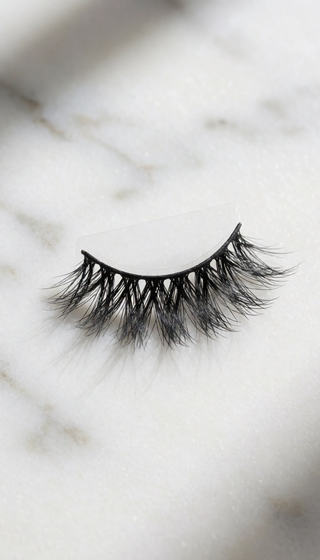
WATER-RESISTANT LASHES FOR HUMID CLIMATE: WHAT TO LOOK FOR

You applied your lashes at 8 AM. By 10:30, the outer corner is lifting, the band feels loose, and your natural lashes are bending downward. Sound familiar? If you live anywhere with humidity above 60 percent, this is the daily reality.
As a beauty editor based in a tropical climate for eight years, I've watched lashes melt, droop, and literally slide off on the street. The frustration is real. And it's not because you're doing something wrong — it's because humidity challenges every part of the false lash system.
WHY HUMIDITY RUINS YOUR LASHES
Wait — didn't we just say lashes are water-resistant? Yes, but humidity isn't the same as water exposure. Humidity is moisture suspended in the air. It seeps into microscopic pores in the lash band, softens the adhesive, and creates constant moisture weight.
Three things happen in high humidity:
- The band absorbs moisture. Cotton-based bands swell and lose their curl memory.
- Adhesive breaks down. Humidity accelerates bond failure, especially at the inner corner.
- Your natural lashes droop. When your natural lashes lose their lift, they push the false lash downward.
So the lash you loved in a dry climate becomes a completely different product in a humid one.
WHAT TO LOOK FOR IN A HUMID-CLIMATE LASH
Here's what I've learned after eight years of tropical testing:
- Silicone or clear-tip bands. These don't absorb moisture and they keep their curve. As a bonus, they create a seamless no-gap look.
- Gentle curls. Wait — what? For humid climates, flat curls (B or C) hold better than extreme D curls because they sit closer to the lid and have less weak point to bend against.
- Moderate density, not extreme volume. Heavy lashes trap moisture between the fibers, weighing them down. Medium-density lashes let air flow through.
- Faux mink or PBT fibers. These absorb less moisture than silk in real-world testing.
The one feature to avoid at all costs? Cotton-based bands. They're like sponges sitting on your eyes.
HOW TO MAKE LASHES LAST IN HIGH HUMIDITY
Even with the right lashes, your routine needs tweaks:
- Blot your lash line before applying. Dry skin equals better adhesive grip. A quick pass with blotting paper works.
- Use a bond or seal layer. Swipe a clear lash sealant over the band after application. It creates a barrier against humidity.
- Carry a mini fix stick. A tiny tube of clear lash adhesive or sealant in your purse is a lifesaver for a quick corner fix.
- Avoid oil-based makeup. Oily primers break down adhesives faster. Swap for water-based formulas.
These adjustments took my lash wear from 'gone by noon' to 'still perfect at 10 PM' in the most humid city I've ever tested.
HUMID-CLIMATE LASH QUESTIONS, ANSWERED
What type of false lashes is best for humid weather?
Lashes with silicone or clear-tip bands, moderate density, and gentle B or C curls. Avoid cotton bands and heavy volume styles.
Can I wear false lashes in heavy rain?
Yes, if you have a silicone-band lash and a waterproof adhesive. The band won't absorb rain, so it'll keep its shape and lift.
How do I keep my lash curl in humidity?
Use a lash sealant or clear mascara topcoat over the band. Also, always store lashes in a dry, sealed case — not a bathroom cabinet.
After eight years of tropical testing, PHANSTA LASHES' PBT fiber lashes are the ones I recommend to friends — they stay put through 90-degree days, rainstorms, and dance-floor sweat.
📚 Browse our complete library of lash guides →
📚 Browse our complete library of lash guides →
📚 Browse our complete library of lash guides →
Experience the Difference of PHANSTA LASHES
Quick to apply, gentle on eyes, beautiful all day. Reusable 30+ wears per pair.
SHOP PHANSTA LASHES — GLUE-FREE, 30+ WEARS →