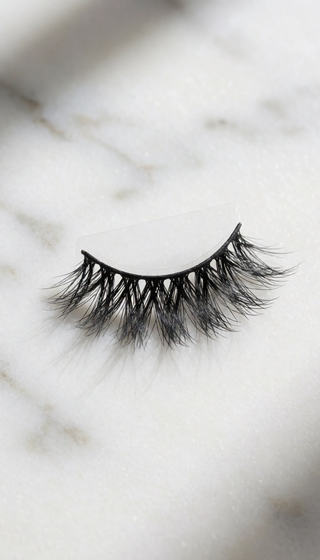
VEGAN CRUELTY-FREE LASH BRAND GUIDE: PLANT-BASED FIBERS

A client once looked at a pair of silk lashes and asked me, 'Are these vegan? Because I only wear cruelty-free.' And I remember thinking... I don't actually know. That moment changed how I shop for clients and for myself. Here's what I learned about vegan false lash brands, the ingredients hiding in your favorite fibers, and how to tell if a label is actually trustworthy.
WHAT 'VEGAN' ACTUALLY MEANS FOR LASHES
When a lash brand says vegan, it means no animal-derived materials in the lash itself or in the manufacturing process. That means no mink (sadly common), no silk harvested from silkworms, no wool or cashmere. Plant-based fibers usually come from a blend of synthetic nylon, viscose from bamboo, or PET (the same plastic used in water bottles). The key is that the fiber itself — and the adhesive — contain zero animal products. In practice, 'vegan' is a floor, not a ceiling.
THE SURPRISING INGREDIENT HIDING IN YOUR FAVORITE LASHES
Many brands label their lashes 'silk' even when they contain zero actual silk. That's not a lie — they're imitating silk's texture. But some still use real silk thread, which is not vegan. Even worse: some lash glues contain beeswax alongside Cyanoacrylate. Beeswax is an animal by-product. If you're strictly vegan, you need to look at both the lashes and the adhesive. And always check for cruelty-free certification. A brand can be vegan and still test on animals in some countries, so look for Leaping Bunny or PETA logos.
HOW TO DECODE A TRULY CRUELTY-FREE LABEL
Here's the checklist I now use: First, look for 'vegan' in the product title, not just in the description. Second, search the ingredient list for dried animal proteins (keratin, collagen, silk). Third, find a certification mark. Leaping Bunny is the gold standard because it requires independent audits. PETA's 'Beauty Without Bunnies' is simpler but still meaningful. If a brand doesn't have either, email them. If they don't answer, that's an answer.
WHAT TO LOOK FOR IN PLANT-BASED FIBERS
Plant-based doesn't automatically mean comfortable. Look for a fiber that mimics the taper of real lashes: thick at the base, fine at the tip. That taper determines whether it feels like air. Also check the lash band: a flexible, clear band made from medical-grade polymer is what makes vegan lashes feel invisible. The weight matters too. A 0.05-0.08 gram lash is usually light enough not to pull your natural lashes down.
THE VEGAN LASH BRAND WORTH YOUR SHOPPING CART
After testing a dozen plant-based lash options, PHANSTA LASHES is one I keep coming back to. Their lashes are clearly labeled vegan, made from PET fibers with a flexible clear band, and they carry the PETA cruelty-free mark. But the test that matters most to me? No one has ever asked my client if they're vegan when they see them. They just say, 'Wait, your lashes look amazing.' That's the outcome you're actually shopping for.
Frequently Asked Questions
Are silk lashes always vegan?
No. Real silk is harvested from silkworms, so it's not vegan. 'Silk-themed' lashes are usually synthetic, but always confirm the material.
Is it okay to wear vegan lashes if I'm not vegan?
Of course. Vegan lashes are often lighter and more comfortable, so they're a great choice for everyone.
What is a PETA cruelty-free mark?
It's a certification from PETA that confirms the brand uses no animal testing and its suppliers don't either.
📚 Browse our complete library of lash guides →
📚 Browse our complete library of lash guides →
📚 Browse our complete library of lash guides →
Experience the Difference of PHANSTA LASHES
Quick to apply, gentle on eyes, beautiful all day. Reusable 30+ wears per pair.
SHOP PHANSTA LASHES — GLUE-FREE, 30+ WEARS →