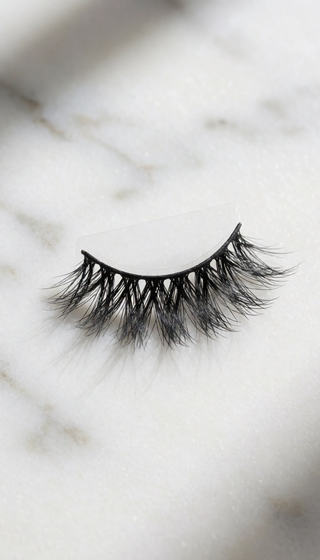
Layered Lash Styles: Volume and Dimension Explained

THE SCIENCE BEHIND LASH DENSITY: WHY LAYERING WORKS
If you’ve ever wanted that 'fluffy' look from a salon but are nervous about the commitment or the prep, you’re not alone. Many people feel overwhelmed by the sheer volume of options. The reality is that the secret to true dimension isn't just about adding more lashes; it’s about *how* you apply them. Think of your lashes like a staircase, not a single flat floor. A flat application looks neat but can feel 'thin' because it doesn't mimic how natural hair grows in clusters.
Layering is the technique of strategically placing individual or grouped lash clusters at different heights across the eyelid. This technique tricks the eye into seeing incredible depth. For example, placing a slightly shorter, fuller cluster at the inner corners and a slightly longer, sparser cluster towards the outer V creates a natural, sweeping lift—a look that screams 'I woke up like this' even if it took a few minutes of careful placement.
MASTER THE THREE LAYERS OF DIMENSION
To achieve a realistic, voluminous effect without looking heavy or fake, focus on these three placement zones:
- The Foundation Layer (The Inner Sweep): This layer is closest to the root. It provides the base density. Use shorter, wispy strands here to create a dense, foundational look that fills in any gaps naturally.
- The Mid-Body Layer (The Lift): This is where the majority of your volume lives. Use medium-length clusters here. The goal is to mimic the natural curve of your eye, ensuring the lashes fan out gently, not just straight up.
- The Outer Halo (The Drama): The final layer, placed near the outer corner, should feature your longest, most dramatic lashes. These provide the outward sweep and the 'lift' that draws attention to the entire eye. This creates the visual illusion of longer, more impactful lashes without the heaviness across the whole lid.
This methodical approach means you can achieve a high-drama effect—like those stunning, cloud-like styles—but it feels perfectly balanced and wearable for daily wear. It's about building architecture for your eyes.
COMMON PITFALL: WHY LASH LAYERS LOOK CLUMPED
I used to struggle with this too. I would try to make everything the same length and density, and it would just look like a thick band of hair. The biggest mistake is ignoring the 'transition zone.' You need a smooth transition from the dense inner cluster to the longer outer sweep. If the transition is jarring, the whole look collapses. Always ensure there is a subtle variation in length between adjacent clusters—no two adjacent lashes should be identical in length or density.
COMPARISON: DIFFERENT APPLICATION STYLES
| Style | Primary Focus | Best For | Visual Impact |
|---|---|---|---|
| Straight Volume | Even density across the entire lid. | Subtle enhancement, everyday wear. | Moderate |
| Curved Layering | Varying lengths to create a natural sweep. | Balanced, sophisticated looks. | High |
| Halo Effect | Dense inner base with extreme length at the outer corner. | Dramatic evening looks, maximum flutter. | Very High |
Finding the right balance between density and sweep is key to transforming your look without the 'overdone' feeling. When you're ready to see how these techniques translate into flawless, long-lasting application, you can explore the curated collection designed for dimension.
📚 Browse our complete library of lash guides →
📚 Browse our complete library of lash guides →
Experience the Difference of PHANSTA LASHES
Quick to apply, gentle on eyes, beautiful all day. Reusable 30+ wears per pair.
SHOP PHANSTA LASHES — GLUE-FREE, 30+ WEARS →