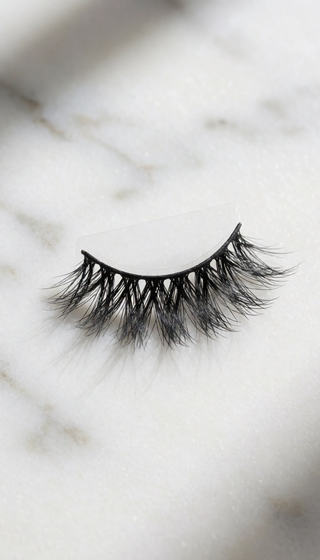
KNOT-FREE VS HAND-TIED LASH EXTENSIONS: WHAT'S DIFFERENT?

You've seen "knot-free" and "hand-tied" written on lash techs' Instagram bios. But when you actually sit in the chair, what do those words mean for how your lashes feel, how long they last, and how much you pay? If you've been confused, you're not the only one. Let's break down exactly what those terms mean, what's different, and what actually matters for your natural lashes.
THE QUESTION I GET ASKED MOST OFTEN
"What's the difference between knot-free and hand-tied lashes?" It's the most common question I get. Here's the short version: they are two different ways of attaching extensions to your natural lash. Hand-tied means the extension is manually tied to your natural lash. Knot-free means the application method avoids creating a visible "knot" at the base, so the extension sits flatter along the lash line.
KNOT-FREE VS HAND-TIED: THE 4 REAL DIFFERENCES
- Application time. Hand-tied lashes take longer to apply — generally 2 to 3 hours for a full set, since each fan is individually tied. Knot-free sets typically run 90 minutes to 2 hours.
- Weight and comfort. Hand-tied fans are handmade and fluffier, but each individual extension is comparable in weight. Knot-free styles are known for being lighter at the base because there's no knot to create bulk. If you wear contacts or have sensitive lids, the flatter base of knot-free feels noticeably better.
- Retention and twisting. Hand-tied lashes can be more prone to twisting if not applied perfectly, because the knot creates a tiny pivot point. Knot-free methods reduce this because the lash lies flat against the natural lash.
- Price. Hand-tied full sets usually cost more — anywhere from $150 to $300 depending on your city. Knot-free sets typically range from $120 to $250. The price difference reflects application time more than quality.
WHICH ONE IS WORTH YOUR MONEY?
If you want maximum fluff and have the time and patience, hand-tied is a beautiful experience. If you wear contacts, have looser lashes, or want the most comfortable daily wear, knot-free is the better choice.
But honestly, the more important question is: which is better for your natural lashes? The answer is the one applied by a technician who understands isolation and placement. Even the most advanced application method will damage your lashes in the wrong hands.
Here's a side-by-side comparison to help you decide:
| Factor | Hand-Tied | Knot-Free |
|---|---|---|
| Apply time | 2–3 hours | 90 min–2 hours |
| Weight feel | Fluffy, fuller | Lighter base |
| Retention | 4–6 weeks | 4–6 weeks |
| Twisting risk | Slightly higher | Lower |
| Cost range | $150–$300 | $120–$250 |
Before you decide which one to book, look for a tech who can show you photos of their own work. Pay attention to the shape they're known for. The best tech is the one who recommends the style that suits your eyes, not the one that's most expensive.
FAQ
What does knot-free mean in lashes?
Knot-free means the extension is applied without creating a visible knot at the base of the natural lash. The lash lies flat against the lash line, which feels lighter and reduces twisting during wear.
Are hand-tied lashes more expensive than knot-free?
Yes, hand-tied full sets typically cost $150 to $300, while knot-free sets range from $120 to $250. The higher price comes from longer application time, not necessarily better quality.
How long do knot-free lashes last compared to hand-tied?
Both last about 4 to 6 weeks with proper care. Retention depends more on your natural lash cycle, your aftercare habits, and the skill of the technician than on the application method itself.
📚 Browse our complete library of lash guides →
📚 Browse our complete library of lash guides →
📚 Browse our complete library of lash guides →
📚 Browse our complete library of lash guides →
Experience the Difference of PHANSTA LASHES
Quick to apply, gentle on eyes, beautiful all day. Reusable 30+ wears per pair.
SHOP PHANSTA LASHES — GLUE-FREE, 30+ WEARS →