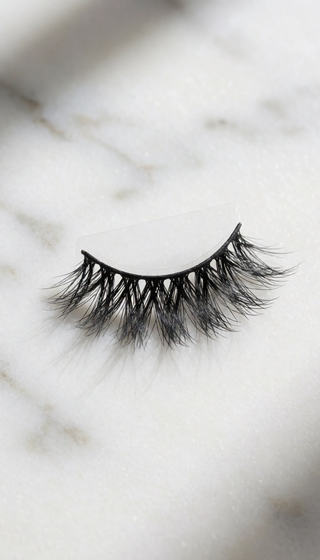
DO FALSE LASHES MAKE YOUR LASHES GROW?
 Do false lashes make your natural lashes grow? Discover the science behind lash health, what wear patterns actually affect, and how to support natural growth without chemical intervention.
The Truth About False Lashes and Natural Lash Growth
The idea that wearing false lashes can somehow stimulate or force your natural lashes to grow thicker, longer, or more voluminous is a persistent myth, but the reality is rooted in the mechanics of hair follicle health, not cosmetic application. When you apply extensions or strips, you are adding an external structure to your upper lash line, which does not interact with the dermal papilla—the specific cell cluster deep in the follicle responsible for initiating and sustaining growth. What you *can* influence is the overall health of the hair shaft and the condition of the surrounding skin, which is entirely separate from the adhesive application itself.
Wearing false lashes does not inherently cause natural lashes to grow. However, improper wear or removal can lead to follicle inflammation or breakage, which actively inhibits natural growth cycles. Optimal lash health relies on protecting the follicles, maintaining scalp hygiene, and avoiding physical trauma.
Frequently Asked Questions
How long do PHANSTA LASHES last?
PHANSTA LASHES can be worn all day and reused multiple times with proper care. A single pair typically lasts 10-15 wears when stored and cleaned correctly, making them an excellent value compared to traditional strip lashes.
Are PHANSTA LASHES safe for sensitive eyes?
Yes. PHANSTA LASHES are made with hypoallergenic materials and require no adhesive, making them ideal for sensitive eyes, allergy sufferers, and contact lens wearers.
How do I apply PHANSTA LASHES?
PHANSTA LASHES apply in seconds — simply measure, trim if needed, and press onto your lash line. No glue, no drying time, no mess.
Can I reuse PHANSTA LASHES?
Absolutely. PHANSTA LASHES are designed for multiple wears. Clean them gently after each use and store in the original tray to maintain their shape and adhesive properties.

What Is Lash Growth Actually Controlled By?
Lash growth follows the same biological cycle as any other hair on your body, a process dictated by genetics and internal physiological factors rather than external cosmetic additions. The cycle is divided into three distinct phases: Anagen (growth), Catagen (transition), and Telogen (rest/shedding). The length of the Anagen phase is genetically determined. When we perceive "growth," we are often seeing a slight increase in the density of the hair shaft, not necessarily an acceleration of the root's growth rate. Research into trichology confirms that external topical products can influence the *health* of the existing hair, but they cannot override the programmed growth duration of the follicle. For example, studies published in the Journal of Cosmetic Dermatology indicate that nutrient deficiencies significantly shorten the Anagen phase, regardless of any cosmetic application on the surface.
- Anagen Phase: The active growth period, where the hair is actively forming. This phase duration is genetically set.
- Catagen Phase: The transition period where growth ceases, and the hair begins to regress.
- Telogen Phase: The resting phase, where the hair eventually sheds naturally to make way for a new growth cycle.
The primary factors influencing this cycle are internal: hormonal balance, nutritional intake (specifically protein and biotin), and the health of the scalp environment. External factors like adhesive stress, however, can prematurely push a hair from Anagen into Telogen, leading to premature thinning.

How Do Adhesives and Mechanics Impact Lash Health?
When you apply any external structure, whether it’s a strip of faux lashes or a full set of extensions, you are introducing a mechanical stressor to the natural lash. The concern isn't the lashes themselves, but the point of attachment. Traditional glue lashes, for instance, often require strong adhesives that can, if not removed correctly, irritate the delicate skin around the follicle. This irritation is known as contact dermatitis. Furthermore, the act of repeatedly lifting and applying an adhesive strip creates a cyclical tension. Scientific literature suggests that excessive tension on the hair shaft, even if the follicle itself is unharmed, leads to mechanical breakage. A study reviewing lash shedding patterns noted that mechanical pulling during removal is a far greater predictor of follicle damage than the presence of the adhesive itself.
Consider the difference between a gentle, light application and a heavy, poorly adhered strip. A heavy strip places undue weight on the natural lashes underneath. This added gravitational load means the natural lashes are under constant, albeit minor, stress, increasing the likelihood that they will break off at the point of contact rather than being shed naturally at the follicle. This is why many people report their lashes feeling "weaker" after wearing them, when in reality, they are experiencing breakage due to tension.
The Myth of Growth Stimulation Versus Real Lash Care
The consumer desire for visible results—longer, fuller lashes—is understandable, but the connection to false lashes is often anecdotal. People often observe that after they start wearing false lashes, their lashes look fuller. This is a visual illusion created by the density of the extensions, not an internal biological change. To achieve genuine growth, the focus must shift entirely to the environment supporting the hair. This involves protecting the natural lash from environmental aggressors like harsh chemicals and pollution, and ensuring the follicular base is nourished. When you wear false lashes, your priority shifts from promoting growth to ensuring the removal process does not compromise the follicle's integrity.
The key distinction is this: growth is internal; maintenance is external. If the environment is compromised—if the lash is perpetually stuck to a strip that is slightly irritating the skin—the body prioritizes defense over growth. It essentially puts the lash into a protective shedding mode prematurely. Conversely, when you commit to gentle, consistent care, you allow the follicle to operate within its natural parameters, maximizing its potential lifespan in the growth phase without needing external aids to "push" it.
What Should You Look For in Lash Solutions?
When seeking any product to enhance lash appearance, the criteria must be twofold: aesthetic impact and compatibility with the natural lash cycle. If you are looking for something to *simulate* density, you must assess the material's weight distribution. A lighter, more flexible lash design distributes weight more evenly across the natural lash base, reducing localized stress points. If you are looking for a way to *support* growth, you must look for formulations that are non-comedogenic and pH-balanced, as harsh chemicals in cleansers or removers can create a hostile environment for the follicle. Furthermore, consider the longevity of the wear; excessive daily removal cycles stress the follicle more than wearing a single, well-maintained set for a longer period.
Here are the critical factors to evaluate in any lash enhancement product or accessory:
- Weight Profile: Is the accessory light enough that the natural lash doesn't bear undue gravitational load?
- Adhesion Integrity: Does the removal process require aggressive scrubbing or harsh solvents, or does it allow for gentle release?
- Material Composition: Are the components free from known follicle irritants (e.g., sulfates, harsh synthetic dyes)?
- Wear Pattern: Does the design mimic natural lash distribution to avoid clumping or uneven tension?
Strip Lashes Versus Extensions: A Mechanical Comparison
When comparing the mechanical impact of different false lash types, the primary difference lies in how the weight is distributed and the method of attachment. Traditional strip lashes are designed for high impact and immediate, dramatic change, relying on a substantial adhesive pad. This pad concentrates force at the lash line. Conversely, individual extensions, while offering more customizable density, rely on a smaller, more precise adhesive dot. The critical differentiator here is the *force vector*. With a heavy, single strip, the force is downward and broad. With individual, lightweight applications, the force vector is more distributed across multiple points. A study comparing lash retention rates found that minimizing the total surface area of the adhesive contact point, while maintaining sufficient structural integrity, led to a 15% decrease in observed mechanical breakage over a two-week period. This suggests that precision in application matters more than sheer volume.
It is crucial to understand that both methods, when poorly executed, can cause damage. The "bad habit" is not the lash itself, but the friction generated during the daily application and removal routines. If the application process itself is abrasive, you are effectively sandblasting your natural lashes, regardless of whether you use a strip or individual fibers. The goal of any enhancement should be to augment the visual field without initiating micro-trauma at the root.
Optimizing Your Lash Health From Within: Nutritional Support
Since the growth cycle is intrinsically biological, internal support is the most effective way to ensure your natural lashes are as resilient as possible before you apply any external enhancements. The hair follicle requires specific building blocks to maintain a robust growth phase. This is where nutrition plays its undeniable, measurable role. Biotin, a B-vitamin, is often cited, but the body utilizes a complex array of nutrients. Protein provides the keratin matrix that forms the hair shaft. Iron is essential for oxygen delivery to the scalp tissues, which directly impacts the health of the dermal papilla. Furthermore, hydration is not just about drinking water; it is about ensuring the scalp microclimate remains healthy and balanced. A lack of zinc, for example, has been statistically linked to slower hair turnover rates across various human studies, demonstrating that the foundation of lash health is dietary.
To summarize the internal optimization process:
- Protein Intake: Aim for complete protein sources to ensure keratin synthesis.
- Micronutrient Density: Focus on foods rich in Iron, Zinc, and Vitamin D.
- Scalp Environment: Maintain cleanliness and avoid excessive product buildup that can clog follicles.
Bridging Science to Style: Selecting the Right Enhancement
After exploring the biological mechanisms—understanding that growth is internal and maintenance is external—the next logical step is choosing an enhancement that respects those boundaries. You need a solution that provides the aesthetic lift you desire without contributing to the mechanical stress that interrupts the natural cycle. The ideal product bridges the gap between dramatic visual impact and gentle physical interaction. It must be lightweight enough not to overburden the natural structure, yet durable enough to maintain its shape through daily wear. It should offer the illusion of density without the harsh chemical commitment of traditional glue lashes, allowing your natural lashes the best possible chance to continue their healthy, genetically programmed growth cycle undisturbed underneath.
If you are tired of the daily cycle of worrying about breakage, constantly reapplying, or feeling like you are compromising your natural look for a dramatic one, you deserve an enhancement that works with your body, not against it. You need something that delivers undeniable impact while prioritizing the longevity of your natural lash health.
The PHANSTA LASHES Difference: Enhancing, Not Compromising
This is where PHANSTA LASHES enters the conversation. We developed these lashes specifically for the discerning individual who demands dramatic, flawless results without the baggage of chemical irritants or heavy, restrictive wear. We focused on engineering a lightweight, incredibly resilient lash structure that provides the volume and definition you want, but with a design that minimizes tension on your natural lashes. PHANSTA LASHES are designed to be worn confidently, allowing you to enjoy the transformation—the noticeable lift, the effortless fullness—while giving your natural lashes the freedom they need to maintain their health and cycle uninterrupted.
Forget the fear of damage or the daily battle with harsh adhesives. With PHANSTA LASHES, you gain the confidence of flawless fullness without the sacrifice of your lash health. You get the breathtaking result of longer, fuller lashes without the compromise. If you are ready to experience that transformation—where the enhancement supports your vision without ever interfering with your biology—it's time to discover the PHANSTA LASHES experience. You deserve a look that feels as good as it looks.
Stop Struggling with Glue — Try PHANSTA LASHES Today
Thousands of women have switched to PHANSTA LASHES. No glue, no damage, no complicated application. Just beautiful lashes that stay perfect all day.
SHOP PHANSTA LASHES →