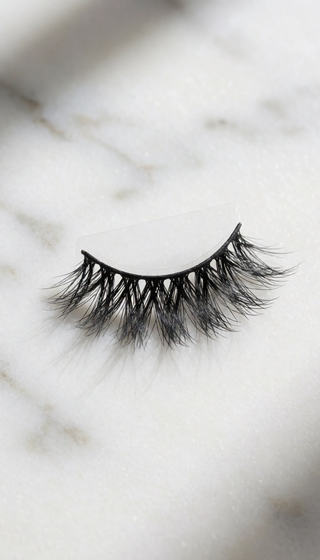
CAN YOU BE ALLERGIC TO FALSE LASHES? SYMPTOMS AND SOLUTIONS

You did everything right. You chose a pair of lashes you loved. You washed your hands, applied them carefully, and for the first few hours everything was perfect. Then it started: a subtle itch near the outer corner of your eye, a little redness along your lash line, then a familiar uncomfortable tingling. By the time you took the lashes off, your eyelids were swollen and irritated. It was just like the last time — and the time before that.
If this sounds familiar, let me tell you something that might genuinely help: it's probably not the lashes themselves causing the problem. It might not even be how you're applying them. Most "lash allergies" aren't a response to the lash at all — they're a response to something that's touching them, or adhering to them.
False lashes sit in a uniquely sensitive environment. Your eye area has the thinnest and most absorbent skin on your face. The lash line is the direct border between skin and mucosa. That means anything on your lashes — be it glue, adhesive remover, dust, the fibers themselves, or bacterial buildup from reusing a pair — has a very short path into delicate tissue.
THE REAL CAUSES BEHIND ALLERGY-LIKE SYMPTOMS
There are three very different things that cause allergic reactions when wearing false lashes. If you know which one you're dealing with, you can solve it fast. If you don't, you might abandon false lashes entirely and miss out on an amazing look for no reason.
1. The Adhesive
The most common culprit is the lash glue, not the lash. Most traditional lash adhesives contain ingredients like cyanoacrylate (the same bonding family as superglue) or latex. These adhesives create a strong bond, but they can also trigger contact dermatitis — your skin's way of fighting back against a substance it sees as unfriendly.
Allergic lash glue symptoms usually appear in the hours after application: redness, swollen eyelids, itching, flaking, or small bumps near the lash line. The tricky part is that it happens when you first put the lashes on and again when you remove them, so it can feel like a recurring problem that you can't pinpoint.
2. The Lash Material Itself
Some people are genuinely sensitive to certain lash materials. For example, while mink lashes are generally considered hypoallergenic, some people with a specific animal-fiber sensitivity can react to them. Synthetic lashes made of polyester or nylon can also cause reactions in rare cases, especially if the fibers carry dust or microscopic debris from packaging.
This is less common than glue reactions, but it happens. The symptoms are similar to any other contact allergy: itching, burning, watering, swelling.
3. Bacterial Buildup From Reusing Lashes
This is the one no one talks about, but it's surprisingly common. When you wear lashes multiple times without proper cleaning, they collect not just old glue residue but dead skin cells, makeup, dirt, and in some cases, bacteria. When you wear the lash again, you're pressing all of that buildup against your lash line for hours. Your eyelids are a prime entry point for bacteria, and the inflammation that follows can look — and feel — exactly like an allergy.
This type of reaction often comes with a pattern — you'll notice it more on the second or third wear of the same pair, in the exact same spots where the old glue residue sits.
4. The Remover
Oil-based eye makeup removers and some dual-phase removers can be irritating to the lid skin as well. Their job is to dissolve glue, and sometimes they dissolve a bit too much of your natural skin oil barrier. If your lids feel raw, tight, or burning after removal, the remover might be the culprit.
HOW TO TELL IT'S AN ALLERGY AND NOT SOMETHING ELSE
It's easy to panic when your eyes get irritated, but false lash reactions have some distinguishing clues that help you identify the source.
If it involves swelling, redness, and warmth — it's likely an allergic reaction. Consistent with allergies, it can build up over hours and worsen with each application. Contact dermatitis from lash glue typically appears between 24 to 72 hours after exposure, so it's possible to feel fine at the party and wake up the next morning with angry, swollen lids.
If it happens immediately and involves burning — you're probably having an irritant reaction rather than a true allergy. This is common when adhesive accidentally gets onto the skin beyond the lash line, especially if the glue has a chemical component that physically burns on contact.
If it's more of a crawling-skin sensation, watering, or what feels like dust in your eye — the lashes themselves might be shedding microfibers, or your lash may have a coating that's flaking off.
If you're unsure — the safest thing to do is stop wearing the lashes until your eyes fully heal. Once everything settles, patch test: apply the item you suspect (tiny drop of glue behind your ear or a single lash on your lash line) and wait a few hours to monitor for any response. This helps isolate the trigger before you commit to a full application.
STEPS TO STILL WEAR FALSIES AFTER A REACTION
Does a reaction mean you have to give up false lashes forever? No, not automatically. There's a careful way to approach them that works for many people.
- Switch to a hypoallergenic, latex-free lash glue. Begin here because it's the simplest fix that addresses the most common offender. Look for a formula specifically marketed as latex-free and suitable for sensitive eyes.
- Choose lashes with a comfortable, chemical-free band. Many lashes come with a flexible band that sits more gently against the skin. Softer bands also mean less friction — and less friction means less potential irritation.
- Clean your lashes after every single wear. Use oil-free cleanser or a gentle lash-safe makeup remover, and pick any leftover glue off the band. Dry them completely before storing. This eliminates the bacterial-buildup problem entirely.
- Wash your natural lashes and lash line nightly. If you've been wearing lashes, give your natural lashes a gentle cleanse after removal to remove any residue. Baby shampoo or an eye-safe cleanser is enough.
- Rotate between pairs. Don't wear the same pair two days in a row. Let each pair air out completely to avoid trapping moisture or bacteria.
None of these steps are complicated — but they're the ones most people skip. If you want to be one of the lucky people who wears fake lashes without issue, these habits make all the difference.
WHAT TO LOOK FOR IN A LASH IF YOU HAVE SENSITIVE EYES
If your eyes are sensitive, the particular qualities of a lash matter more than the brand name. Here's what to look for:
- Lightweight and flexible: Heavy lashes feel like a physical weight on the eye and can trigger a reflex to rub or touch, which worsens irritation.
- Latex-free band: Look for a band that's described as soft, thin, or flexible. A good band is noticeably more comfortable against the lash line.
- High-quality fiber that doesn't shed: Flimsy fibers can shed and fall into your eye, causing watering, itch, and redness — symptoms that mimic an allergy.
- A clean, minimalist ingredient story: Lashes themselves aren't usually "made with ingredients" — they're fibers and a band. But some are manufactured with coatings that can flake off. If a lash is smooth and well-made, it will pass the comfort test quickly.
There is one more route worth mentioning. Some people find that their sensitivity is less about allergens and more about the drama level of the lash. Heavy, dense lashes trap sweat and moisture and hold it against the skin, increasing the risk of irritation. If you've reacted to a thick dramatic pair, don't assume all lashes will do the same. Try lighter styles with a softer band first.
The truth about false lash allergies is that they're not usually a life sentence. For most people, figuring out the trigger and making two or three changes opens up a whole world of beautiful lashes without pain, swelling, or worry. Your eyes are worth protecting — and yes, they can also be worth decorating with confidence.
FREQUENTLY ASKED QUESTIONS
What are the signs of allergic reaction to false lashes?
The most common signs are red, swollen, itchy eyelids; watery eyes; a burning or tingling sensation along the lash line; and flaky or irritated skin around the eyes. Symptoms can appear within hours or up to 72 hours after exposure.
Can I be allergic to the lash fibers but not the glue?
Yes, it's possible but less common. Some people have sensitivities to animal hairs in mink lashes or to synthetic fiber coatings. If you react only to certain pairs, it's likely the fiber or coating rather than the adhesive.
How long does an allergic reaction to lashes last?
Once you remove the lashes and stop using the allergen, mild reactions usually fade within 24 to 72 hours. Moderate reactions may take several days to fully clear. See a doctor if swelling worsens or vision changes.
Should I use latex-free glue if I'm not allergic to latex?
It can still be a good idea. Latex-free glues are also generally gentler on the skin, dry more flexibly, and are less likely to cause irritation even for people without a true latex allergy.
Are strip lashes safer than lash extensions for sensitive eyes?
Strip lashes give you total control — you choose the glue, the lash, and the removal process. They also don't stay on for weeks, so if you notice sensitivity, you can stop immediately. For these reasons, strip lashes are usually a safer choice for sensitive eyes.
Can I develop a sudden allergy after years of wearing false lashes?
Yes, allergies can develop at any time after repeated exposure. It's called cumulative exposure sensitivity. Your body can suddenly flag a substance it used to tolerate. This might be why a product you've worn for years starts causing issues.
📚 Browse our complete library of lash guides →
📚 Browse our complete library of lash guides →
Frequently Asked Questions
Are glue-free lashes safe for sensitive eyes?
Yes. PHANSTA LASHES are hypoallergenic, latex-free and fragrance-free, and they apply without liquid adhesive — the most common lash irritant. Patch-test any new product on your inner arm for 24 hours before first use.
How long do glue-free lashes last per wear?
With clean, dry lids at application, PHANSTA LASHES hold comfortably through a full day — including workouts and light rain when you use the waterproof version. Hold depends mostly on clean, dry application.
Can you really reuse PHANSTA LASHES 30+ times?
Yes, when cared for properly. Gently peel them off by lifting from the outer corner, wipe the band with a damp swab after each wear, and store pairs curved-side-up in the tray. Never soak the band in remover.
Do PHANSTA LASHES damage natural lashes?
No — unlike tugging off dried glue, PHANSTA LASHES peel away cleanly without pulling natural hairs. Remove gently by lifting from the outer corner.
How much do PHANSTA LASHES cost?
PHANSTA LASHES are $59 per pair, reusable for 30+ wears — that works out to under $2 per wear over a full month of use.
Find your eye shape and get personalized lash recommendations: See how PHANSTA compares to traditional lashes: Explore our occasion-specific lash guides:NOT SURE ABOUT YOUR EYE SHAPE?
STILL COMPARING OPTIONS?
FIND THE PERFECT LASH FOR EVERY MOMENT
Quick to apply, gentle on eyes, beautiful all day. Reusable 30+ wears per pair.
SHOP PHANSTA LASHES — GLUE-FREE, 30+ WEARS →