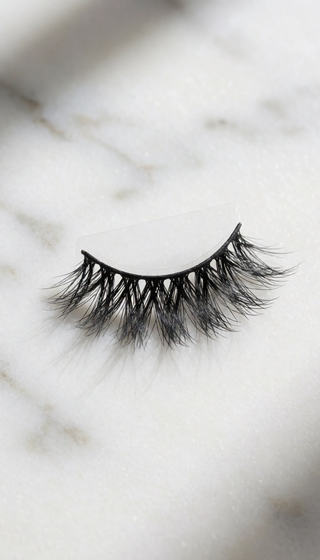
WINTER LASH CARE: PROTECT LASHES FROM COLD AIR

Achieve Flawless, Protected Lashes Through the Cold Season
Learn the science of moisture retention and structural integrity to prevent breakage when temperatures drop.
Understanding the Science of Cold Air and Hair Integrity
When the temperature drops, the air quality changes dramatically, creating an environment that actively works against the health of your natural lashes. It is not just the cold itself, but the associated atmospheric conditions that cause visible damage.
Cold air is inherently dry. This lack of ambient humidity means that moisture is rapidly drawn out of all organic materials, including the keratin fibers that make up your lashes. This process, known as desiccation, is accelerated indoors by heating systems.
The Mechanics of Lash Damage in Dry Climates
- Moisture Depletion: Cold winter air holds minimal humidity. Your lashes lose their natural moisture barrier the moment they are exposed to this dry environment, leading to a loss of elasticity.
- Thermal Stress from Indoor Heating: Indoor heating systems blast highly desiccated air throughout your home and workplace. This constant exposure causes the cuticle scales on the lash to lift and become brittle, making them susceptible to snapping.
- Mechanical Stress from Wind: Winter winds create high-velocity air movement. When lashes are already compromised by dryness, this physical agitation causes them to tangle and snap under stress.
- Static Buildup: The combination of very low humidity and synthetic materials (like certain scarves or pillowcases) generates static electricity. This static can lift the lash cuticle, causing frizz and premature shedding.
Actionable Strategies to Preserve Lash Health This Winter
Maintaining lash health during colder months requires a proactive, multi-layered approach focusing on hydration and protection. These steps are designed to mitigate environmental damage without harsh chemicals.
- Increase Ambient Humidity: Utilizing a humidifier in your primary sleeping area is one of the most effective ways to counteract the dryness of winter air, allowing your lashes to retain natural moisture overnight.
- Implement Nightly Conditioning: Applying a specialized lash conditioner nightly acts as an occlusive layer, sealing in essential moisture and providing a protective barrier against the drying effects of the night air.
- Gentle Cleansing Technique: When washing your face, always pat the eye area gently with a clean towel rather than rubbing. Rubbing creates friction that can pull out fragile, moisture-depleted lash strands.
- Wind Shield Protection: When outdoors, using a scarf or a light wrap over the lower half of your face can create a microclimate that blocks direct, harsh winter winds from impacting your lash line.
- Strategic Break Periods: During the peak severity of winter weather, consider giving your natural lashes a break from any heavy cosmetic enhancements to allow them time to recover and strengthen their natural structure.
Criteria for Selecting Winter Lash Enhancements
If you choose to enhance your look with lash extensions during the colder months, the product itself must be chosen with extreme care. The primary goal is to select a solution that complements your skin's compromised barrier rather than adding further stress. Look for options that offer a featherlight feel, ensuring no undue pressure is placed on dry, sensitive eyelids. Furthermore, the removal process should be designed to be gentle, ideally requiring only a warm-water soak to ensure the integrity of your natural lashes remains intact post-wear.
Comparing Lash Options for Cold Weather Performance
| Lash Option | Winter Performance | Comfort in Cold | Damage Risk |
|---|---|---|---|
| Heavy extensions | Adhesive can weaken in dry air; prone to sagging | Irritating on dry, sensitive lids | High |
| Thick strip lashes | Hold shape but can feel heavy and restrictive | Weigh down eyelids | Medium |
| Featherweight strip lashes | Maintains curl; resists sagging | Comfortable all day | Low |
| Mascara only | Prone to smudging or flaking in snow | Can feel stiff after prolonged wear | Low |
Winter is challenging for lash health. Your chosen enhancement should support, not stress, your natural lashes.
The PHANSTA LASHES Solution: Engineered for Cold Weather Durability
At PHANSTA LASHES, we developed a solution specifically addressing the environmental stressors of cold and dry air. Our lashes utilize a proprietary GLUE-FREE micro-adhesion technology, meaning they adhere securely without the need for harsh glues or magnets. This design ensures that your lashes remain comfortable and secure even when your eyes are sensitive to the elements.
By focusing on featherlight construction and superior adhesion, PHANSTA LASHES allows you to enjoy beautiful, full-looking lashes for 30+ wears, all while keeping the irritation and breakage risks associated with traditional winter wear to a minimum. They are designed to be hypoallergenic and waterproof, offering reliable wear regardless of the weather.
FREQUENTLY ASKED QUESTIONS
Can cold weather really damage natural lashes?
Answer: Yes. Cold, dry air strips moisture from lash fibers, making them brittle and prone to breaking. Using a humidifier and conditioning treatment in winter helps protect them.
How often should I replace strip lashes during winter?
Answer: Winter wear is tougher on lashes. Replace them after 3-5 wears to avoid exposing your eyes to dry, brittle materials that can irritate sensitive winter skin.
Are silk lashes better for winter than synthetic?
Answer: Silk and synthetic lashes both work in winter. What matters more is weight and band flexibility. Look for lashes that feel featherlight and have a soft, flexible band that won't press on your eyelids.
Are glue-free lashes safe for sensitive eyes?
Answer: Yes, PHANSTA LASHES are formulated to be hypoallergenic and utilize a GLUE-FREE micro-adhesion system, eliminating the risk of irritation often associated with traditional lash adhesives.
How long do PHANSTA LASHES last compared to other options?
Answer: PHANSTA LASHES are designed for exceptional durability, offering 30+ wears per pair. This longevity is achieved through our micro-adhesion technology, providing consistent wear without compromising comfort.
Find your eye shape and get personalized lash recommendations: Explore our occasion-specific lash guides:NOT SURE ABOUT YOUR EYE SHAPE?
FIND THE PERFECT LASH FOR EVERY MOMENT
Quick to apply, gentle on eyes, beautiful all day. Reusable 30+ wears per pair.
SHOP PHANSTA LASHES — GLUE-FREE, 30+ WEARS →