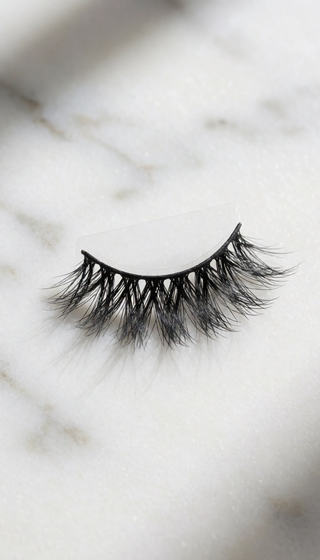
WHY DO MY FALSE LASHES KEEP FALLING OFF? 7 EASY FIXES

You're at a wedding. The ceremony was beautiful, the cocktails were flowing, and you've spent the last two hours feeling genuinely gorgeous — lashes fluttering, eyes looking wide awake in every photo. Then you step into the bathroom, catch your reflection in the mirror, and there it is: the left lash has completely detached from the outer corner, hanging at a 45-degree angle like a broken windshield wiper. You peel it off, shove it in your clutch, and spend the rest of the night blinking asymmetrically while pretending nothing happened.
If that scenario stings a little too close to home, you're not alone. Lash lift-off is the single most common complaint in the false lash community — and it's also the most fixable. The vast majority of premature lash fallout traces back to a handful of specific, correctable mistakes rather than bad luck or "just having oily skin." Once you understand the mechanics of how lashes actually adhere to your eyelid, you can troubleshoot the problem with precision instead of guessing.
Key Takeaway: False lashes fall off for seven primary reasons: incorrect sizing, skipped prep, wrong adhesive amount, oil contamination, insufficient drying time, environmental factors, and stiff lash bands. Each one has a specific, proven fix — and most take less than 60 seconds to implement.
Frequently Asked Questions
How long do PHANSTA LASHES last?
PHANSTA LASHES can be worn all day and reused multiple times with proper care. A single pair typically lasts 10-15 wears when stored and cleaned correctly, making them an excellent value compared to traditional strip lashes.
Are PHANSTA LASHES safe for sensitive eyes?
Yes. PHANSTA LASHES are made with hypoallergenic materials and require no adhesive, making them ideal for sensitive eyes, allergy sufferers, and contact lens wearers.
How do I apply PHANSTA LASHES?
PHANSTA LASHES apply in seconds — simply measure, trim if needed, and press onto your lash line. No glue, no drying time, no mess.
Can I reuse PHANSTA LASHES?
Absolutely. PHANSTA LASHES are designed for multiple wears. Clean them gently after each use and store in the original tray to maintain their shape and adhesive properties.
The Real Reason Your Lashes Won't Stay Put (It's Not What You Think)
Most people assume their lashes fall off because they have "oily eyelids" or because the adhesive is "weak." In reality, eyelid oil is only one piece of the adhesion puzzle — and often not the biggest one. Cosmetic chemists who formulate lash adhesives point out that the bond between a lash band and your skin depends on three variables working in sync: surface cleanliness, adhesive chemistry, and mechanical fit. When any one of those three variables is off, the bond fails — regardless of how expensive the lashes are or how "strong" the glue claims to be.
Think of it like wallpaper. You can use the most aggressive adhesive on the market, but if you apply it to a dusty, uneven wall, it will peel within hours. The wall wasn't the problem — the prep was. Your eyelid works the same way. Understanding this framework is the difference between randomly trying tips you found online and actually diagnosing why your specific lashes are failing.
- Surface cleanliness: Is your eyelid free of oil, makeup residue, and skincare products at the lash line?
- Adhesive chemistry: Are you using the right amount of the right type of adhesive for your skin type?
- Mechanical fit: Does the lash band actually match the curvature and length of your natural lash line?
When you can identify which of the three variables is breaking down, the fix becomes obvious. The rest of this guide walks through each failure point in detail so you can pinpoint your specific issue and solve it for good.

Reason #1: Your Lashes Don't Actually Fit Your Eyes
This is the most overlooked cause of lash fallout, and it's the one that frustrates people the most because they assume the lashes are "defective." In most cases, the lashes are fine — they're just the wrong size for your eye shape. A lash band that's too long for your lash line will lift at the inner and outer corners because there's no skin surface to adhere to. A band that's too short creates tension across the center, which pulls the middle section away from the lid within an hour or two.
The fix takes about 30 seconds and requires nothing more than a pair of small scissors and a ruler or the lash band itself. Before applying any adhesive, hold the lash strip up to your eye along the natural lash line. If the band extends past the inner corner or hangs over the outer corner, it's too long. Trim from the outer corner first — never the inner corner, since that's where the band is narrowest and most critical for a seamless look. Remove small amounts at a time, testing the fit after each snip.
- Signs your lashes are too long: The outer corner lifts within 30 minutes, or you feel a "tugging" sensation at the inner corner.
- Signs your lashes are too short: The center of the band pulls away from the lid, or you see a visible gap between the lash band and your natural lash line.
- The sweet spot: The band should start right at the base of your first natural lash and end at the outermost lash without extending past it.
A 2023 survey of professional lash artists found that improper sizing accounted for roughly 35% of all premature lash lift-off complaints — making it the single most common culprit. Once you trim correctly, you'll notice an immediate difference in how securely the lashes sit against your lid.

Reason #2: You're Skipping the Prep Step (and It's Costing You Hours of Wear)
Here's something that surprises a lot of people: the cleanliness of your eyelid matters more than the quality of your adhesive. A study published in the Journal of Cosmetic Dermatology found that skin surface lipids — the natural oils your eyelids produce throughout the day — can reduce adhesive bond strength by up to 60%. That means even the strongest lash glue on the market will struggle to hold if it's sitting on top of a film of oil, leftover foundation, or moisturizer residue.
The prep routine that lash professionals use takes less than two minutes and makes a dramatic difference in hold time:
- Cleanse the lash line with an oil-free micellar water or gentle cleanser. Focus specifically on the area where the lash band will sit — the base of your natural lashes, not just the lid itself. Oil-based cleansers leave a residue that interferes with adhesion, so stick to water-based or gel formulas.
- Swipe the area with an alcohol-free toner or a cotton pad dampened with witch hazel. This removes any remaining cleanser residue and slightly dehydrates the skin surface, creating a better bonding environment.
- Apply an oil-free eye primer if you use one. Let it dry completely before applying lashes. A thin layer of primer creates a matte, slightly textured surface that adhesive grips more effectively than bare skin.
- Never apply mascara before your false lashes. Mascara creates a barrier between the lash band and your skin, and the waxy formulas in most mascaras actively repel adhesive. If you want to blend your natural lashes with the falsies, apply mascara first, let it dry completely, then apply your false lashes — or use a lash comb to blend them after application.
People who follow a consistent prep routine report an average wear time increase of 3 to 5 hours compared to those who apply lashes directly onto bare, unprepped lids. That's the difference between lashes that last through dinner and lashes that last through the after-party.
Reason #3: You're Using the Wrong Amount of Adhesive
Adhesive amount is one of those things that seems intuitive but is actually counterintuitive. Most people assume more glue equals more hold. The opposite is true. Excess adhesive creates a thick, wet layer that takes longer to dry, slides around during application, and eventually forms a gummy residue that breaks down faster than a thin, even coat. Too little adhesive, on the other hand, creates dry spots where the band never makes contact with the skin.
The ideal amount is a thin, even layer along the entire lash band — about the width of a thread. Here's the technique that lash artists use to get it right every time:
- Apply a thin line of adhesive along the band, then use a lash applicator or the back of a tweezer to spread it evenly across the entire surface. Pay extra attention to the inner and outer corners, which are the first points to lift.
- Wait 30 to 60 seconds before applying. This is the step most people skip, and it's the one that matters most. Lash adhesive needs to become tacky — slightly sticky and less wet — before it makes contact with skin. If you apply it while it's still wet, the band will slide around and won't set properly.
- Apply a tiny extra dot of adhesive to each corner before placing the lash. The corners bear the most mechanical stress from blinking and facial movement, so they need a slightly stronger bond.
- Press the band down with a lash applicator or your fingertips for 10 to 15 seconds after placement, moving from the inner corner to the outer corner. This ensures full contact between the adhesive and your skin.
If you're using a clear adhesive, wait until it turns slightly blue or translucent before applying — that's the visual cue that it's reached the right tackiness. With dark or black adhesive, the 30-to-60-second wait is your best timing guide.
Reason #4: Oil-Based Products Are Sabotaging Your Lash Line
Even if you prep your eyelids perfectly, oil-based skincare and makeup products can migrate to your lash line throughout the day and break down the adhesive bond from the outside in. This is especially common with heavy eye creams, oil-based primers, and certain foundations that contain emollients like squalane, mineral oil, or coconut oil.
The migration happens gradually. You apply your moisturizer in the morning, and by mid-afternoon, the product has seeped into the lash line area, creating an oily film that weakens the adhesive. You might not notice it happening — but you'll notice the result when the outer corner of your lash starts to lift around 3 or 4 p.m.
Here's how to protect your lash line from product migration:
- Switch to water-based or gel-based eye creams that absorb quickly and don't leave a greasy residue. Look for labels that say "oil-free" or "non-comedogenic."
- Apply eye cream at least 15 minutes before your lashes — or better yet, apply it the night before. This gives the product time to fully absorb into the skin rather than sitting on the surface.
- Avoid applying foundation or concealer past your lash line. If you need to even out the skin around your eyes, use a small brush to apply product only where you need it, staying at least 2 millimeters away from the base of your lashes.
- Blot your lash line gently with a tissue or oil-blotting sheet midday if you notice shine developing. This removes surface oil before it can break down the adhesive.
Dermatologists note that people with combination or oily skin types produce significantly more sebum in the T-zone — which includes the eyelid area — than those with dry or normal skin. If you fall into that category, being vigilant about oil control around the lash line isn't optional; it's essential for all-day hold.
Reason #5: You're Not Giving the Adhesive Enough Time to Cure
There's a difference between adhesive being dry to the touch and adhesive being fully cured. When you first press the lash band onto your lid, the adhesive is still in a semi-liquid state. It needs time to fully polymerize — to transition from a wet bond to a solid, flexible one that can withstand blinking, facial movement, and environmental exposure.
Most lash adhesives require 24 to 48 hours to reach full cure strength. During that window, the bond is vulnerable to water, steam, oil, and physical manipulation. This is why your lashes might feel secure immediately after application but start lifting the next morning after a shower or a night of sleep.
The curing protocol that maximizes bond longevity:
- Avoid getting your lashes wet for at least 24 hours after application. This means no steamy showers, no swimming, no sweaty workouts, and no crying during emotional movies. Water re-activates the adhesive and weakens the bond before it has fully set.
- Sleep on your back if possible. Pressing your face into a pillow creates friction and pressure that can dislodge partially cured lashes. If you're a side or stomach sleeper, consider a silk pillowcase, which creates less friction than cotton.
- Avoid rubbing or touching your eyes during the curing period. Even gentle rubbing can shift the lash band before the adhesive has fully hardened.
- Don't apply mascara to the false lashes for the first 24 hours. The chemicals in mascara — particularly waterproof formulas — can interfere with the curing process.
If you're applying lashes for a specific event, put them on the night before rather than the morning of. This gives the adhesive a full overnight cure period while you sleep, and you'll wake up with lashes that are significantly more secure.
Reason #6: Environmental Factors Are Working Against You
Humidity, heat, and wind all affect how well lash adhesive performs. High humidity keeps adhesive in a wetter state for longer, which delays curing and makes the bond more susceptible to slipping. Extreme heat — like a hot yoga class or a summer day outdoors — increases oil production and sweat, both of which break down adhesive. Wind can physically lift the edges of the lash band, especially if the adhesive hasn't fully cured.
You can't control the weather, but you can control how you respond to it:
- In humid climates, use a latex-based adhesive rather than a latex-free formula. Latex-based adhesives cure more effectively in high-humidity environments and create a stronger initial bond.
- In hot weather, carry oil-blotting sheets and gently press them along your lash line every few hours to remove excess oil before it compromises the bond.
- In windy conditions, apply a thin layer of lash sealant over the band after application. This creates a protective barrier that shields the adhesive from physical disruption.
- Avoid direct airflow on your face — car air conditioning vents, fans, and hair dryers all create airflow that can lift lash edges before the adhesive sets.
Professional lash artists who work in tropical climates consistently report that environmental factors account for approximately 20% of lash fallout cases in their clients — a significant enough number to warrant specific countermeasures.
Reason #7: Your Lash Band Is Too Stiff to Conform to Your Eye
The physical construction of the lash band plays a bigger role in hold time than most people realize. A stiff, rigid band cannot flex to match the natural curvature of your eyelid. Even if the adhesive is perfect and your prep is flawless, a band that doesn't conform to your eye shape will have gaps between the band and your skin — and those gaps are where lifting begins.
Lash bands fall into three general categories in terms of flexibility:
- Thick cotton bands: These are the stiffest and most visible. They hold a dramatic curl well but conform poorly to the eyelid, making them prone to lifting at the corners. They're best suited for people with very prominent, deep-set eye shapes.
- Thin cotton or synthetic bands: More flexible than thick cotton, these conform better to most eye shapes and are less visible. They offer a good balance between hold and comfort.
- Flexible polymer or "invisible" bands: These are the most adaptable. They bend to match the curvature of almost any eye shape and create the most seamless bond with the skin. They're ideal for people who have struggled with lifting using traditional band styles.
If you've tried every adhesive and prep trick in the book and your lashes still lift within a few hours, the band construction is likely the culprit. Switching to a more flexible band style often solves the problem immediately — no other changes needed.
What to Look for in a Lash That Actually Stays On
Now that you understand the seven failure points, you can evaluate any lash product against a clear set of criteria. When you're shopping for lashes — whether it's your first pair or your fiftieth — here's what separates the lashes that last from the lashes that lift:
- A flexible, lightweight band that bends easily when you hold it between your fingers. If the band doesn't flex with gentle pressure, it won't conform to your eyelid.
- A band width that matches your natural lash line — not too thick, not too thin. A band that's too wide creates excess surface area for oil to penetrate; a band that's too narrow doesn't provide enough contact area for a strong bond.
- A design that doesn't require traditional glue — or at minimum, a band that's compatible with multiple adhesive types. The fewer variables between the band and your skin, the stronger the bond.
- Consistent fiber distribution along the band. Clumps or gaps in the lash fibers create uneven weight distribution, which pulls the band away from the lid in specific spots.
- A shape that matches your eye curvature out of the box, with minimal need for trimming or adjusting. The less you have to modify the lash, the better it will perform.
Keep these criteria in mind as you evaluate your options. The right pair of lashes should feel almost weightless when you hold them, bend easily in your fingers, and sit flush against your lash line the moment you place them — no tugging, no gaps, no lifting at the corners.
The Lash That Solves All Seven Problems at Once
If you've read through this guide and recognized yourself in several of the seven failure points — maybe your lashes don't fit quite right, maybe you're tired of wrestling with adhesive amounts, maybe you've been dealing with oil migration for years — there's a solution that addresses every single one of these issues without requiring you to overhaul your entire routine.
PHANSTA LASHES were designed specifically to eliminate the most common causes of lash fallout. The ultra-flexible polymer band conforms to virtually any eye shape without trimming, which solves the sizing and stiffness problems in one move. The band's micro-textured surface grips skin on contact — no adhesive required, no drying time, no curing period, no oil-based product interference. You apply them, press them down for a few seconds, and they stay put through humidity, through workouts, through long days and longer nights.
Here's what that means in practice: you get beautiful, secure lashes without glue, without damage, without the 60-second tacky-wait, without the 24-hour curing anxiety. No more carrying a tube of adhesive in your clutch for emergency reapplication. No more peeling a half-detached lash off your eyelid in a bathroom mirror. No more choosing between dramatic lashes and lashes that actually stay on.
The band is lightweight enough that you'll forget you're wearing them — until someone asks if they're real. The fiber distribution is engineered for even weight across the entire band, so there's no tugging, no pulling, no uneven lift. And because there's no adhesive involved, there's no oil migration to worry about, no curing window to protect, and no residue to remove at the end of the day.
People who've spent years fighting with traditional glue lashes describe the switch to PHANSTA LASHES as the moment they stopped thinking about their lashes entirely — which, if you think about it, is exactly how it should be. You should be thinking about your night out, your presentation, your wedding photos — not about whether your left lash is still attached.
Your Lashes Should Work for You, Not Against You
Lash fallout isn't a mystery, and it isn't a curse. It's a mechanical problem with mechanical solutions — and now you have all seven of them. Whether you fix the issue by trimming your lashes to fit, perfecting your prep routine, adjusting your adhesive technique, or switching to a lash that eliminates the problem entirely, the result is the same: lashes that stay where you put them, for as long as you want them there.
You deserve to stop worrying about your lashes and start enjoying them. The next time you catch your reflection mid-event, you want to see lashes that look as flawless at midnight as they did at 7 p.m. — not a lash band hanging by a thread. With the right approach and the right lashes, that's not a luxury. It's the baseline.
Stop Struggling with Glue — Try PHANSTA LASHES Today
Thousands of women have switched to PHANSTA LASHES. No glue, no damage, no complicated application. Just beautiful lashes that stay perfect all day.
SHOP PHANSTA LASHES →