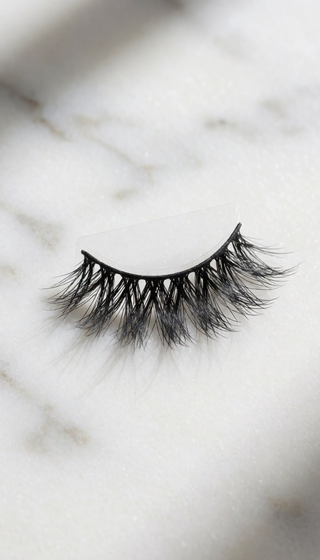
WEAR LASHES WITHOUT THE IRRITATION: THE EYE-HEALTH FACTS THAT ACTUALLY MATTER
Learn which materials, placement habits, and removal methods affect comfort—and how to respond when something feels wrong.
Lashes do not automatically cause chronic irritation or eye damage. Common avoidable triggers include adhesive contact, placement too close to the waterline, pulling or friction, contaminated hands or tools, and failure to remove damaged product. Eye-compatible materials, balanced weight, clean handling, and careful removal can reduce avoidable risk.
Use a simple rule: remove a lash if it feels tight, sits near irritated skin, or causes symptoms. Seek professional eye-care advice for persistent redness, itching, swelling, pain, discharge, light sensitivity, or vision changes; pain or vision changes warrant prompt care.

WHAT ACTUALLY INCREASES EYE-IRRITATION RISK?
The risk profile is shaped by three main variables—adhesion, lash weight and density, and hygiene—plus fit and removal habits.
- Adhesion: Traditional glue can cause irritant or allergic contact dermatitis, particularly if it touches irritated skin, migrates from the lash line, or is left on.
- Weight and density: A heavy or uneven band can pull on the eyelid, press against the lashes, and create friction during blinking.
- Hygiene: Dirty hands, applicators, storage cases, and shared surfaces can introduce irritation or increase infection risk.
- Fit and removal: A band placed too close to the waterline or removed forcefully can cause rubbing, redness, or damage to the lash area.
The waterline—the inner rim of the eyelid—is where placement causes the most trouble. A band that rides against it can trap adhesive, shed fibers into the eye, and rub with every blink, which is why fit matters as much as the material itself.
Material quality matters, but even eye-compatible or hypoallergenic products are not reaction-proof. Clean application and knowing when to stop matter just as much as the label.
THREE LASH MYTHS, CORRECTED
Common misconceptions can make lash wear feel more harmful—or more unpredictable—than the evidence supports.
- Myth: Lashes inherently cause chronic eye irritation. Fact: Irritation is not inevitable. It may come from adhesive, placement near the waterline, rubbing, residue, forceful removal, or sensitivity to a fiber or adhesive ingredient.
- Myth: There is a definitive age limit for safely wearing cosmetic lashes. Fact: There is no universal age limit. A suitable weight, secure fit, careful handling, and the ability to follow removal directions are more important than a number.
- Myth: Every form of lash wear is inherently dangerous. Fact: Risk varies by material, adhesion, weight, hygiene, placement, and removal routine. An eye-compatible style used as directed is not equivalent to a poorly fitted or unhygienic application.
Irritation is a reason to stop, not something to push through. Persistent symptoms deserve professional guidance rather than repeated trial and error.
BUILD A SAFER APPLICATION AND REMOVAL ROUTINE
A consistent routine reduces avoidable exposure to residue, friction, and contamination:
- Wash and dry your hands, tools, and work surface before touching the lash band or eye area.
- Inspect the fibers and base before use. Replace any band that is cracked, badly bent, frayed, or no longer holds evenly.
- Apply only to clean, dry lashes. Follow the directions, align the band with the lashes, and avoid pulling it toward the waterline.
- Remove gently and completely. Use a dedicated oil-free eye-makeup remover compatible with the product directions, then rinse and dry the band as instructed.
- Reusable strips do not need routine salon appointments. Clean, dry, and store them as directed, and replace them when the adhesion becomes uneven or damaged.
Storage is part of hygiene too. Keep clean, dry bands in their case away from dust and direct sunlight, and never share strips with others—sharing transfers skin bacteria and oils directly to the eye area.
If itching or redness appears, stop use instead of masking it with stronger makeup or cleansers. A qualified eye-care professional can help when symptoms are significant or persistent.
COMPARE ADHESION, WEIGHT, AND HYGIENE
Use this comparison to assess any lash option without focusing on appearance alone:
| Factor | Potential Risk Factor | Health-Conscious Standard |
|---|---|---|
| Adhesion Method | Use of harsh or unknown chemical ingredients | Hypoallergenic, tested, gentle formulas |
| Lash Weight | Excessive weight causing eyelid pulling | Lightweight, weight-distributed designs |
| Maintenance Protocol | Skipping removal, leading to product buildup | Regular upkeep and thorough removal procedures |
A comparison should not stop at a label. Confirm that the method suits the eye area, the weight feels balanced, and removal fits your routine. A style that cannot be used cleanly or comfortably is not the right match, regardless of how dramatic it looks in photos.
HOW TO READ LASH PRODUCT CLAIMS WITHOUT GETTING MISLED
Marketing language on lash packaging is not regulated the way medical claims are, so it helps to know what common terms actually promise—and what they do not.
- "Hypoallergenic" means formulated to reduce the likelihood of a reaction, not that a reaction is impossible. Individual sensitivities still vary from person to person.
- "Waterproof" describes resistance to moisture, not difficulty of removal. The removal method you use matters far more than the claim on the box.
- "Reusable" signals that a band can be worn more than once with proper cleaning, but every reusable band still has a limited lifespan.
A claim is only useful when it comes with clear directions for application, removal, and replacement. Vague promises with no instructions tell you very little about how the product will actually behave at your eye line.
TROUBLESHOOT REDNESS, ITCHING, OR DISCOMFORT
Match the response to the symptom rather than simply adding more product:
- Redness, itching, or burning: Remove the lash and avoid rubbing. Check for adhesive contact, trapped fibers, or removal residue that may need gentle cleaning.
- Dryness, tearing, or pulling: These may reflect mechanical friction. Reposition a band that sits poorly or choose a lighter style with more even weight distribution.
- Buildup around the lashes: Follow the removal directions and use a compatible oil-free remover rather than pulling dry fibers away from the skin.
- Marked swelling, pain, discharge, light sensitivity, or vision changes: Stop wearing lashes and seek prompt professional care. Vision changes or significant pain should not wait for routine advice.
If reactions keep recurring, pause lash wear entirely and let the eye area recover before trying a different material or adhesion method. Persistent symptoms should not be self-treated with stronger cleansers—eye disease, active infection, and severe cosmetic reactions require individualized care.
WHAT TO LOOK FOR IN A LASH SOLUTION
A lower-risk choice should make sense across several parts of your routine:
- An adhesion method with clear directions and no unknown or unnecessarily harsh ingredients.
- A lightweight, balanced band that does not pull on the lid or concentrate pressure on one area.
- Cleanable materials and realistic care, wear, and replacement instructions.
- A fit designed for the lash line rather than contact with the waterline.
- Simple removal and storage guidance that fits a routine you will actually follow.
If a solution removes one concern while increasing irritation, difficult removal, or daily maintenance, it is not a complete solution. Comfort, compatibility, and clarity should work together.
A solution that checks every box on paper but feels uncomfortable in practice is not the right match. Comfort across a full day of wear—through blinking, humidity, and long hours—is the real test of whether a lash routine is genuinely low-risk.
The biggest concerns can be addressed directly:
PHANSTA LASHES: THE GLUE-FREE APPROACH THAT MEETS THE CHECKLIST
PHANSTA LASHES is a natural fit for readers who want volume without making lash glue part of the routine. The brand uses GLUE-FREE micro-adhesion technology with no adhesive, magnets, or liner. Its 17 styles use hypoallergenic, waterproof materials and support a quick, comfortable application.
- Glue and irritation: The attachment method avoids traditional glue, while hypoallergenic materials suit consumers who prefer a gentler eye-area routine.
- Durability: Each set is designed for 30+ wears with proper care, without requiring the lashes to be discarded after a single use.
- Cost: The collection is priced at $59, which works out to under $2 per wear based on the stated 30+ wear guidance.
These features do not make every wearer reaction-proof. Follow the directions, begin with clean and dry lashes, and stop use if symptoms occur.
Compare approaches: PHANSTA vs Glue Lashes, PHANSTA vs Extensions, and PHANSTA vs Magnetic.
Explore style-specific guides: Wedding Lashes, Prom Lashes, Beach Lashes, and Festival Lashes.
FREQUENTLY ASKED QUESTIONS
Can wearing strip lashes damage your natural lashes?
Not when they are applied and removed correctly. Damage usually comes from forceful removal, adhesive migrating onto the natural lash line, or excessive weight pulling on the lid. A lightweight band, gentle removal with a compatible oil-free remover, and stopping use at the first sign of irritation all protect the natural lash line.
Are glue-free lashes a better choice for sensitive eyes?
For many people, yes. Traditional lash glue is a common trigger for irritant and allergic contact dermatitis, especially when it migrates from the band or touches broken skin. Glue-free micro-adhesion removes that ingredient from the routine, and hypoallergenic, waterproof materials further reduce avoidable exposure around the eye area.
How long do reusable glue-free lashes actually last?
With proper care, each set is designed for 30+ wears, which works out to under $2 per wear on a $59 set. Clean, dry, and store the band as directed, and replace it when the adhesion becomes uneven, the band cracks, or the fibers fray. Consistent care is what makes the wear count realistic.
What should you do if your eyes feel irritated after wearing lashes?
Remove the lashes gently and avoid rubbing. Check for adhesive contact, trapped fibers, or leftover residue, and clean the area with a compatible oil-free remover. If redness, itching, swelling, pain, discharge, light sensitivity, or vision changes persist, stop use and consult a qualified eye-care professional.
Are waterproof lashes harder to remove?
Not with the right method. Waterproof materials resist moisture, so use an oil-free eye-makeup remover compatible with the product directions, then rinse and dry the band gently. Never pull dry fibers away from the skin—that friction, not the waterproofing, is what causes breakage and irritation.
STILL COMPARING OPTIONS? Explore our guides on finding your perfect lash, magnetic vs strip, and sensitive eyes.
FIND THE PERFECT LASH — Not sure which style suits you? Take the 30-second lash finder finder →
NOT SURE ABOUT YOUR EYE SHAPE?
Find your eye shape and get personalized lash recommendations:
FIND THE PERFECT LASH FOR EVERY MOMENT
Explore our occasion-specific lash guides:
EXPERIENCE THE DIFFERENCE
Join thousands of women who have made the switch. No adhesive, no damage, no salon appointments — just beautiful lashes in seconds.
SHOP PHANSTA LASHES — GLUE-FREE, 30+ WEARS →