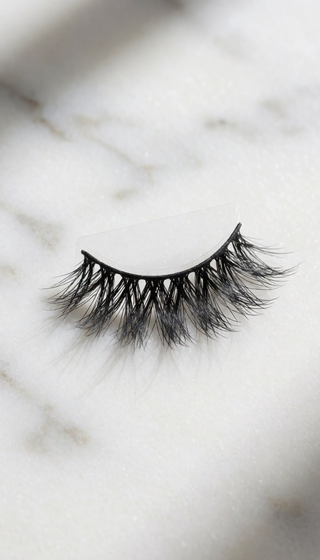
LASH MAINTENANCE
Lash maintenance is not about forcing natural lashes to grow faster; it is about protecting the lashes you already have and keeping every tool you wear easy to clean, position, and remove. If you have wondered why a lash that looked perfect in the morning can lift, tangle, or irritate by midday, the cause is usually practical: residue at the band, a fit that rubs the lid, moisture collecting underneath, or friction while sleeping.
Start with a reset today. Remove eye makeup completely, rinse your lash line with lukewarm water, and pat the area dry. Then clean reusable tools according to their material and care directions, let them dry fully, and return them to a protective case. Change your pillowcase or clean the sleep surface if you notice regular rubbing, and never use a contaminated mascara wand or shared applicator.
Natural lashes do not all grow and shed at once. Eyelash hairs commonly spend about 30–45 days in the active growth phase before transitioning into a rest period, and the complete cycle varies by person. Noticing a few loose hairs one day can therefore be ordinary shedding rather than a maintenance failure.
Trimming the tips does not make a natural lash thicker, and conditioning treatments cannot change the growth cycle from the outside. What helps is a low-friction routine, gentle makeup removal, hygienic tools, and a fit that does not pull or press against the eyelid. Persistent burning, watering, swelling, discharge, itchiness, or sudden patchy loss is not something to troubleshoot with a stronger remover; stop the irritant and seek qualified medical advice.
BUILD A REPEATABLE LASH-CARE ROUTINE THAT KEEPS NATURAL LASHES HEALTHY
Natural lashes benefit from consistency because every hair moves independently through growth, transition, and rest. The visible length of a lash partly reflects its current phase, so small daily fluctuations are normal. Aggressive trimming cannot make an individual follicle produce a denser lash, which makes gentle handling more important than trying to accelerate growth.
A manageable routine has four repeatable parts:
- At the end of the day: Remove eye makeup with a remover suitable for the eye area, rinse with lukewarm water, and pat dry. Avoid rubbing the lid or pulling downward on the lashes while taking off mascara.
- Before handling lashes: Wash your hands, clean the case or applicator, and keep lotions, ointments, and heavy creams away from the lash line until they have absorbed.
- After each wear: Remove residue, clean the lash as directed, reshape the band gently, and allow it to dry fully before touching the fibers again.
- On a regular basis: Wash the storage case with mild cleanser and let it air-dry. A closed, damp case can trap moisture and develop odor, while a contaminated case may transfer residue to a lash.
Do not routinely scrub the lash line or use a contaminated mascara wand, and avoid coating natural lashes with oils or adhesive residue overnight. If density changes suddenly, especially in patches, or the change comes with pain, scaling, redness, discharge, or marked fatigue, stop using potentially irritating products and consult an ophthalmologist or dermatologist.
CLEAN EACH LASH TYPE WITH THE RIGHT METHOD
The correct cleaning method depends on how the lash is attached and which materials are present. Begin by taking the lash off the eye rather than cleaning it while it is still being worn. A reusable lash without adhesive or liner does not need the same solvent treatment as one with dried adhesive.
- Reusable lash: Remove it slowly, peel away any liner, and address adhesive residue before it hardens. If its care instructions allow washing, use lukewarm water and a mild cleanser, working gently with clean fingers or a soft spoolie.
- Water-activated or glue-backed strip: Follow the maker’s removal directions before wetting the band. Support the lash with one hand so pressure is transferred to the band rather than the fibers.
- Single-use strip: Replace it when the band, adhesive, or fibers become contaminated, distorted, or difficult to apply. Aging adhesive is not made hygienic by wiping off visible dirt.
- One-eye adhesive segments: Clean each piece separately and avoid twisting the fibers while removing residue. Do not assume a stronger solvent is safer; alcohol and acetone can damage some fibers and irritate eyelid skin.
After cleaning, rinse away cleanser completely, press the band dry with a clean cloth, reshape it, and let it air-dry before storage. Repeated solvent exposure can dry or roughen fibers, while oil-based products may migrate toward the tear film or contact lenses. Never reuse a disposable adhesive segment solely to avoid wasting it.
If a natural lash has adhesive on it, work from the base outward rather than combing a dissolving wad through the hair. More force does not equal a cleaner result; stopping and seeking professional removal is preferable when a bonded section begins to pull.
REMOVE LASHES WITHOUT PULLING OR TRAPPING MOISTURE
Most lash damage during removal happens when a dry bond is pulled before it has been released. Slow, low-force removal protects both the fibers and the delicate skin around the eye. The goal is to peel the attachment away while keeping tension off the natural lashes.
- Prepare: Wash your hands. Remove contact lenses if you will be using liquids, and make sure the remover is specifically labeled for use around the eyes.
- Release the edge: Press the skin above and below the outer corner, then gently lift the corner away from the eyelid. Never pull from the center of the band or pinch a cluster of natural lashes.
- Roll the liner back: For liner built into the band, begin at the outer corner and peel backward while rolling the section onto itself. This reduces the amount of tension directed into the lash fibers.
- Loosen stubborn residue: Press a lightly dampened cotton pad or cotton swab against the band with an eye-area-safe adhesive remover. Allow it to penetrate the bond; do not flood the open eye or force the attachment before it releases.
- Finish gently: Remove the tool, rinse the eye area, and pat dry. Let the lashes settle before applying mascara, lotion, or another treatment near the lash line.
Do not use tweezers or pliers to pluck dried adhesive away from lashes still attached to the eyelid. One sharp tug can create traction irritation or remove a natural lash along with the residue, particularly when the eye is closed or the skin is dry.
If adhesive has been applied directly to natural lashes, take extra care. If individual hairs must be pulled, if one section feels firmly bonded, or if removal causes pain, stop and have a trained professional remove it. Continuing after the first warning signal can turn a maintenance task into skin or lash damage.
PROTECT NATURAL LASHES DURING DAILY WEAR AND SLEEP
Eyelid skin is thin, highly sensitive, and closely connected to the eye’s tear system. Lashes help deflect some airborne particles, but they cannot make trapped fibers, adhesive, or a poor-fitting band harmless. Comfortable maintenance depends on reducing pressure and preventing repeated rubbing rather than simply using more product.
- Follow a safe makeup sequence: Place contact lenses before mascara and eyeliner, not afterward. Avoid lining the waterline, and do not let mascara dry where it can flake or brush against a contact lens.
- Check the silhouette: Lower fibers should not sweep across the eyelid with every blink, and the outer tail should not scrape the temple or rest heavily on the cheek. A correct length is the longest length that remains comfortable.
- Reduce sleep friction: Removing lashes before sleep gives the eye area the longest uninterrupted recovery period. Side sleeping can press the band, curl fibers, and create a consistent rubbing path.
- Do not rely on water resistance: Perspiration, body oils, and rubbing can loosen a lash even when rain resistance is high. Water resistance describes performance under water, not immunity to wear or debris.
- Respond to early irritation: Persistent dryness, burning, redness, or a reflex to blink more often is information, not a styling challenge. Remove the tool before the skin becomes visibly inflamed.
Clean hands, soft applicators, and a smooth sleep surface all reduce avoidable friction. Do not compensate for poor fit by repeatedly pressing the band down throughout the day; that can increase edge wear and disrupt the placement that made the lashes comfortable.
If discomfort continues after removal, avoid piling on another adhesive remover or makeup product. Ongoing symptoms may be linked to contact lenses, eyelid inflammation, skin conditions, or an attachment problem, all of which deserve a more targeted approach than routine cleaning.
FIX WEAR-TIME FAILURES BY IDENTIFYING THE ACTUAL CAUSE
When a lash lifts early, the solution is rarely more pressure. Treat a failed wear as useful information about fit, residue, moisture, or movement. Read the pattern before changing the attachment method or selecting a completely different style.
- The center lifts: The band may be too wide, too rigid, or curved differently from the eye. Check placement before trimming or adding more adhesive.
- The outer corner lifts: Look for lotion, oil, leftover makeup, perspiration, or an outer tail that is too long and contacts the temple.
- The fibers flare or cross: This often signals rubbing during blinking or sleep, a crowded lower edge, or a shape that is too long for the available space.
- One eye wears differently: Compare the band position, natural-lash direction, and amount of contact on each side rather than assuming both eyes need identical adjustment.
For a clean reset, remove old residue, let the lid and lashes dry, and inspect the band for stiffness or warping. Position the lash without stretching it, then apply gentle, even pressure across the band and ends. When adhesive is used, place a thin coat on the band according to its directions rather than saturating the natural lashes.
A band stored while damp can curl even if the fibers look clean, and an applicator left covered can transfer skin oil back onto the next application. Allow the tool to dry completely, reshape the band, and keep the case open during drying before closing it for storage.
Replace a tool when its band no longer lies flat, its fibers become rough, its attachment system stops releasing cleanly, or application requires pulling and readjusting several times. Condition is more useful than an arbitrary replacement date, because storage, body chemistry, and application vary from person to person.
WHAT TO LOOK FOR IN A LOW-MAINTENANCE SOLUTION
A low-maintenance lash should simplify both attachment and removal, not just look good on the first day. Evaluate any option by asking what it touches, how it is released, and what happens to the band after several uses.
- Attachment: It should not require residue that builds up on natural lashes or a liner that repeatedly bends into fragile fibers.
- Fit: The lower edge should follow the eye comfortably, while the outer fibers should have room to move without scraping the temple.
- Care clarity: Instructions should explain removal, cleaning, drying, and storage in a way that protects the material.
- Skin safety: A “hypoallergenic” claim is useful, but it does not guarantee that every person will have no reaction. Sensitivity history and ingredient disclosure still matter.
- Long-term value: Look for a clear, credible number of documented uses and compare total cost per wear rather than assuming reusable means indestructible.
The strongest option is the one you can remove cleanly, maintain without harsh handling, and wear without pressure. Confirm that the style suits your eye shape and comfort before focusing on dramatic length, because a technically beautiful lash that creates rubbing is not low maintenance.
MEET PHANSTA LASHES: A GLUE-FREE APPROACH TO LASH MAINTENANCE
PHANSTA LASHES fits this maintenance framework by removing several common sources of buildup. Its glue-free micro-adhesion system holds the lash without adhesive, magnets, or liner, so there is no adhesive bond to weaken at the edge and no separate component to peel away during removal.
The lashes are waterproof and hypoallergenic, while the 30+ wears claim gives you a practical way to evaluate long-term use. At $59, that works out to under $2 per wear. As with any cosmetic placed near the eye, “hypoallergenic” does not mean reaction-proof, so stop using the lashes if burning, swelling, redness, or persistent itching occurs.
There are 17 styles to compare against your preferred length, density, and eye shape. Maintenance becomes simpler: begin with clean, dry hands and a clean lash line, position one eye at a time, press the band into place, and remove slowly without pulling on the fibers. Store the lashes protected and dry so the band does not crease.
This approach is best for someone who wants a fast routine without drying adhesive, peeling liner, or attending an application appointment. It does not remove the need to respect your skin, stop if discomfort begins, or choose a style that feels comfortable rather than simply dramatic.
Glue-free micro-adhesion · 30+ wears · Seconds per eye
FREQUENTLY ASKED QUESTIONS
HOW OFTEN SHOULD REUSABLE LASHES BE CLEANED?
A reusable lash should be checked after every wear and cleaned whenever makeup, skin oil, or adhesive residue is present rather than on a fixed weekly schedule. Follow the maker’s care directions, remove buildup gently, reshape the band, and let it dry completely before storage. Waiting for visible grime can allow residue to stiffen fibers or warp the band.
CAN I SLEEP IN EYELASHES?
Sleeping in lashes is not ideal maintenance. A band or fiber under the head can add pressure, curl the band, or create a rubbing path, and contact lenses raise the need to remove them first. Remove lashes before sleep whenever possible, especially if you wake with marks, dryness, redness, or an urge to rub your eyes.
DOES WATERPROOF MEAN A LASH CAN STAY ON INDEFINITELY?
Waterproof describes resistance to water, not to friction, body oils, debris, or prolonged wear. It also does not make the natural lash biologically maintenance-free. Remove the tool after its intended wear, clean any residue as directed, and never leave a removable style on solely because the adhesive resists rain.
HOW SHOULD EYELASHES BE STORED?
Store lashes only after they are clean, completely dry, and lightly reshaped. Keep the band supported in a case so it does not fold, and do not crush the fibers against the lid. Let any dampness evaporate before closing the case, because trapped moisture can support odor and microbial growth.
WHY DO MY NATURAL LASHES LOOK THINNER?
Some shedding is normal because lashes grow and rest in overlapping phases. A suddenly sparser line, loss in patches, or loss accompanied by pain, redness, scaling, or fatigue merits assessment from an ophthalmologist or dermatologist. Tight makeup removal, rubbing, eyelid inflammation, medical eye conditions, and systemic factors can also affect density.
STILL COMPARING OPTIONS? Explore our guides on finding your perfect lash, magnetic vs strip, and sensitive eyes.
FIND THE PERFECT LASH — Not sure which style suits you? Take the 30-second lash finder finder →