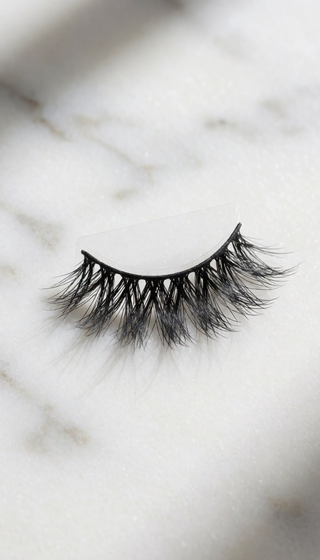
REUSE STRIP LASHES SAFELY — THE EXACT CLEANING, STORING, AND MAINTENANCE ROUTINE THAT EXTENDS EVERY PAIR'S LIFESPAN
Learn the exact cleaning, storing, and maintenance routine that keeps every pair lasting longer — without damaging your lashes or your eye health.
Strip lashes can be costly to replace every week, and tossing them after a single night out feels wasteful. The good news: you can safely reuse strip lashes many times over — the key is knowing how to clean, store, and handle the band correctly. The band material determines how many wears you'll get, and proper hygiene prevents the bacteria buildup that leads to eye irritation.
If you've ever tossed a pair after one event, you're not alone — and you're not wasteful for wanting to reuse them. You're just missing the technique. The routine takes about two minutes per pair, and once it becomes a habit it protects both your lashes and your eye health.
The core principle is simple: a strip lash survives reuse only if you remove it gently, clean the band fully without soaking the fibers, let it air dry in its natural curve, and store it somewhere dry and protected. Get those four things right and a single pair serves you for many wears. Get them wrong and the band warps, the fibers mat, and bacteria quietly builds up against your eyelid.
WHY REUSING STRIP LASHES WORKS — AND WHEN IT DOESN'T
Strip lash bands are made from one of three materials: cotton thread, clear plastic (PVC), or flexible fabric. Cotton and fabric bands are the most durable and tolerate repeated cleaning best. Clear PVC bands are thinner and lighter but crack and warp faster with handling. If you want a pair that survives many wears, the band material is the single biggest factor.
Beyond the band, the fibers matter. Synthetic fibers hold their shape through cleaning better than real mink or silk, which can mat if handled too aggressively. Natural fibers can still be reused — they just need a gentler touch and a shorter overall lifespan.
The health concern with reuse is straightforward: every wear leaves the band coated in makeup, oils, skin cells, and bacteria. Without cleaning between uses, that buildup transfers directly onto your eyelid, raising the risk of styes, conjunctivitis, and contact dermatitis. Proper hygiene eliminates that risk entirely — which is why the cleaning step below is non-negotiable, even when the lashes "look clean."
How you wear them matters too. Apply strip lashes to clean, bare lashes — never over mascara or heavy eyeliner — because trapped residue is harder to remove and degrades the fibers faster. And never sleep in them: overnight pressure and oil exposure mat the fibers and stress the band far more than a normal day of wear.
THE STEP-BY-STEP LASH CLEANING ROUTINE
Cleaning properly after every wear is the difference between a pair that keeps its shape for wear after wear and one that falls apart in five. Here's the exact process:
- Remove gently. Starting from the outer corner, slowly peel the band away from your eyelid. Never yank or pull from the center — this stretches and warps the band.
- Clean the old adhesive. Using tweezers or your fingertips, carefully peel off any remaining glue from the band. If the adhesive is stubborn, soak a cotton pad in micellar water or oil-free makeup remover and press it against the band for 20 seconds to dissolve the residue.
- Wipe the band clean. Dampen a lint-free cloth or cotton pad with micellar water and gently wipe both sides of the band, working from the outer edge inward. Avoid soaking the fibers — excess moisture weakens the band and causes fibers to lose their curl.
- Let them air dry. Place the cleaned lash on a lint-free tissue or the original tray with the band resting on the raised edge so it keeps its curve. Allow to air dry completely — at least 15 to 20 minutes — before storing.
- Reshape the band. Once dry, gently press the band back into its natural curve with your fingertips or tweezers. If it has lost its shape, briefly hold it near warm (not hot) air from a hair dryer for two seconds to soften it, then reshape.
Never use oil-based makeup removers on cotton or fabric bands — oil degrades the fibers over time. Micellar water or a lash-specific cleanser is your safest option. Clean after every single wear, even if they look clean: bacteria and oils are invisible, and residue you can't see still degrades the band and irritates your eyelid.
LASH STORAGE: KEEPING YOUR PAIRS BETWEEN WEARS
Storage is where most people unknowingly damage their lashes. The original lash tray or a dedicated lash case is the best option because it holds the band in its natural curved shape. Never store lashes flat, loose in a drawer, or in a bathroom cabinet — humidity and temperature fluctuations break down both the fibers and any residual adhesive on the band.
If you don't have the original tray, a clean pill organizer or a rigid glasses case works well. The key requirements are: a dry environment, protection from dust and crushing, and something that holds the band's curve. Some lash wearers shape a small piece of tissue paper into a half-moon and place it inside the band to preserve the curve.
Keep lashes away from direct sunlight, heaters, and bathroom steam. UV exposure degrades synthetic fibers, and humidity cycles break down the band's structure faster than anything else. A rigid lash case protects the band when you travel, and a small silica gel packet tucked into your case absorbs excess moisture and extends fiber life.
Keep pairs separated rather than stacked loose — fibers snag and pull out when lashes rub against each other. If you rotate through several pairs, marking the first-wear date on each tray helps you track which pairs are oldest and due for retirement first.
5 MISTAKES THAT RUIN YOUR LASHES FAST
Most lash damage isn't dramatic — it's small habits repeated every wear. These five do the most harm:
- Applying new glue over old glue. The most common mistake. Each wear must start with a completely clean band. Layering new adhesive over dried residue creates a bumpy, uncomfortable surface that causes the lash to lift and traps bacteria against your eyelid.
- Getting the band soaking wet. Water weakens the band material and loosens the bond between the fibers and the band. Clean with a damp — not wet — cloth.
- Using oil-based removers. Oil breaks down cotton threads and causes natural fibers to mat. Stick to oil-free micellar water or alcohol-based lash cleansers.
- Pulling lashes off roughly. This stretches the band permanently. A gentle peel from the outer corner preserves the shape.
- Storing lashes loose or flat. A flattened band loses its curve and won't sit properly against your lash line, causing lifting and an uneven look.
SIGNS IT'S TIME TO REPLACE YOUR LASHES
Even with perfect care, lashes don't last forever. Here's when to retire a pair:
- The band has become stiff, cracked, or permanently straightened and no longer hugs your lash line.
- Fibers are visibly matted, clumped, or shedding in noticeable patches.
- The band leaves visible residue that won't clean off, no matter how thoroughly you wipe it.
- You've developed any eye irritation, redness, or itching after wearing a pair — replace it immediately and never wear it again.
- The inner corner or outer edge fibers have fallen out completely, leaving gaps.
A well-cared-for cotton or fabric band will give you many wears with proper hygiene — far more than most people expect. When in doubt, replace them: no pair is worth an eye infection. If you notice a stye, persistent redness, or discharge, see an eye care professional and stop wearing the pair.
WHAT TO LOOK FOR IN A LASH BUILT TO BE REUSED
If you want a lash you can genuinely reuse many times, four criteria matter most: a cotton thread or flexible fabric band that outlasts clear PVC; an adhesive system that doesn't degrade the band with every application and removal cycle; hypoallergenic construction free from latex, formaldehyde, and harsh chemicals if you have sensitive eyes; and waterproof, sweat-resistant fibers that hold their shape through humidity with less damage between cleanings.
The single biggest structural advantage for longevity is a glue-free band. Traditional lashes fail because adhesive residue builds up and the band warps with every cycle. A glue-free micro-adhesion design eliminates that failure point entirely — you press on and peel off without stressing the band, which is what makes many wears realistic rather than aspirational.
Finally, consider how the lash applies. A band that requires liquid glue degrades with every application and removal cycle, no matter how gently you handle it. A glue-free design removes that variable entirely, which is why it's the single most important feature if reuse is your priority.
ONE PAIR, 30+ WEARS — THE GLUE-FREE STRIP LASH ENGINEERED TO BE REUSED
PHANSTA LASHES were built to solve the two biggest problems with traditional strip lashes: the mess and irritation of glue, and the short lifespan of glue-dependent bands. Instead of adhesive, PHANSTA LASHES use a proprietary micro-adhesion band — a flexible, skin-safe polymer strip that grips your natural lash line through gentle surface tension, not chemical bonding.
The band releases cleanly after every wear, with no adhesive residue to scrub off and no glue degrading the band cycle after cycle. Application takes seconds per eye — peel the backing, press along your lash line, adjust with your fingertips. No drying time, no sticky fingers, no glue tube to replace.
- Glue-free micro-adhesion: No adhesive ever touches your eyelid — no irritation, no residue, no messy removal. Press on and peel off cleanly, wear after wear.
- 30+ wears per pair: The band is engineered to hold its shape and comfort through repeated cleaning, so reuse becomes the baseline rather than a pleasant surprise.
- Under $2 per wear: At $59 per pair, the cost per wear drops every time you reuse them — and there's nothing to repurchase in between.
Hypoallergenic, waterproof, and free from latex and formaldehyde, PHANSTA LASHES suit sensitive eyes and humid days alike — across all 17 styles.

FREQUENTLY ASKED QUESTIONS
How many times can you safely reuse a pair of strip lashes?
With thorough cleaning and gentle handling, a cotton-thread or fabric-band strip lash can be safely reused many times. The band material sets the ceiling, not a fixed number. Retire the pair the moment you notice stiffness, matting, stubborn residue, or any eye irritation — hygiene always comes first.
What is the safest way to clean strip lashes without ruining them?
Peel off leftover adhesive with tweezers or fingertips, then wipe both sides of the band with a lint-free cloth dampened with micellar water or oil-free makeup remover. Never soak the fibers, and never use oil-based removers on cotton bands. Air dry for 15 to 20 minutes on the original tray, then reshape the band.
Can you reuse strip lashes that use regular lash glue?
Yes — but only if you remove every trace of adhesive between wears. Layering new glue over dried residue creates a bumpy surface, causes lifting, and traps bacteria against your eyelid. A completely clean band is non-negotiable, even when the lashes look clean, because oils and bacteria are invisible to the eye.
Is it safe to sleep in strip lashes?
No. Sleeping in strip lashes mats the fibers, stresses the band far more than a normal day of wear, and presses a full day of oil, makeup, and bacteria against your eyelid overnight. Remove and clean them every night — it takes about two minutes and is the single most effective habit for extending reuse.
How should you store strip lashes between wears?
Keep them in the original tray or a rigid lash case that holds the band's natural curve, somewhere dry and away from sunlight, steam, and heat. Add a silica gel packet to absorb excess moisture, keep pairs separated so the fibers don't snag, and never store them loose or flat in a drawer.

NOT SURE ABOUT YOUR EYE SHAPE?
Find your eye shape and get personalized lash recommendations:
FIND THE PERFECT LASH FOR EVERY MOMENT
Explore our occasion-specific lash guides:
EXPERIENCE THE DIFFERENCE
Join thousands of women who have made the switch. No glue, no damage, no salon appointments — just beautiful lashes in seconds.
SHOP PHANSTA LASHES — GLUE-FREE, 30+ WEARS →