SHOULD YOU REMOVE LASHES BEFORE SWIMMING | THE TRUTH REVEALED
SHOULD YOU REMOVE LASHES BEFORE SWIMMING? LEARN WHEN TO KEEP THEM SECURE AND WHEN TO TAKE THEM OUT
Short answer: you usually do not need to remove strip lashes before swimming. If the band is secure, the application system’s directions allow wet wear, and your eyes feel comfortable, you can keep them on. The attachment method and edge condition matter more than the fact that you are entering water.
Swimming is not a reason to sacrifice your look automatically, but it is not worth forcing a loose lash to stay on either. Use this quick decision guide:
- Keep them on when the entire band feels secure, the natural lashes and skin are clean and dry before application, and no moisture has already loosened the attachment.
- Remove them before swimming if an end is lifting, the band sits unevenly, your eye feels irritated, or you cannot reposition it without pulling.
- Plan the after-swim care before you get wet: know how you will rinse away residue, dry the lashes without rubbing, and check for lifting afterward.
WHY WATER AFFECTS DIFFERENT LASH SYSTEMS IN DIFFERENT WAYS
Water can weaken some adhesives, but it does not affect every lash system in the same way. Movement, hand oils, makeup, skin moisture, heat, application timing, and the condition of the band all influence retention. A lash must be evaluated as a complete system—fibers, band, and attachment method—rather than by water exposure alone.
THE 90-SECOND RULE IS NOT UNIVERSAL
The often-repeated 90-second setting rule is not a universal standard for every adhesive. Some traditional lash glues require a specific set time, while others need longer; only the formula’s instructions can establish when the bond should be ready for water. Body heat is not a substitute for that stated time. Glue-free micro-adhesion has no adhesive to cure, but it still requires clean, dry skin and careful placement.
HYDROPHOBIC AND POROUS MATERIALS BEHAVE DIFFERENTLY
A hydrophobic surface repels water, while a porous surface can absorb it. An absorbent or dense band may become heavier, drag against the natural lashes, or lose its shape. Material alone does not prove that an entire lash system is waterproof, however. Look for a waterproof claim that covers the complete application and follow its stated care instructions.
BUILD A RELIABLE FIT BEFORE ENTERING THE WATER
A few precautions before swimming can prevent most avoidable lifting:
- Clean and dry the area. Oil, moisturizer, sunscreen, and natural moisture can interfere with a close fit.
- Apply the lash as directed. Give traditional glue its exact set time; for glue-free micro-adhesion, seat the band evenly as instructed.
- Inspect the full band. Check the center and both ends in a mirror before any water reaches the lash line.
- Keep the waterline clear. Mascara applied at the base or waterline can complicate removal after swimming.
- Check comfort. Blinking and moving your eye should feel natural, with no scraping or pressure.
- Do not keep adjusting it. Touching or repositioning a wet band increases dragging and pulling.
If the band is already lifting when you reach the pool or beach, remove it and reapply it on a clean, dry surface rather than relying on water to hold it in place.
WHY POOL, OCEAN, AND HOT-TUB EXPOSURE IS DIFFERENT
The same lash can face different stresses depending on the environment:
POOL: Chlorine does not automatically loosen every lash, but it can irritate the eyes and interact with oils, sunscreen, or makeup already around the lash line. Persistent burning or redness is a reason to get out of the water and remove the lash.
OCEAN: Salt residue, sand, and repeated wave movement can add drag. Rinse away residue according to the application directions and pat the band dry rather than rubbing it.
HOT TUB: Heat, steam, and prolonged moisture may soften some attachment systems even when there are no waves. Do not assume a hot tub creates less exposure simply because the water is still.
DRY YOUR LASHES WITHOUT SABOTAGING THE BOND
What you do immediately after leaving the water can matter as much as the application itself.
- Do not rub the lash line. Rubbing pushes moisture into the edge and can create drag.
- Rinse when directed. Use clean, fresh water to help remove accessible salt or chlorine residue without pulling at the band.
- Pat with a clean, soft towel. Blot surface moisture rather than dragging the towel across the lashes.
- Let the area air-dry. Check the edges after drying and remove the lash if it has lifted instead of trying to reattach it while damp.
REMOVE LASHES WITHOUT PULLING YOUR NATURAL LASHES
For traditional glued lashes, use a remover intended for the adhesive formula. Oil-based removers often loosen lash glue, but an oil-free remover is not automatically better for every waterproof adhesive. Follow the remover’s directions, avoid direct eye contact, and allow the recommended dwell time rather than pulling immediately.
For a glue-free micro-adhesion system, follow that system’s removal instructions rather than assuming an oil-based glue remover is necessary. Release the band slowly and support the skin beneath it. Never use force near the natural lashes or keep working on an attachment that is causing pain.
Discard a lash if its band is stretched or badly damaged. Stop wearing it if redness, itching, swelling, pain, or discharge develops, and seek professional medical advice for persistent or severe symptoms.
WHAT TO LOOK FOR IN A WATER-READY LASH SOLUTION
Use the same five criteria whether you are comparing traditional glue, glue-free micro-adhesion, or another lash category:
- A complete-system waterproof claim that addresses the attachment, not only the fibers or band.
- Clear application directions, including any required setting time or placement technique.
- A flexible, lightweight band that resists water absorption and will not drag on wet skin.
- Removal instructions matched to the system so the attachment can be released without pulling.
- Realistic reuse and cost information, plus a clear hypoallergenic claim that does not promise zero irritation.
If your priorities are waterproof wear, no traditional glue, repeatable application, and a removal method you understand, a glue-free micro-adhesion system is the logical category to evaluate next.
THE WATER-READY GLUE-FREE ANSWER
Each pair is reusable for 30+ wears. At $59, that works out to under $2 per wear, making application consistency, comfort, and planned reuse more useful than comparing one day’s cost alone.
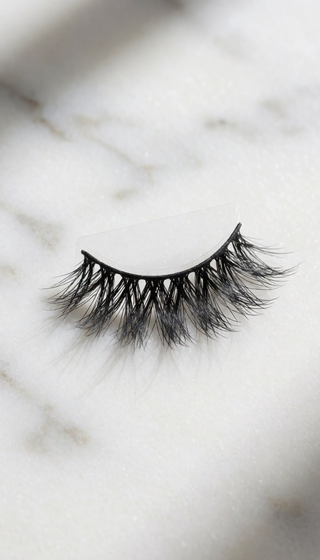
Those criteria lead to PHANSTA LASHES, a glue-free micro-adhesion option for readers who do not want to remove their lashes automatically before water activities. The lashes are waterproof and hypoallergenic, use no adhesive, magnets, or liner, and are available in 17 styles.
- Glue and sensitivity: Micro-adhesion provides the lash look without traditional lash glue.
- Durability: Each reusable pair is designed for 30+ wears with proper application and removal.
- Value: Seventeen styles are available at $59, or under $2 per wear.
FREQUENTLY ASKED QUESTIONS
DO I NEED TO REMOVE LASHES BEFORE SWIMMING?
Usually not. If the lash band is secure, you feel comfortable, and the application instructions allow water exposure, you can swim without removing it first. Remove it beforehand if an edge is lifting, moisture has loosened the attachment, or the eye feels irritated. After swimming, rinse as directed, pat dry, and never rub the lash line.
CAN I SWIM IN GLUE-FREE LASHES?
PHANSTA LASHES use glue-free micro-adhesion rather than traditional lash glue, magnets, or a liner. Apply the band only as instructed and make sure each section is seated before swimming. Waterproof describes the product, but rubbing, poor alignment, or a band placed on damp skin can still affect attachment. Check the fit before entering the water.
WILL PHANSTA LASHES STAY ON IN POOLS, OCEANS, OR HOT TUBS?
PHANSTA LASHES are waterproof and made for repeat wear, but no lash product can promise unlimited or guaranteed retention in every pool, ocean, or hot tub. Chlorine, salt, heat, skin oils, and movement affect conditions differently. Follow the application directions, avoid rubbing, and remove the lashes if they lift or cause discomfort.
HOW DO I REMOVE LASHES AFTER SWIMMING?
Start with clean, dry hands and follow the removal directions for the lash system you use. Do not pull the band quickly or use force near the natural lashes. Work slowly, release the bond gently, and discard the lash if the band is stretched or badly damaged. Persistent pain, redness, swelling, or discharge warrants medical advice.
ARE PHANSTA LASHES SUITABLE FOR SENSITIVE EYES?
PHANSTA LASHES are hypoallergenic and do not use glue, which can make them a relevant option for people who dislike adhesive formulas. Hypoallergenic does not mean irritation is impossible. Stop wearing them if burning, redness, itching, or swelling develops, and seek professional medical advice for persistent or severe symptoms.
CHOOSE GLUE-FREE WATER-READY LASHES
SHOP PHANSTA LASHES — GLUE-FREE, 30+ WEARS →
STILL COMPARING OPTIONS? Explore our guides on finding your perfect lash, magnetic vs strip, and sensitive eyes.
FIND THE PERFECT LASH — Not sure which style suits you? Take the 30-second lash finder finder →